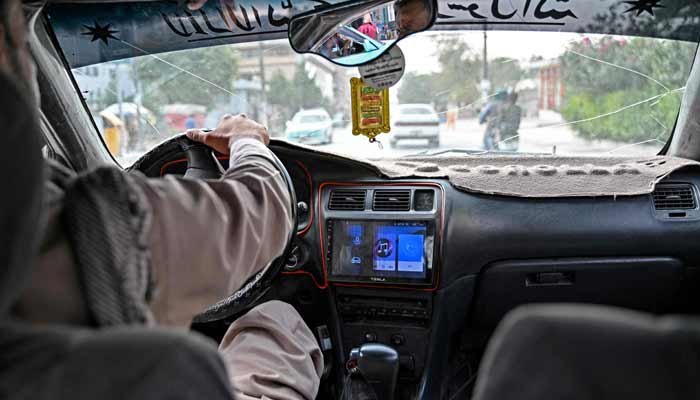
Afghan taxi drivers in Kabul are quietly defying the Taliban music ban by playing songs inside their vehicles, despite fears of being stopped by morality police. Music that once filled restaurants, cafés and shops across the Afghan capital has largely disappeared from public spaces since the Taliban returned to power in 2021. However, some drivers have found a discreet way to keep music alive during their daily journeys.
Drivers say they often play Afghan folk, regional and pop music at low volume. But when approaching security checkpoints, they quickly turn the sound down or switch it off altogether to avoid possible trouble with authorities.
Drivers Take Risks to Hear Music
One taxi driver, identified only as Roeen because of security concerns, said he reduces the volume whenever he approaches a checkpoint. He explained that drivers remain concerned about attracting the attention of morality police.
The Taliban music ban is enforced by the Ministry for the Propagation of Virtue and the Prevention of Vice (PVPV). Regulations issued by the ministry state that drivers should not play or listen to music because it is considered prohibited and may disturb passengers.
For drivers such as Roeen, however, listening to music has become an important part of everyday life. He said that since the restrictions were introduced, he has become even more interested in music.
Roeen described listening to songs as a form of personal expression and, for him, a quiet form of protest. He remembers a time when people could listen to songs, dance and celebrate without worrying about being stopped.
Fear of Morality Police
The Taliban music ban has created a climate of caution among drivers and passengers who still want to listen to songs. PVPV officials, commonly referred to as morality police, patrol parts of Kabul and have broad authority to enforce the government’s rules.
Another taxi driver, who requested anonymity, said he listens to music only when he is alone and surrounded by the noise of traffic. He said that listening now comes with stress because he knows he could attract attention.
The driver recalled being stopped twice at checkpoints because he had a USB stick and a memory card. He said officials discovered that the devices contained music and broke them.
For him, the issue goes beyond entertainment. He believes music is part of Afghan culture and fears that restrictions could contribute to its disappearance from everyday life.
Music Remains Part of Afghan Culture
Afghanistan has a long musical tradition that includes regional folk songs, traditional instruments and contemporary popular music. Under the current restrictions, much of this culture has been pushed away from public spaces.
The Taliban music ban has also affected musicians and businesses that once relied on public performances and recorded music. According to the report, PVPV provincial departments occasionally announce the burning of musical instruments as part of enforcement efforts.
The authorities have not publicly provided comprehensive figures showing how many instruments have been confiscated. However, the reported destruction of instruments illustrates the pressure placed on musical activities.
Despite these restrictions, some Afghans continue to find ways to listen privately.
Taxi Rides Offer a Rare Opportunity
Shared taxis are an important form of transportation in Kabul, where public transport options remain limited. Several passengers may share a vehicle, making taxis an affordable way to travel around the city.
For some passengers, the presence of a music player can make a taxi particularly appealing.
Shamsullah Ahmad, a university student, said he prefers taxis equipped with music players. He explained that he checks whether a vehicle has a music system before choosing one.
The Taliban music ban has also made passengers cautious about using headphones. According to the report, morality police have been known to remove headphones from people’s ears to check whether they are listening to music.
As a result, some passengers prefer low-volume music inside taxis rather than using headphones, which could attract unwanted attention.
A Quiet Form of Resistance
For drivers and passengers who continue listening, music represents more than background entertainment. It provides a connection to memories, culture and everyday life before the restrictions were imposed.
Roeen said he misses the period when people could freely listen to songs and celebrate without fear. His comments reflect the frustration of those who believe music remains an important part of Afghan identity.
At the same time, drivers understand the risks associated with violating official rules. Many therefore keep the volume low, switch music off at checkpoints and avoid discussing their habits publicly.
The Taliban music ban has significantly changed the soundscape of Kabul, but it has not completely eliminated people’s desire to listen to music. Inside taxis moving through the city’s crowded streets, songs continue to play quietly.
For some Afghans, those moments offer a small connection to cultural traditions that they fear could otherwise fade away. As long as restrictions remain in place, taxi drivers appear likely to continue balancing their love of music with the risks associated with breaking the rules.