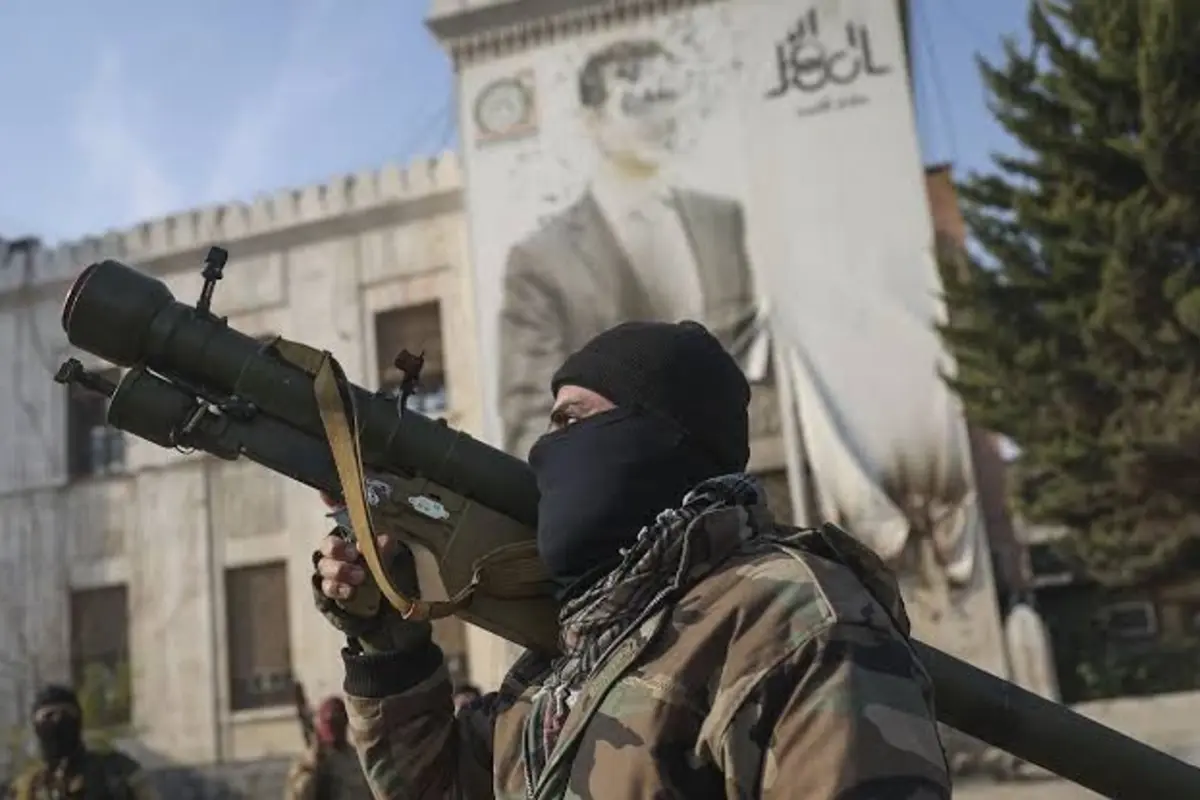
At least three militants affiliated with Syria’s ruling Hay’at Tahrir al-Sham (HTS) authorities have reportedly been killed and several others injured in Syria clashes with local armed fighters in al-Sanamayn city in the southwestern province of Dara’a. According to the Syrian Arab News Agency (SANA), the violence erupted on Thursday after local gunmen opened fire on HTS-affiliated forces carrying out an operation in the city.
The incident has added to growing tensions in parts of Syria, where security concerns are unfolding alongside protests over difficult economic conditions, fuel shortages and inadequate public services.
Fighting Erupts in al-Sanamayn
The latest Syria clashes began when local armed men reportedly fired on HTS-affiliated forces conducting an operation in al-Sanamayn.
Following the attack, HTS-affiliated forces reportedly deployed across the city and launched a search operation aimed at locating those responsible for the shooting.
The fighting resulted in casualties among the HTS-affiliated forces, with at least three militants reportedly killed and several others wounded. The incident highlights the continuing security challenges facing parts of southwestern Syria.
Dara’a has remained an important area in Syria’s wider conflict, and tensions between local armed groups and authorities can quickly develop into confrontations. The latest incident demonstrates the difficulties involved in maintaining security while local communities face broader political and economic pressures.
Protests Spread Over Economic Conditions
The security incident in Dara’a comes as demonstrations have been reported in several parts of Syria. Many of the protests are linked to deteriorating economic conditions and shortages of essential services.
In Hasakah province, protesters reportedly blocked the M4 international highway near Tal Tamr for a fourth consecutive day. The blockade has disrupted the movement of oil tankers and other vehicles traveling along the important route.
Demonstrators are reportedly demanding better living conditions and government action over fuel shortages and inadequate public services.
The continued blockade reflects the level of frustration among residents facing difficulties with basic necessities. Fuel availability is particularly important for transportation, businesses and other daily activities, making shortages a significant source of public concern.
Demonstrations in Aleppo
Elsewhere, residents in Aleppo’s al-Sukkari district have also taken to the streets.
The demonstrations were reportedly linked to violence and property damage that occurred during earlier protests over fuel-price increases. Residents called for grievances to be addressed through peaceful methods and expressed opposition to further violence and destruction.
The situation illustrates the different concerns emerging within Syrian communities. While some protests focus directly on rising costs and fuel shortages, others are increasingly centered on how demonstrations themselves are being handled and the consequences of unrest.
The combination of economic pressure and public dissatisfaction has created an increasingly complicated environment for local authorities.
Oil Workers Blockade Road in Dayr al-Zawr
In Dayr al-Zawr, workers at the al-Omar oil field continued a road blockade for a second consecutive day.
The workers are reportedly protesting delayed salaries and unpaid financial obligations that they say have remained outstanding for more than eight months.
As part of the protest, demonstrators reportedly burned tires and prevented vehicles connected to the oil field from passing through the area.
Workers have said they intend to maintain the blockade until their demands are addressed. The dispute adds another economic dimension to the unrest, with workers highlighting the impact of delayed payments on their livelihoods.
The al-Omar oil field is an important energy site, meaning disruptions around its operations could have wider implications for local economic activity.
Security and Economic Problems Overlap
The latest Syria clashes and protests demonstrate how security and economic issues are occurring at the same time in different parts of the country.
In Dara’a, the immediate issue involved armed confrontation between local fighters and HTS-affiliated forces. In Hasakah, protesters have focused on fuel shortages and public services. Meanwhile, demonstrations in Aleppo have raised concerns about violence and property damage, while oil workers in Dayr al-Zawr are demanding overdue payments.
Although the incidents have different causes, they share a broader backdrop of economic hardship and dissatisfaction.
For local authorities, addressing these issues could require both security measures and responses to economic grievances. Heavy-handed responses to demonstrations can potentially increase tensions, while unresolved economic problems can continue to fuel public frustration.
A Difficult Situation for Syria
The reported Syria clashes in al-Sanamayn come at a sensitive time for the country. Communities in several provinces are dealing with economic pressures, shortages and disputes over services, while armed confrontations continue to pose security challenges.
The developments in Hasakah, Aleppo and Dayr al-Zawr show that public dissatisfaction is not limited to one location or one issue. Fuel prices, shortages, unpaid wages and concerns over public services are among the problems driving demonstrations.
At the same time, the confrontation in Dara’a highlights the continuing risks posed by armed groups and local security disputes.
Whether tensions ease will depend partly on how authorities respond to both security incidents and economic demands. For now, the combination of Syria clashes, protests and economic grievances points to a challenging period for communities across several parts of the country.