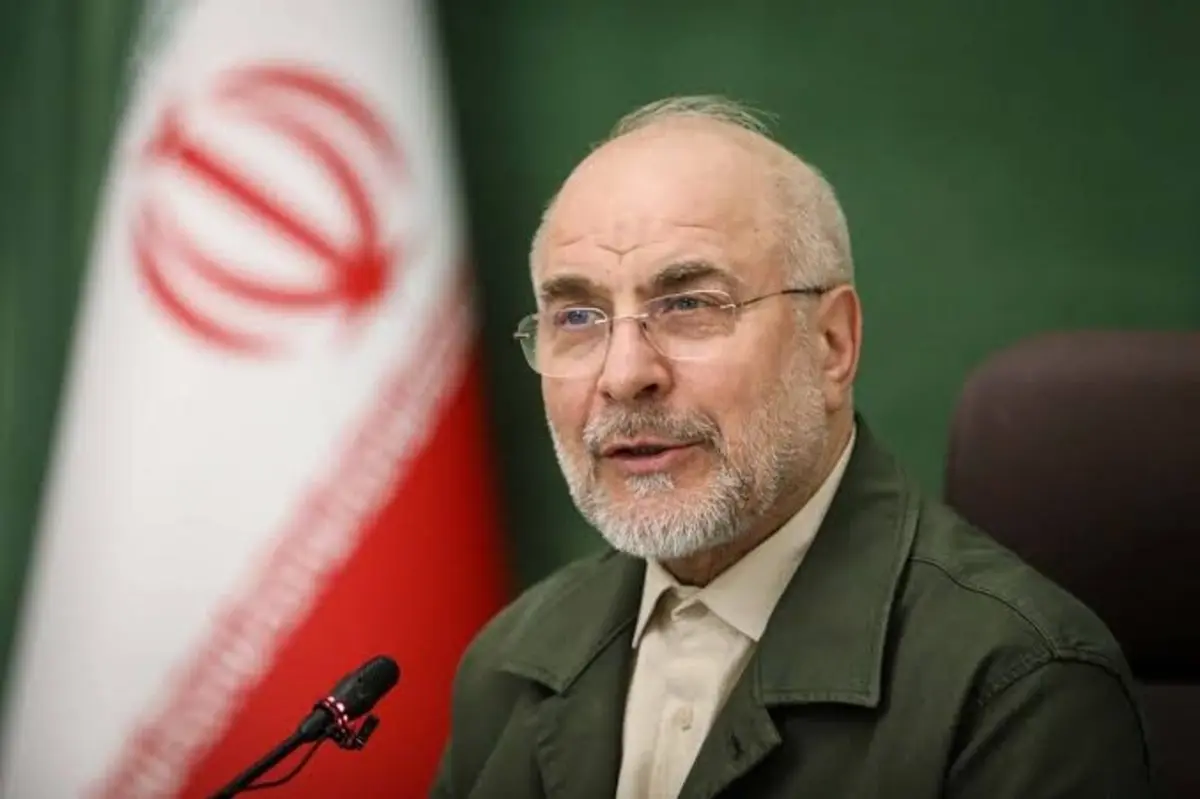
Iranian Parliament Speaker Mohammad Baqer Qalibaf has claimed that the United States and Israel attempted to use Iraq’s Iran Kurdistan Region as a military and security launchpad during the 40-day war, but that the alleged plan was ultimately thwarted. Qalibaf made the remarks during a meeting with Patriotic Union of Kurdistan (PUK) President Bafel Talabani in Tehran, where he also discussed regional security and Iran’s response to the conflict.
Qalibaf Discusses the 40-Day War
During the meeting, Qalibaf praised the Iranian people and the country’s armed forces for what he described as successful resistance against US-Israeli aggression that began on February 28.
According to Qalibaf, Washington may have underestimated the level of resistance Iran would demonstrate during the conflict. He claimed that the United States faced both military and political setbacks as a result of the confrontation.
Qalibaf said the conflict demonstrated Iran’s ability to withstand pressure from both the United States and Israel. His comments reflected Tehran’s broader presentation of the war as a test of the country’s military capabilities and national resilience.
The Iranian speaker did not provide publicly detailed evidence in the remarks cited for his claim about the alleged plan involving the Iran Kurdistan Region.
Alleged Use of Iraqi Kurdistan
A central issue raised during the meeting was the security situation along Iran’s western borders. Qalibaf claimed that the United States sought to conduct military and security operations against Iran using Iraq’s Kurdistan Region as a base during the conflict.
He said the alleged effort involved attempts to establish a military and security launchpad from territory in Iraqi Kurdistan. According to the Iranian parliament speaker, cooperation from what he described as friendly regional forces, combined with a timely response from Iran’s armed forces, prevented the plan from succeeding.
The claim places Iraq’s Kurdistan Region within the wider regional security concerns surrounding the conflict. The region borders Iran and has historically been an important area in discussions involving cross-border security, armed groups and relations between neighboring states.
However, Qalibaf’s description represents the Iranian side’s account of the alleged activities. The remarks do not by themselves establish that the United States and Israel carried out the plan as described.
Importance of Regional Cooperation
Qalibaf also emphasized the importance of cooperation between Iran and neighboring countries. He called for stronger economic, political and security relations across the region.
For Tehran, relations with neighboring states are particularly significant because of Iran’s geographic position. The country shares borders with several states and has long sought regional cooperation on trade, security and political issues.
The discussion with Bafel Talabani was therefore relevant beyond the immediate claims about the conflict. The PUK maintains a significant political presence in Iraq’s Kurdistan Region, making dialogue with its leadership an important channel for Tehran when discussing developments along Iran’s western frontier.
The Iran Kurdistan Region connection also highlights the complicated security environment around Iraq’s northern territory, where local, regional and international interests can overlap.
Security Along Iran’s Western Border
Iran has repeatedly focused on security along its borders, particularly where it believes outside actors or armed groups could threaten its territory. The Kurdistan Region’s proximity to Iran makes developments there closely watched by Iranian officials.
Qalibaf’s comments suggest that Tehran views regional cooperation as an important part of preventing its neighboring territories from being used for operations against Iran.
His call for greater security cooperation with neighboring countries also indicates that Iran wants to strengthen communication with regional political actors following the conflict.
At the same time, the claims made during the meeting should be understood within the political context of the war. Qalibaf was speaking about Iran’s assessment of the conflict and its outcome, rather than presenting an independently verified investigation into the alleged activities.
Economic and Political Engagement
Beyond military and security issues, Qalibaf highlighted the need to expand economic and political cooperation with neighboring countries.
Economic links can provide another channel for regional engagement, particularly between countries that share borders and commercial interests. Political dialogue can also help governments address security concerns before they develop into larger disputes.
For Iran, maintaining communication with political figures in Iraq and the Iran Kurdistan Region can be especially important because of the region’s geographic proximity and its role in Iraq’s political landscape.
Qalibaf’s meeting with Talabani reflects Iran’s continued focus on regional relationships following the 40-day conflict. His allegations regarding the Kurdistan Region underline Tehran’s concerns about foreign military activity near its borders, while his broader message focused on strengthening cooperation with neighboring countries.
Whether through security coordination, political dialogue or economic engagement, Iran appears to be placing increased emphasis on relations with regional partners.
The claims surrounding the Iran Kurdistan Region remain part of Qalibaf’s account of the conflict and would require independent confirmation to establish the details of the alleged US-Israeli operation. Nevertheless, his remarks show how Tehran is framing the regional security challenges that emerged during the war and the importance it places on cooperation with neighboring states.