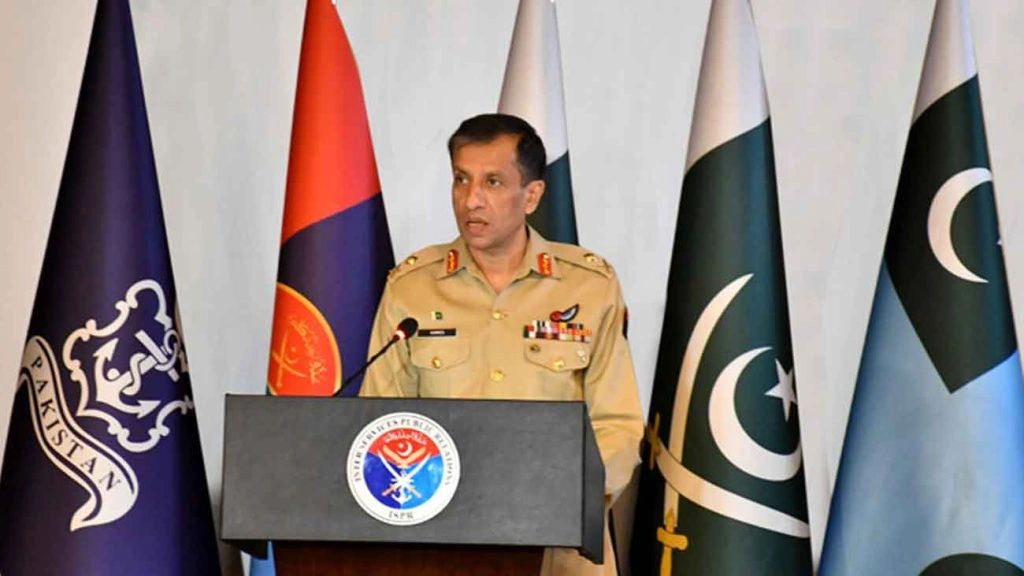
Pakistan’s military spokesperson, Ahmed Sharif Chaudhry, has reaffirmed Islamabad’s strong commitment to Saudi Arabia’s security, saying Pakistan stands with the Kingdom both diplomatically and physically. In an interview with Arab News, the Director General of Inter-Services Public Relations said Pakistan was prepared to go “to any extent” to defend Saudi Arabia against aggression, including protecting the holy sites in Makkah and Madinah.
The remarks come amid heightened regional tensions and recent missile and drone attacks targeting Saudi Arabia. Chaudhry’s comments underline the close relationship between Pakistan and Saudi Arabia and come after the signing of the Makkah Joint Defense Agreement involving Pakistan, Saudi Arabia and Türkiye.
Pakistan Stands With Saudi Arabia
Ahmed Sharif Chaudhry described Pakistan’s commitment to Saudi Arabia as unconditional and rooted in a long-standing relationship between the two countries. He said Pakistan is already practically present in Saudi Arabia to assist the Kingdom and continues to support it diplomatically.
Chaudhry also stressed that there should be no uncertainty about Pakistan’s position if Saudi Arabia faces aggression. He said Pakistan would continue to defend the Kingdom and emphasized the importance of protecting Islam’s two holiest sites.
His comments came after a series of Houthi missile and drone attacks on Saudi targets. According to Arab News, recent attacks caused casualties and damage, while Saudi authorities also reported attempts to target sensitive areas and infrastructure.
Pakistan’s Foreign Office had previously said that no specific Pakistani military response was being discussed under the defense agreement at that point, while maintaining that Islamabad would act if required. The full operational details of the agreement have not been made public.
Makkah Defense Agreement
The Ahmed Sharif Chaudhry statement also drew attention to the recently established regional defense framework. The Makkah Joint Defense Agreement was signed in August and involves Pakistan, Saudi Arabia and Türkiye.
The agreement provides for an armed attack against one member to be treated as an attack against all three countries. It builds on an earlier bilateral Strategic Mutual Defense Agreement between Pakistan and Saudi Arabia.
While the agreements strengthen security cooperation, questions remain about how their provisions would operate in specific circumstances because their complete operational arrangements have not been publicly released.
The latest developments have therefore placed greater attention on Pakistan’s relationship with Saudi Arabia and the role Islamabad could play if regional security conditions deteriorate further.
Concerns Over Afghanistan
Beyond Saudi Arabia, Ahmed Sharif Chaudhry also addressed Pakistan’s security concerns along its western border with Afghanistan.
He called on the Afghan Taliban authorities to prevent militant groups from using Afghan territory to conduct attacks against Pakistan. Chaudhry argued that Pakistan has the right to defend itself if commitments made by the Afghan authorities are not fulfilled.
Pakistani officials have repeatedly accused militant groups based in Afghanistan of being involved in attacks inside Pakistan. Islamabad has particularly raised concerns about the Tehreek-e-Taliban Pakistan and has called on Kabul to take action against militant networks operating from Afghan territory.
Arab News has previously reported similar claims from Pakistani officials regarding Afghanistan-based militants and suicide attacks, while the issue remains a major source of tension between Islamabad and Kabul.
Security Concerns in Balochistan
Chaudhry also discussed the security situation in Balochistan, saying terrorist groups do not have meaningful public support and are attempting to impose their ideology through violence.
He further alleged that India is sponsoring terrorism in Pakistan and claimed that some social media operations targeting Pakistan are being conducted from abroad. These allegations form part of Pakistan’s broader security narrative, although such claims remain matters of political and security dispute.
The military spokesperson emphasized that the state’s policy remains firm regarding negotiations with militant groups. According to his remarks, Pakistan intends to confront threats to its national security and sovereignty through continued security measures.
Focus on National Security
The comments by Ahmed Sharif Chaudhry present Pakistan’s current security position across several fronts, from its strategic relationship with Saudi Arabia to concerns over militancy originating from Afghanistan and violence in Balochistan.
At the diplomatic level, Pakistan has also continued engagement with regional partners. Prime Minister Shehbaz Sharif recently reaffirmed Islamabad’s support for Saudi Arabia during a conversation with Crown Prince Mohammed bin Salman and condemned attacks on the Kingdom’s territory and energy infrastructure.
For Pakistan, the Saudi relationship carries strategic, diplomatic and historical significance. At the same time, Islamabad faces security challenges along multiple borders.
The statements from Ahmed Sharif Chaudhry therefore highlight Pakistan’s emphasis on both regional partnerships and domestic security. His remarks indicate that Islamabad intends to maintain its support for Saudi Arabia while continuing to address what it describes as threats to Pakistan’s sovereignty and national security.