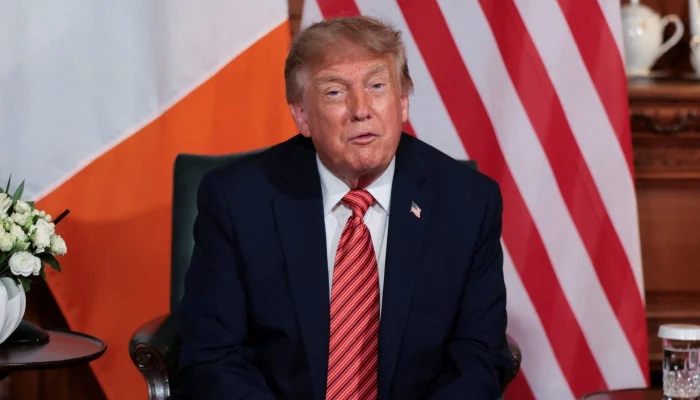
US President Donald Trump has said that Yemen’s Houthi fighters do not want the United States to intervene against them, as the conflict in the Middle East continues to disrupt vital energy and shipping routes. Trump made the comments during a visit to Dublin, Ireland, saying the Houthis had contacted Washington and indicated that they did not want to fight US forces.
The remarks come as tensions surrounding the Red Sea, Saudi Arabia and the Strait of Hormuz continue to create major challenges for regional security and global oil supplies. The Houthis have been involved in attacks that have further increased instability in an already volatile region.
Trump Says Houthis Do Not Want US Action
Speaking to reporters, Trump said the Houthis had contacted the United States and asked Washington not to take military action against them.
“The Houthis called us and they don’t want to fight with us,” Trump said. He added that they did not want the United States to “go after them” and expressed confidence that the situation in the region would eventually stabilize.
Trump also referred to Saudi Crown Prince Mohammed bin Salman as a friend and said he had spoken with him about the ongoing crisis.
According to US outlet Axios, the Saudi crown prince reportedly called Trump twice on Thursday to request US strikes against the Houthis. However, Trump reportedly declined the request, choosing not to expand direct US military involvement against the group.
Saudi Arabia Faces Growing Security Pressure
Saudi Arabia has increasingly relied on alternative routes for exporting crude oil as the conflict around the Strait of Hormuz has disrupted normal tanker traffic.
The Houthis also reportedly launched a major drone and missile attack targeting several Saudi cities this week. More than 70 people were injured in the attacks, adding to concerns about the widening regional conflict.
The attacks have created additional pressure on Saudi Arabia, the world’s largest crude oil exporter, as it attempts to maintain stable energy exports despite disruptions to traditional shipping routes.
Saudi Arabia also temporarily shut down its East-West oil pipeline following a drone attack. Baghdad and Riyadh said the attack originated in Iraq, where Iranian-backed militias operate. Iraq responded by dismissing a military commander on Saturday.
East-West Pipeline Provides Alternative Route
The Saudi East-West pipeline is strategically important because it allows the kingdom to transport crude across the Arabian Peninsula without relying entirely on tanker routes through the Strait of Hormuz.
The pipeline stretches approximately 1,200 kilometres, or 745 miles, across Saudi Arabia. In recent months, it has reportedly transported between four million and five million barrels of oil per day.
According to shipping companies and analysts cited in the report, that amount represents roughly 4% to 5% of global oil supplies.
The Saudi energy ministry said the pipeline was closed as a precaution following the attack. The decision highlights the growing security concerns surrounding critical energy infrastructure across the region.
Strait of Hormuz Remains Under Pressure
The Strait of Hormuz is one of the world’s most important energy shipping routes. The ongoing US-Iran conflict has significantly reduced tanker traffic through the waterway, making alternative transportation routes increasingly important for major oil exporters.
Saudi Arabia’s East-West pipeline has therefore become an important tool for reducing dependence on maritime shipments through the strait. However, the recent drone attack demonstrates that alternative infrastructure can also become vulnerable during periods of heightened regional conflict.
The combination of attacks on Saudi cities, threats to energy infrastructure and reduced shipping through the Strait of Hormuz has raised concerns about the potential impact on global oil markets.
Trump Avoids Another Military Front
Trump’s decision to reject calls for US strikes against the Houthis could indicate an effort to avoid opening another major military front while Washington remains focused on the wider conflict involving Iran.
Direct US action against the Houthis could further increase tensions across the region and potentially create additional risks for shipping and energy infrastructure.
For now, Trump’s comments suggest that Washington is seeking to avoid direct confrontation with the group, while Saudi Arabia continues to deal with attacks on its territory and critical oil infrastructure.
The situation remains highly uncertain. Continued attacks or further disruptions to major energy routes could have consequences well beyond the Middle East, particularly for global oil supplies and international shipping.