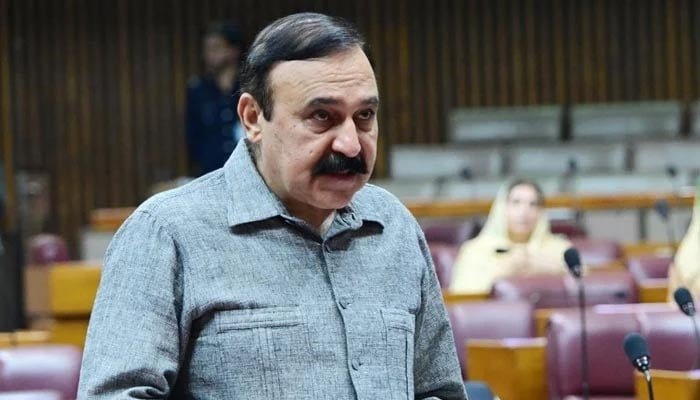
Parliamentary debate on new provinces in Pakistan is set to take place in October, Federal Minister for Parliamentary Affairs Tariq Fazal Chaudhry announced on Thursday. He said the National Assembly and Senate sessions scheduled for October would provide the appropriate forum for lawmakers to discuss the country’s administrative structure and proposals for creating new provinces.
The minister clarified that no sessions of either house are scheduled for September. He emphasized that Parliament House is the proper place to hold a national discussion on the issue and said lawmakers would have an opportunity to debate the matter when parliamentary proceedings resume in October.
Islamabad Will Not Become a Province
Tariq Fazal Chaudhry also clarified the government’s position on Islamabad, saying the federal capital is not being considered for conversion into a separate province.
Instead, he said Islamabad is moving toward a new governance model. According to the minister, there has been no discussion about turning Islamabad into a province.
The clarification comes after reports that a high-level committee had presented Prime Minister Shehbaz Sharif with a draft proposal concerning the governance of Islamabad Capital Territory.
According to the earlier report, the proposal included a 27-member elected assembly for the capital, along with a chief executive and 27 administrative departments. The proposal would represent a significant change in how Islamabad’s local administration operates, although it is separate from the question of creating a new province.
Debate Gains Political Momentum
The discussion over new provinces in Pakistan has gained momentum in recent months as political leaders debate whether the country’s existing administrative structure remains effective.
The issue was brought into sharper focus in July when Interior Minister Mohsin Naqvi criticized the country’s governance system and called for fundamental reforms. He argued that Pakistan needed new administrative units with greater powers transferred to lower levels of government.
Naqvi later clarified that his criticism was directed at the deterioration of the system over several decades rather than any particular government.
On September 5, he again discussed administrative reforms and said the creation of new units should reflect the wishes of the people.
He also clarified that his call for a system “reset” did not mean dismantling the existing structure. Instead, he described it as an effort to correct weaknesses and improve governance.
Ahsan Iqbal Proposes More Provinces
The debate expanded further when Planning and Development Minister Ahsan Iqbal called for a broader national discussion about Pakistan’s administrative structure.
Iqbal proposed that the country could eventually have between 12 and 15 provinces. However, he stressed that such a major change would require political consensus rather than unilateral action.
He also suggested that an administrative reforms committee should examine the issue in detail before any decisions are taken.
According to Iqbal, Pakistan’s four existing provinces have become highly centralized despite the devolution process introduced through the 18th Amendment. He argued that strengthening local governments could provide another way to improve administration without necessarily redrawing provincial boundaries.
He proposed around 160 empowered district governments as one possible approach.
Provinces or Stronger Local Governments?
The debate over new provinces in Pakistan has therefore developed around two broad approaches.
One approach calls for dividing the existing provincial structure and creating additional provinces that could bring government closer to citizens. Supporters argue that smaller administrative units could improve governance, representation and service delivery.
The other approach focuses on empowering districts and local governments while keeping the existing provincial boundaries intact.
Ahsan Iqbal has warned that demands for additional provinces could continue growing if meaningful powers are not transferred to local governments.
This distinction is likely to become an important part of the parliamentary debate in October.
PPP Raises Reservations
The Pakistan Peoples Party has expressed reservations about moving forward with proposals for new administrative units.
The party has said that no concrete plan for restructuring the country’s administrative system has been presented to it. This position highlights the need for political consultation before any major constitutional or administrative changes are considered.
Because the creation of provinces can affect political representation, resources, administrative authority and constitutional arrangements, gaining agreement among major political parties would be essential.
The issue is consequently expected to require extensive discussion rather than a quick decision.
October Debate Could Shape Future Policy
The planned parliamentary discussion could provide an important opportunity for political parties to present their positions on new provinces in Pakistan and broader administrative reforms.
The debate may cover the possible creation of additional provinces, stronger district governments, greater local autonomy and the proposed governance structure for Islamabad.
The government has made clear that Islamabad is not being turned into a province, while the broader question of administrative restructuring remains open for discussion.
With Parliament expected to debate the issue in October, political parties will have an opportunity to explain whether Pakistan’s governance challenges require a new provincial map or whether greater powers should instead be transferred to districts and local governments.
The eventual outcome will depend on political consensus, constitutional considerations and, as several leaders have emphasized, the views and interests of the people.
The October sessions could therefore mark an important stage in Pakistan’s continuing discussion about how government should be organized and delivered across the country.