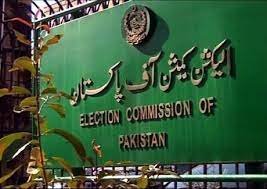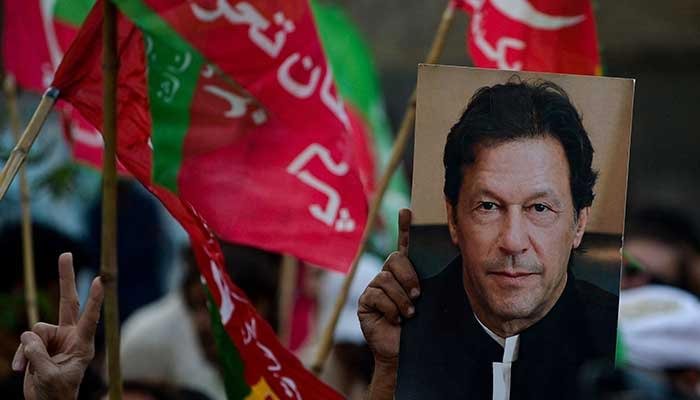
The Islamabad High Court (IHC) has heard a petition seeking to stop the planned PTI long march toward Islamabad on September 27, with Attorney General of Pakistan Mansoor Awan supporting the plea and raising concerns about the capital’s ability to manage the expected protest. The opposition party has announced nationwide demonstrations and a march to Islamabad to demand the release of its founder, Imran Khan.
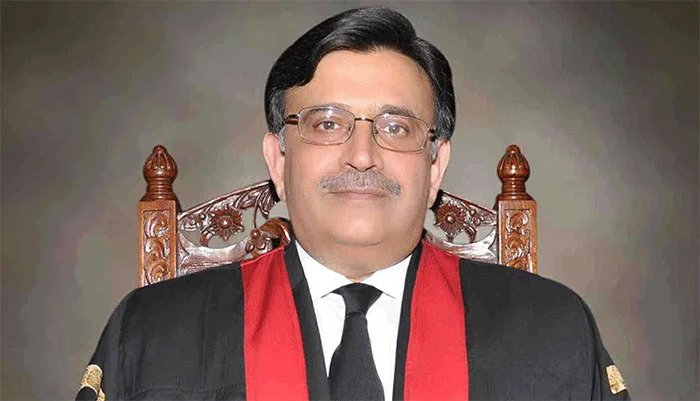
A three-member IHC bench headed by Chief Justice Sarfaraz Dogar, with Justice Azam Khan and Justice Muhammad Asif, conducted the hearing on Thursday. Senior police officials from several provinces also appeared before the court as the judges examined concerns surrounding the planned demonstration.
AGP Raises Security Concerns
During the hearing, AGP Mansoor Awan told the court that intelligence reports suggested PTI was preparing for the upcoming PTI long march more extensively than for previous demonstrations.
Awan acknowledged that citizens have a constitutional right to peaceful protest but argued that fundamental rights cannot be exercised in a way that affects the rights and daily lives of other citizens.
He referred to the Faizabad sit-in as an example of a protest that, according to him, caused significant disruption in Islamabad and Rawalpindi.
The attorney general also emphasized the responsibility of provincial governments, saying state machinery should not be used for political purposes. He maintained that political objectives could be pursued while remaining within constitutional and legal limits.
Court Questions Provincial Authorities
Chief Justice Sarfaraz Dogar questioned whether provincial officials, including the Khyber Pakhtunkhwa chief secretary and inspector general of police, were bound by an IHC order issued in November 2024.
The chief justice also asked whether the previous order had been challenged or had attained finality. Questions were further raised about the responsibility of police authorities to maintain law and order.
The court’s questions reflected the broader issue of how federal and provincial authorities should coordinate when a major political demonstration is planned in the federal capital.
Awan argued that previous court directions had not been fully followed and referred to the Supreme Court’s May 2022 directions. He also pointed to statements by PTI leaders that he described as inflammatory.
The government lawyer maintained that the court had authority to issue directions if any party or government body failed to fulfill its responsibilities.
KP Seeks More Time
The Advocate General of Khyber Pakhtunkhwa asked the court for two days to prepare a response to the petition.
During the hearing, the KP law officer also questioned why the PTI long march was being treated as an attack rather than a political demonstration.
The court rejected the request for additional preparation time and adjourned the hearing until Friday.
The proceedings are expected to continue as the court considers arguments from the federal and provincial governments along with other parties involved in the case.
At this stage, the court has heard the arguments but has not, according to the information provided, issued a final decision on whether the planned march should be stopped.
PTI Announces Nationwide Protests
PTI has announced a nationwide protest campaign leading up to the September 27 demonstration. The party says its demands include the release of Imran Khan and attention to his medical treatment.
The planned PTI long march follows a recent mobilisation campaign led by Khyber Pakhtunkhwa Chief Minister Sohail Afridi. The five-day campaign travelled through Sindh as the party sought to build support for its political demands.
PTI has continued to make the release of its founder a central part of its political campaign.
Imran Khan’s Legal Situation
Imran Khan has remained in prison since August 2023 after facing convictions in multiple cases. He and PTI have described the cases against him as politically motivated.
Since his removal from office in April 2022, the former prime minister has faced numerous legal cases. Some convictions have subsequently been suspended or overturned, while several appeals and legal proceedings have remained pending.
His imprisonment has remained one of PTI’s primary political issues and has been a major factor behind demonstrations organized by the party.
Balancing Protest Rights and Public Order
The IHC proceedings highlight the difficult balance between the constitutional right to peaceful assembly and the state’s responsibility to protect public order.
Political parties have the right to organize demonstrations, but authorities are also responsible for ensuring that protests do not result in violence, disruption or violations of other citizens’ rights.
During the hearing, Chief Justice Dogar warned that fundamental rights could not be used to cross what he described as red lines. The observation suggests that the court will closely examine the boundaries between lawful political activity and actions that could create serious public-order concerns.
The presence of senior police officials from Punjab, Sindh, Khyber Pakhtunkhwa and the Motorway Police further demonstrates the potential nationwide security and coordination implications of the planned demonstration.
Hearing Continues Friday
The court’s decision on the petition could have significant implications for the PTI long march and the party’s wider protest strategy.
For now, the IHC has not issued a final ruling based on the information available. The hearing will resume on Friday, when the court is expected to hear further arguments.
The case comes at a politically sensitive time, with PTI seeking to increase pressure through nationwide protests while government authorities emphasize security, public order and compliance with existing court directions.
The outcome of the proceedings will determine whether the planned September 27 demonstration faces any judicial restrictions or proceeds under conditions set by the authorities.