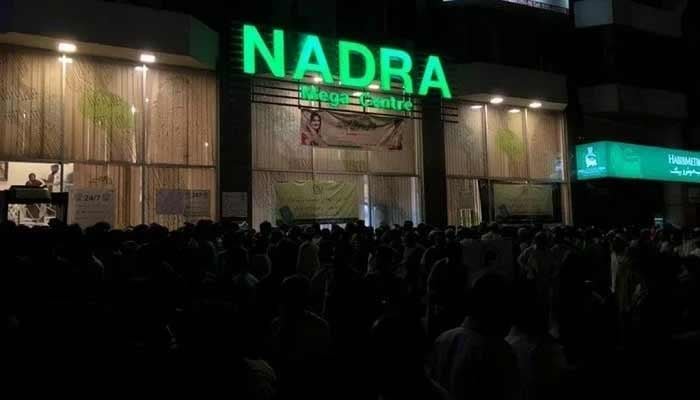
The NADRA FBISE agreement marks an important step toward modernising student registration and academic record management in Pakistan. The National Database and Registration Authority (NADRA) and the Federal Board of Intermediate and Secondary Education (FBISE) have agreed to integrate their systems for students appearing in Matriculation and Intermediate examinations.
The agreement establishes a secure mechanism for exchanging student information and is designed to reduce errors during registration. It also represents a wider effort to connect Pakistan’s national identity infrastructure with educational records.
Secure Student Data Exchange
Under the NADRA FBISE agreement, important student information will be exchanged directly between the two organisations.
NADRA will provide FBISE with verified details from its national registry, including students’ full names, fathers’ names and dates of birth. Direct access to verified information is expected to reduce discrepancies that can occur when student details are manually entered during examination registration.
Errors in names, dates of birth or other identifying information can create difficulties for students when they receive academic certificates or later apply to universities and employers.
By connecting the registration system with verified identity records, the new arrangement could make the process more accurate and efficient.
Improving Examination Registration
Student registration is an important part of the examination process. Every year, large numbers of students register for Matriculation and Intermediate examinations, making accurate record management essential.
The NADRA FBISE agreement aims to simplify this process by allowing verified information to be transferred electronically rather than relying entirely on manual data entry.
This could reduce administrative workloads for educational authorities while also helping students avoid problems caused by incorrect information.
Accurate records are particularly important because examination certificates are used for university admissions, employment applications and other official purposes.
Digital Educational Certificates
Another major element of the partnership is the planned development of a secure Digital Wallet.
The Digital Wallet will allow students to access, store and digitally share their educational certificates. Instead of relying exclusively on physical documents, students could eventually have verified academic credentials available through a digital platform.
This could make it easier to submit certificates when applying for higher education, scholarships, jobs or other opportunities.
A digital system could also reduce the risk of documents being lost or damaged and make the verification process more convenient for institutions.
Connecting Identity and Education Records
The partnership is part of NADRA’s broader initiative to connect the country’s national identity infrastructure with educational records.
Under this programme, NADRA is progressively working toward digital data-sharing arrangements involving secondary and higher secondary education boards, universities and the Higher Education Commission.
The objective is to create more connected and reliable digital records across Pakistan’s education sector.
The NADRA FBISE agreement therefore represents more than a technical upgrade for one examination board. It could become part of a larger digital ecosystem in which identity and academic information can be securely verified across different institutions.
Benefits for Students
Students are expected to be among the main beneficiaries of the new system.
When identity and academic information is accurately linked, students may face fewer problems with discrepancies in official documents. A verified digital record could also make it easier to prove educational qualifications when dealing with universities, employers and government institutions.
The planned Digital Wallet could further improve accessibility by giving students greater control over their certificates.
For students who move between cities or apply to institutions in different parts of the country, digital access to verified credentials could be particularly useful.
Greater Administrative Efficiency
Educational institutions also stand to benefit from improved data management.
Manual registration processes require staff to collect, enter and verify large volumes of information. Integrating systems can reduce repetitive work and potentially allow staff to focus on other administrative responsibilities.
The use of verified information may also help authorities identify discrepancies earlier in the registration process rather than discovering them after examinations or certificate issuance.
This could make the overall examination system more efficient while improving confidence in official academic records.
Importance of Data Security
As educational records become increasingly digital, protecting student information will remain essential.
Names, dates of birth and other identity-related information are sensitive records. Any system connecting national identity databases with educational institutions therefore needs strong security measures, controlled access and appropriate safeguards.
The success of the initiative will depend not only on efficient data exchange but also on ensuring that students’ information remains protected.
A Step Toward Digital Education
The NADRA FBISE agreement reflects Pakistan’s growing focus on digital transformation in public services.
Integrating identity verification with examination registration could reduce paperwork, improve accuracy and make academic credentials easier to verify. The planned Digital Wallet adds another layer by giving students digital access to their educational documents.
If similar systems are successfully introduced across other education boards and universities, Pakistan could gradually move toward a more connected national academic record system.
For students, the long-term goal is a simpler and more reliable process—from examination registration to certificate verification and higher education applications. The NADRA FBISE agreement could be an important foundation for achieving that goal.