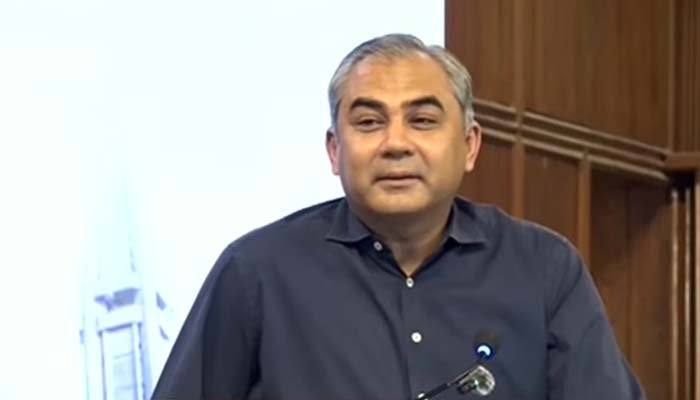
Governance reforms in Pakistan took center stage after Interior Minister Mohsin Naqvi stated that the country’s existing administrative system is no longer capable of effectively addressing national challenges. Speaking at the Pakistan Economic Summit in Islamabad, Naqvi called for structural reforms, greater administrative efficiency, and the creation of new administrative units to improve governance and accelerate development. His remarks have sparked renewed discussion about institutional reform, decentralization, and Pakistan’s long-term political and economic future.
Existing Governance System Needs Reform
Addressing business leaders, policymakers, and experts at the summit, Mohsin Naqvi argued that Pakistan’s current governance framework has reached its limits.
According to the interior minister, many of the country’s recurring challenges cannot be solved under the existing administrative structure. He warned that without meaningful institutional changes, Pakistan could continue facing the same economic and governance problems for years to come.
His comments highlighted the growing debate over governance reforms in Pakistan, particularly as policymakers search for sustainable solutions to improve public administration and economic performance.
Proposal for New Administrative Units
One of the most notable proposals presented by Naqvi was the idea of creating additional administrative units.
He suggested that Pakistan should move toward a system with more manageable administrative divisions, regardless of whether they are officially called provinces or given another designation.
According to Naqvi, smaller administrative units could improve service delivery, strengthen local governance, and make government institutions more responsive to public needs.
Supporters of decentralization have long argued that distributing administrative responsibilities more effectively can improve efficiency while bringing decision-making closer to citizens.
Merit-Based Employment for Youth
Naqvi also emphasized the importance of creating employment opportunities based on merit rather than political influence or favoritism.
He stated that Pakistan’s younger generation is primarily seeking fair access to jobs and equal opportunities.
According to the interior minister, strengthening merit-based recruitment would not only improve public confidence in institutions but also encourage talented young professionals to contribute more effectively to national development.
Employment remains one of the country’s most pressing issues, particularly as Pakistan continues to experience a growing youth population.
Economic Challenges Require Structural Solutions
Another major focus of Naqvi’s address was Pakistan’s economic situation.
He warned that the country’s increasing debt burden cannot be managed through borrowing alone and stressed that long-term reforms are essential for sustainable economic growth.
According to him, addressing structural weaknesses within governance and public administration will play a critical role in improving economic stability.
Many economists have similarly argued that institutional reforms often complement fiscal and economic policies by improving efficiency, transparency, and investor confidence.
Devolution of Powers
Naqvi also advocated for devolving greater authority to lower levels of government.
He argued that empowering local administrations would allow faster decision-making and improve the implementation of development projects.
Greater decentralization could also help provincial and local governments respond more effectively to the unique needs of different regions across Pakistan.
The discussion surrounding governance reforms in Pakistan frequently includes proposals aimed at strengthening local governments and improving coordination between federal, provincial, and district administrations.
Role of the Business Community
During the summit, Naqvi encouraged greater participation by the business community in shaping economic policies.
He said sustainable economic progress requires close cooperation between policymakers and private-sector stakeholders.
Business leaders often provide valuable insights into investment challenges, industrial development, taxation, and regulatory reforms.
By involving the private sector more actively, policymakers may be able to develop practical strategies that support entrepreneurship, investment, and job creation.
Political Consensus Is Essential
Beyond administrative reforms, Naqvi called on political parties to place national interests above political disagreements.
He stressed that meaningful reforms require cooperation among all major political stakeholders rather than confrontation.
According to him, institutional improvements cannot succeed without broad political consensus.
Later, while speaking to journalists, Naqvi reiterated that all major political parties—including the Pakistan Muslim League-Nawaz (PML-N), Pakistan Peoples Party (PPP), and Pakistan Tehreek-e-Insaf (PTI)—should work together to strengthen Pakistan’s governance framework.
Democracy and Institutional Stability
Naqvi reaffirmed his support for democracy while rejecting speculation about replacing the parliamentary system with a presidential model.
He stated that the current government would complete its constitutional term and emphasized that democratic continuity remains important for political stability.
However, he argued that democracy itself should continue evolving through institutional improvements that strengthen governance rather than weaken democratic principles.
His remarks suggest that reforms should focus on administrative efficiency while maintaining constitutional processes.
Long-Term Vision for Pakistan
The interior minister’s speech reflected a broader conversation about Pakistan’s long-term development strategy.
Improving governance, strengthening institutions, creating employment opportunities, promoting merit, and encouraging cooperation among political stakeholders are frequently identified as key components of sustainable national development.
While opinions may differ regarding the specific reforms required, many observers agree that institutional effectiveness plays an important role in economic growth, public service delivery, and investor confidence.
As discussions continue, policymakers will likely examine various approaches aimed at modernizing governance structures while preserving democratic institutions.
The debate over governance reforms in Pakistan has gained renewed attention following Interior Minister Mohsin Naqvi’s remarks at the Pakistan Economic Summit. His proposals including administrative restructuring, decentralization, merit-based employment, stronger political cooperation, and greater business participation—highlight the need for comprehensive institutional reform.
Whether these ideas translate into concrete policy changes remains to be seen. However, the discussion underscores the growing recognition that long-term progress depends not only on economic policies but also on effective governance, transparent institutions, and collaborative leadership capable of addressing Pakistan’s evolving challenges.