Pakistan Terrorism Concerns took center stage after the country’s Foreign Office called on Amnesty International and the wider international community to focus greater attention on what Islamabad describes as the Afghan Taliban’s continued support for terrorist organizations. The statement came in response to a recent Amnesty International report that called for an investigation into alleged Pakistani airstrikes in Afghanistan. Pakistan firmly rejected the report, insisting that its actions were aimed solely at terrorist threats and carried out in accordance with international law.
Pakistan Rejects Amnesty International Report
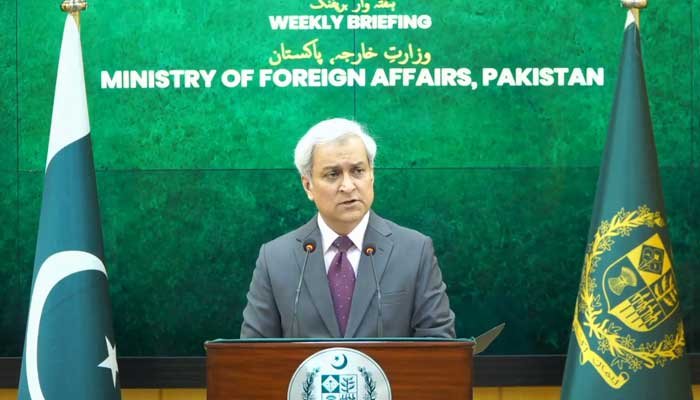
Speaking during a weekly media briefing in Islamabad, Foreign Office spokesperson Tahir Andrabi dismissed Amnesty International’s allegations, saying the report lacked credible evidence. He argued that serious claims should be supported by verified facts rather than assumptions.
The Pakistan Terrorism Concerns response emphasized that Pakistan remains committed to protecting its citizens from cross-border attacks and has repeatedly raised security issues with the international community.
According to Andrabi, Pakistan’s security operations are conducted only when necessary and target terrorist groups rather than civilian populations.
Allegations Against Terrorist Groups
Pakistan has repeatedly stated that several banned militant organizations continue to operate from Afghan territory.
The Foreign Office identified groups including the banned Tehreek-e-Taliban Pakistan (TTP), the proscribed Balochistan Liberation Army (BLA), and other affiliated organizations as major security threats.
Officials argue that these groups have carried out attacks against Pakistani civilians and security personnel, making counterterrorism operations a national security priority.
The Pakistan Terrorism Concerns highlighted that no responsible government can ignore repeated attacks originating from across its borders.
Right to Self-Defense
The Pakistani government defended its security operations by referring to the internationally recognized right of self-defense.
According to the Foreign Office, any military action taken by Pakistan has been based on the principles of necessity and proportionality. Officials stated that such operations are considered a measure of last resort and are directed exclusively at terrorist hideouts and logistical support networks.
Pakistan maintains that its objective is to eliminate threats posed by armed militant groups rather than escalate tensions with neighboring Afghanistan.
The government also emphasized that regional peace remains an important foreign policy objective.
Rising Security Challenges
Pakistan has experienced an increase in terrorist incidents over the past several years.
Government officials have consistently expressed concern over cross-border militancy, arguing that extremist organizations continue to exploit regional instability.
The Pakistan Terrorism Concerns reflect broader security challenges facing the country, particularly in border regions where militant activity has remained a persistent issue.
Authorities have repeatedly called for stronger regional cooperation to combat terrorism through intelligence sharing, border security, and coordinated law enforcement efforts.
Concerns Over Red Sea Security
During the same briefing, the Foreign Office also addressed developments in the Middle East.
Pakistan strongly condemned threats against commercial shipping in the Red Sea, warning that any attack targeting Pakistani-flagged vessels or maritime interests would be treated as a serious threat to national security.
Officials stressed that freedom of navigation is essential for global trade and regional stability.
The government reiterated that it remains committed to protecting its commercial interests while supporting peaceful solutions to regional disputes.
Support for Diplomacy
Despite growing regional tensions, Pakistan continues to advocate diplomatic engagement.
The Foreign Office called on all parties involved in Middle Eastern conflicts to exercise restraint and resolve disputes through dialogue rather than military confrontation.
Officials stated that Pakistan remains actively engaged in diplomatic outreach aimed at reducing tensions and encouraging peaceful negotiations.
The government’s approach reflects its broader commitment to regional stability and conflict prevention.
Commitment to Saudi Arabia
Pakistan also reaffirmed its commitment to implementing bilateral agreements with Saudi Arabia, including cooperation on mutual defense and security matters.
The longstanding relationship between the two countries continues to play an important role in Pakistan’s regional foreign policy.
Officials noted that cooperation extends beyond security to include economic, political, and strategic partnerships.
Positive Assessment on GSP Plus
Alongside security issues, the Foreign Office welcomed the European Union’s latest assessment under the GSP Plus framework.
Officials said the report recognized Pakistan’s legislative progress and continued compliance with the international conventions linked to the trade program.
The GSP Plus arrangement remains important for Pakistan’s economy because it supports exports, employment opportunities, women’s participation in the workforce, poverty reduction, and broader economic development.
Pakistan reiterated its commitment to implementing international conventions while strengthening its economic partnership with the European Union.
Pakistan’s latest diplomatic statements highlight the country’s efforts to balance national security priorities with international engagement.
While continuing counterterrorism operations against groups it considers major security threats, Islamabad also emphasizes diplomacy, regional cooperation, and adherence to international law.
The government believes stronger global coordination is necessary to address terrorism while ensuring regional peace and stability.
At the same time, Pakistan continues working to strengthen economic partnerships and maintain constructive relations with international organizations and trading partners.
The recent Pakistan Terrorism Concerns expressed by the Foreign Office underline Islamabad’s position on regional security and cross-border militancy. By rejecting allegations made in the Amnesty International report and calling for greater international attention to terrorist organizations operating in Afghanistan, Pakistan has reaffirmed its commitment to defending its national security while advocating diplomacy and international cooperation.
As regional challenges continue to evolve, Pakistan’s approach combines security measures, diplomatic engagement, and economic cooperation in an effort to promote long-term peace, stability, and sustainable development both within the country and across the wider region.