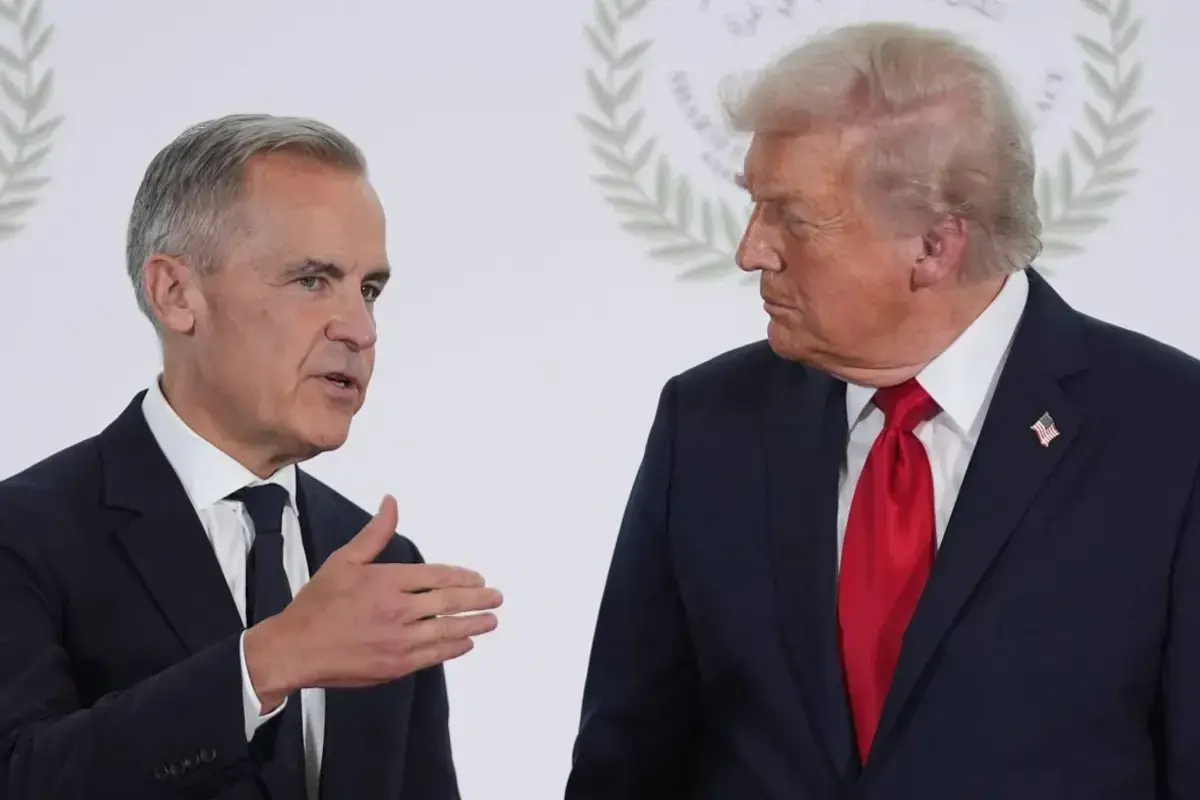
Trump Canada Trade Talks have once again taken center stage after Canadian Prime Minister held a telephone conversation with US President Donald Trump to discuss ongoing trade disputes and strengthen diplomatic engagement. The leaders agreed to accelerate negotiations in the coming days, signaling a willingness to resolve key economic differences despite rising tensions caused by proposed tariffs on Canadian products.
The latest discussion comes at a critical time for both countries. The United States and Canada share one of the world’s largest trading relationships, with billions of dollars in goods and services crossing the border every year. Any disruption to this partnership can have significant consequences for businesses, consumers, and investors on both sides.
A major issue driving the current Trump Canada Trade Talks is the announcement of a proposed 50 percent tariff on certain Canadian products. The proposed measure has raised concerns among manufacturers, exporters, and policymakers who fear it could increase costs, disrupt supply chains, and slow economic growth.
Although tariffs are often used as a negotiating tool during trade disputes, they can also create uncertainty for industries that rely on cross-border commerce. Canadian businesses are closely monitoring developments, while American companies that import Canadian goods are also evaluating the potential impact.
The recent phone conversation suggests that both governments recognize the importance of maintaining open communication. Rather than allowing tensions to escalate further, the leaders agreed to continue negotiations in an effort to find common ground.
Trade between the United States and Canada covers a wide range of sectors, including energy, agriculture, automotive manufacturing, technology, and natural resources. Because the economies are deeply interconnected, changes in trade policy can quickly affect employment, investment, and consumer prices.
Beyond trade, the conversation also touched on several international issues. President Trump discussed regional developments involving Lebanon, emphasizing that the United States continues to maintain positive relations with the country.
According to Trump, Washington intends to provide significant assistance to Lebanon, which he described as a nation that has experienced decades of political and economic instability. Although no specific details regarding future aid were announced, the statement reflects ongoing American interest in supporting regional stability.
The discussion also included developments related to Iran. Trump stated that Tehran remains interested in negotiations, while claiming that Washington is not currently prepared to resume talks. His remarks indicate that tensions between the two countries continue to influence broader regional diplomacy.
Another important issue raised during the conversation involved maritime security in the Middle East. Trump warned that any attempt to disrupt shipping through Bab al-Mandab or interfere with navigation in the Red Sea would prompt a response from the United States.
These waterways play a crucial role in global trade, carrying significant volumes of energy supplies and commercial goods between Asia, Europe, and other international markets. Ensuring safe navigation through these strategic routes remains a priority for many governments.
In addition to discussing Canada and the Middle East, Trump also highlighted a recent conversation with the newly appointed British prime minister. According to the US president, the two leaders reviewed several important areas of cooperation, including trade, defense partnerships, and bilateral relations.
The talks reportedly included discussions on North Sea oil production and broader economic cooperation between the United States and the United Kingdom. Strengthening commercial ties remains an important objective for both governments as they seek to expand investment and economic growth.
Security cooperation also formed part of the discussions with Britain. Trump noted that both countries continue working together on maintaining stability in strategic maritime regions, including efforts related to the Strait of Hormuz.
The Strait of Hormuz remains one of the world’s most important shipping corridors, particularly for global oil exports. Any disruption in the region can have immediate effects on international energy prices and global markets.
While these international issues are significant, the primary focus of the Trump Canada Trade Talks remains resolving the tariff dispute and preserving one of North America’s strongest economic partnerships.
Economic analysts believe continued negotiations are preferable to prolonged trade conflicts. Stable trade relations encourage investment, protect jobs, and provide greater certainty for businesses planning long-term operations.
Both governments face pressure from domestic industries that depend heavily on uninterrupted cross-border commerce. Automotive manufacturers, agricultural exporters, energy companies, and logistics providers all benefit from predictable trade policies and efficient border operations.
Consumers may also be affected if tariffs increase the cost of imported goods. Higher production expenses can eventually translate into increased prices for everyday products, making successful negotiations beneficial for households as well as businesses.
Diplomatic dialogue remains an essential tool for managing disagreements between close allies. Even when differences arise over trade policies or economic priorities, regular communication helps reduce misunderstandings and creates opportunities for mutually beneficial solutions.
The willingness of both leaders to continue discussions suggests that neither side wishes to allow current disagreements to permanently damage the broader relationship. Canada and the United States have decades of cooperation across trade, defense, security, and regional development.
As negotiations continue, businesses and financial markets will closely monitor announcements from both governments for signs of progress. Any agreement that reduces uncertainty could strengthen investor confidence and support continued economic growth.
Trump Canada Trade Talks represent an important effort to ease growing trade tensions while preserving one of the world’s most valuable bilateral economic relationships. Although proposed tariffs have created uncertainty, the commitment to continued negotiations offers hope that both countries can find practical solutions through diplomacy. At the same time, discussions on international security, regional stability, and global trade routes demonstrate that cooperation between major allies extends well beyond economic issues alone.