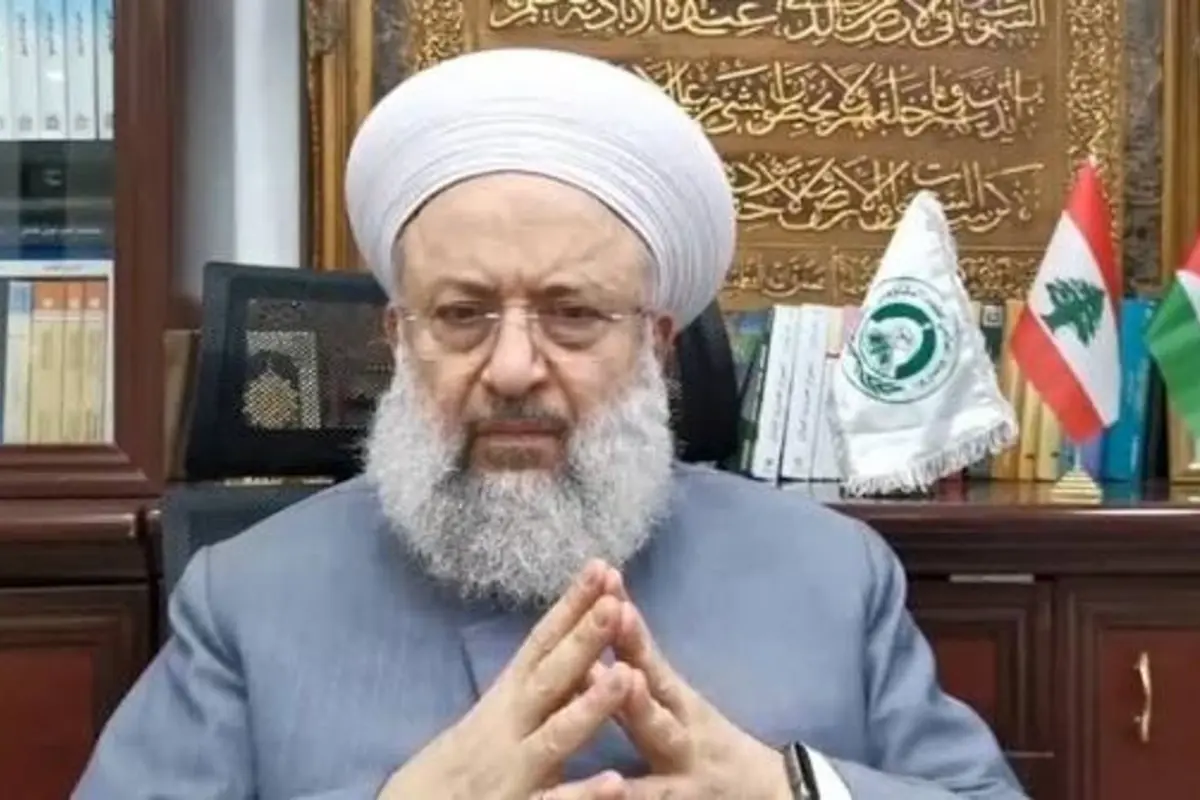
Ayatollah Khamenei Legacy continues to be a subject of discussion following remarks made by Sheikh Maher Hammoud, Head of the World Union of Resistance Scholars. Speaking about the late Iranian leader, Hammoud praised Ayatollah Seyed Ali Khamenei for what he described as his long-standing support for the Palestinian cause and regional resistance movements. His comments highlighted the influence Khamenei had on political, religious, and ideological debates across the Middle East.
The statements come as discussions continue about Khamenei’s impact on regional affairs and the direction of Iran’s foreign and ideological policies after his death.
Sheikh Maher Hammoud Praises Khamenei’s Role
According to Sheikh Maher Hammoud, the Ayatollah Khamenei Legacy is closely connected to his commitment to Palestine and his support for movements that Iran considers part of the Axis of Resistance.
Hammoud stated that the Palestinian issue remained one of Khamenei’s highest priorities throughout his leadership. He argued that Khamenei consistently emphasized the importance of supporting Palestinians politically, diplomatically, and ideologically during periods of regional conflict.
In his remarks, Hammoud described Khamenei as a leader who placed Palestine at the center of broader political and religious discussions.
Focus on the Palestinian Cause
One of the key themes highlighted by Hammoud was Khamenei’s unwavering attention to the Palestinian issue.
He said the late Iranian leader believed that the Palestinian cause represented more than a territorial dispute. According to Hammoud, Khamenei viewed it as a matter of justice, identity, and regional stability.
Throughout his leadership, Iran frequently voiced support for Palestinian groups and called for international attention to developments in the occupied territories.
Supporters argue that this position became one of the defining characteristics of the Ayatollah Khamenei Legacy.
Support for the Axis of Resistance
Hammoud also referred to Khamenei’s support for what Iran describes as the Axis of Resistance.
The term generally refers to a network of regional groups and organizations that share opposition to Israeli and Western influence in the Middle East.
According to Hammoud, Khamenei’s backing helped strengthen these movements during periods of political uncertainty and military conflict.
He claimed that this support contributed to what he described as greater resilience among regional resistance groups.
These comments reflect the views of the World Union of Resistance Scholars and do not necessarily represent the perspectives of all governments or international observers.
Ideological Foundations of His Leadership
Sheikh Hammoud stated that Khamenei’s policies toward Israel and regional affairs were based on the ideological principles established by the Islamic Republic of Iran.
According to him, the late leader consistently promoted policies that aligned with Iran’s revolutionary values while encouraging unity among Muslim communities.
Hammoud argued that Khamenei’s influence extended beyond politics into religious and cultural discussions, making him an important figure for many supporters across the region.
This ideological approach remains a significant part of the Ayatollah Khamenei Legacy according to those who share his political outlook.
Influence Beyond Iran
Although Ayatollah Khamenei served as Iran’s Supreme Leader, his influence reached beyond the country’s borders.
His speeches, religious guidance, and political statements were followed by supporters in several Middle Eastern countries.
Observers have noted that Iran’s regional policies during his leadership affected diplomatic relations, security dynamics, and strategic alliances throughout the region.
Supporters often describe his influence as extending into political thought, religious scholarship, and discussions about regional independence.
Critics, however, have viewed many of these policies differently, reflecting the complex and often divisive nature of Middle Eastern geopolitics.
Education and Intellectual Development
Hammoud also linked Khamenei’s legacy to education and intellectual growth.
He suggested that the late leader encouraged knowledge, cultural development, and ideological awareness as essential components of national progress.
According to his remarks, building educated societies was closely connected to strengthening independence and preserving cultural identity.
Supporters believe that encouraging academic development and intellectual engagement formed an important element of the broader Ayatollah Khamenei Legacy.
Regional Reactions Continue
Following Khamenei’s death, leaders, scholars, and organizations from different countries have continued to issue statements reflecting on his political and religious influence.
While supporters praise his leadership and commitment to causes they consider important, others maintain differing views regarding his policies and regional impact.
These varying perspectives demonstrate the significant role Khamenei played in shaping political discussions across the Middle East for several decades.
His leadership continues to be analyzed by scholars, policymakers, and regional observers who seek to understand its long-term implications.
A Legacy Open to Interpretation
The remarks made by Sheikh Maher Hammoud represent one perspective on Khamenei’s influence and contributions.
Supporters emphasize his commitment to Palestine, his support for resistance movements, and his focus on ideological development.
Others evaluate his legacy through broader geopolitical considerations, highlighting the complexity of regional conflicts and international relations.
As a result, discussions surrounding Khamenei’s leadership remain diverse and often reflect differing political viewpoints.
The Ayatollah Khamenei Legacy continues to generate discussion across political, religious, and academic circles following the comments of Sheikh Maher Hammoud. By praising Khamenei’s support for the Palestinian cause, regional resistance movements, and intellectual development, Hammoud highlighted the qualities that many of his supporters consider central to his leadership.
At the same time, Khamenei’s regional influence remains a subject of ongoing debate, with different observers offering contrasting interpretations of his policies and their long-term impact. Regardless of perspective, his leadership has left a lasting mark on Iran and the wider Middle East, ensuring that discussions about his legacy will continue for years to come.