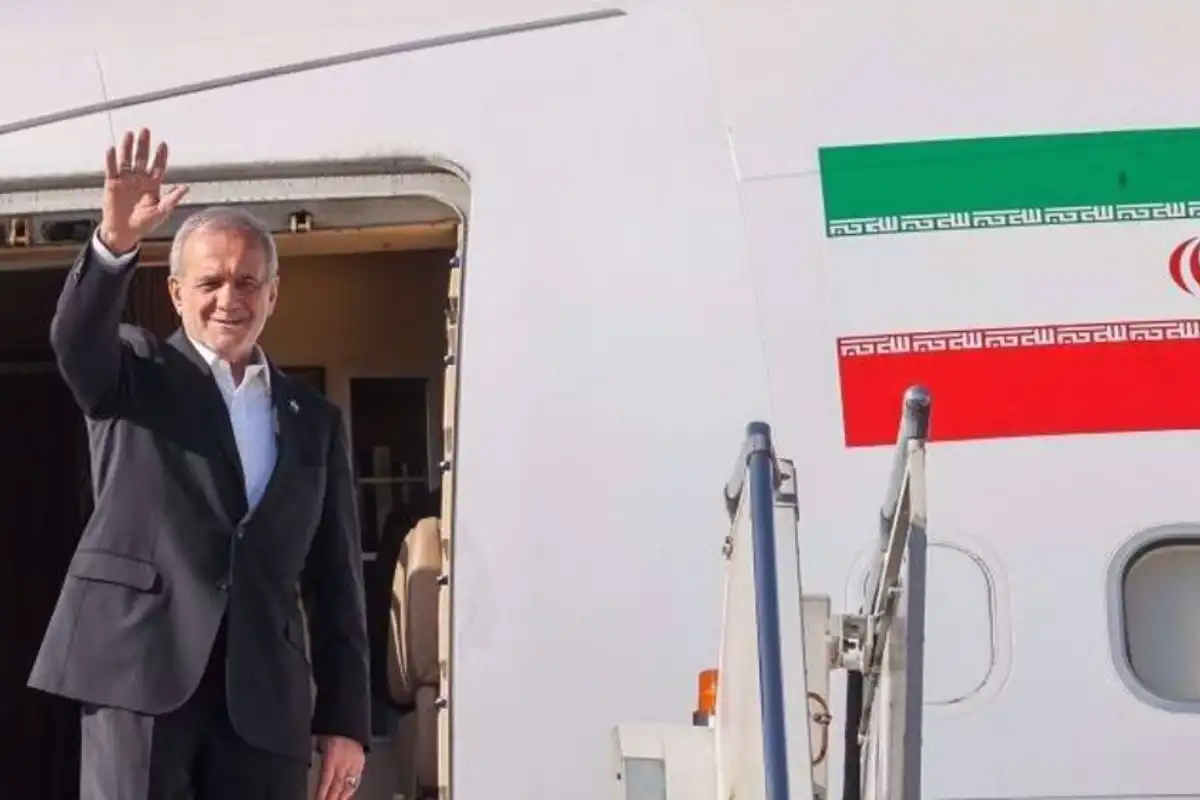
The Iran-US MoU has once again become a major topic in regional diplomacy as Iranian President Masoud Pezeshkian arrived in Islamabad for a one-day official visit. His visit highlights the growing importance of the agreement signed between Tehran and Washington and underscores Pakistan’s role in helping facilitate the diplomatic breakthrough.
Speaking before leaving Tehran, President Pezeshkian emphasized that the successful implementation of the Iran-US MoU is now his government’s top priority. He stressed that every clause of the agreement must be fully enforced to ensure long-term peace, stability, and cooperation across the region.
Pakistan’s Role in the Historic Agreement
President Pezeshkian publicly acknowledged Pakistan’s contribution to the negotiations that led to the agreement. He praised Prime Minister Shehbaz Sharif, Field Marshal Asim Munir, Interior Minister Mohsin Naqvi, and other Pakistani officials for their diplomatic efforts.
According to the Iranian president, Pakistan played a critical role in bringing both sides closer to an understanding during a period of heightened tensions. He described the efforts of Pakistani leaders as essential in creating conditions that allowed dialogue to replace confrontation.
The recognition highlights Pakistan’s growing diplomatic influence in regional affairs and demonstrates its ability to serve as a bridge between countries facing difficult political disputes.
Why the Iran-US MoU Matters
The Iran-US MoU is widely regarded as one of the most significant diplomatic developments in the Middle East in recent years. The agreement was designed to reduce tensions between Iran and the United States following months of conflict and uncertainty.
Key objectives of the memorandum include:
- Preventing further military escalation.
- Promoting diplomatic dialogue.
- Supporting regional stability.
- Facilitating economic cooperation.
- Creating a framework for future negotiations.
The agreement also includes provisions related to sanctions discussions and the reopening of important trade and energy routes that affect global markets.
For many observers, the success of the memorandum could help reduce geopolitical risks and improve economic conditions across the region.
Focus on Full Implementation
During his remarks, President Pezeshkian made it clear that signing the agreement was only the first step. He repeatedly emphasized that the Iran-US MoU must now be fully implemented to achieve its intended goals.
According to Iranian officials, successful implementation could address several long-standing regional challenges and contribute to a more stable security environment.
The Iranian president stated that the agreement has the potential to reduce conflict and strengthen cooperation among neighboring countries. He expressed hope that all parties involved would remain committed to their obligations and avoid actions that could undermine progress.
Regional Impact of the Agreement
The implications of the memorandum extend far beyond Iran and the United States. Many countries in the Middle East and South Asia are closely monitoring developments because regional stability directly affects trade, investment, and energy security.
One area of particular importance is maritime transportation. International markets have closely followed discussions surrounding the Strait of Hormuz, one of the world’s most important shipping routes for oil and gas exports.
Any improvement in relations between Tehran and Washington could help reduce uncertainty in energy markets and support more predictable trade flows.
Analysts believe successful implementation of the agreement may also encourage broader diplomatic engagement among regional powers.
Expanding Pakistan-Iran Relations
Beyond discussions related to the agreement, President Pezeshkian’s visit also focused on strengthening bilateral relations between Pakistan and Iran.
Officials from both countries are expected to discuss:
- Trade and investment opportunities.
- Border security cooperation.
- Energy partnerships.
- Cultural exchanges.
- Regional connectivity projects.
Pakistan and Iran share deep historical, cultural, and economic ties. Both governments have repeatedly expressed interest in expanding cooperation across multiple sectors.
The visit provides an opportunity to advance these goals while also addressing broader regional challenges through dialogue.
Challenges Ahead
Despite the optimism surrounding the memorandum, challenges remain. Recent diplomatic meetings have revealed differences over certain issues, and both sides continue to express concerns about implementation.
Iran has emphasized the need for tangible progress, particularly regarding sanctions and security commitments. At the same time, American officials have highlighted the importance of compliance and transparency.
These differences demonstrate that while the Iran-US MoU represents a significant achievement, maintaining momentum will require continued diplomatic engagement and mutual trust.
Regional observers note that the coming months will be critical in determining whether the agreement can deliver meaningful results.
President Masoud Pezeshkian’s visit to Islamabad reflects the growing importance of diplomacy in addressing complex regional issues. His emphasis on implementing the Iran-US MoU signals Tehran’s commitment to ensuring that the agreement moves beyond symbolic commitments and produces practical outcomes.
Pakistan’s involvement in facilitating dialogue has enhanced its diplomatic standing and positioned it as an important player in regional peace efforts. As discussions continue, the success of the agreement will depend on sustained cooperation, constructive engagement, and a shared commitment to stability.
If fully implemented, the memorandum could become a turning point for regional relations, helping reduce tensions, strengthen economic cooperation, and create new opportunities for peace and development across the broader Middle East and South Asia.