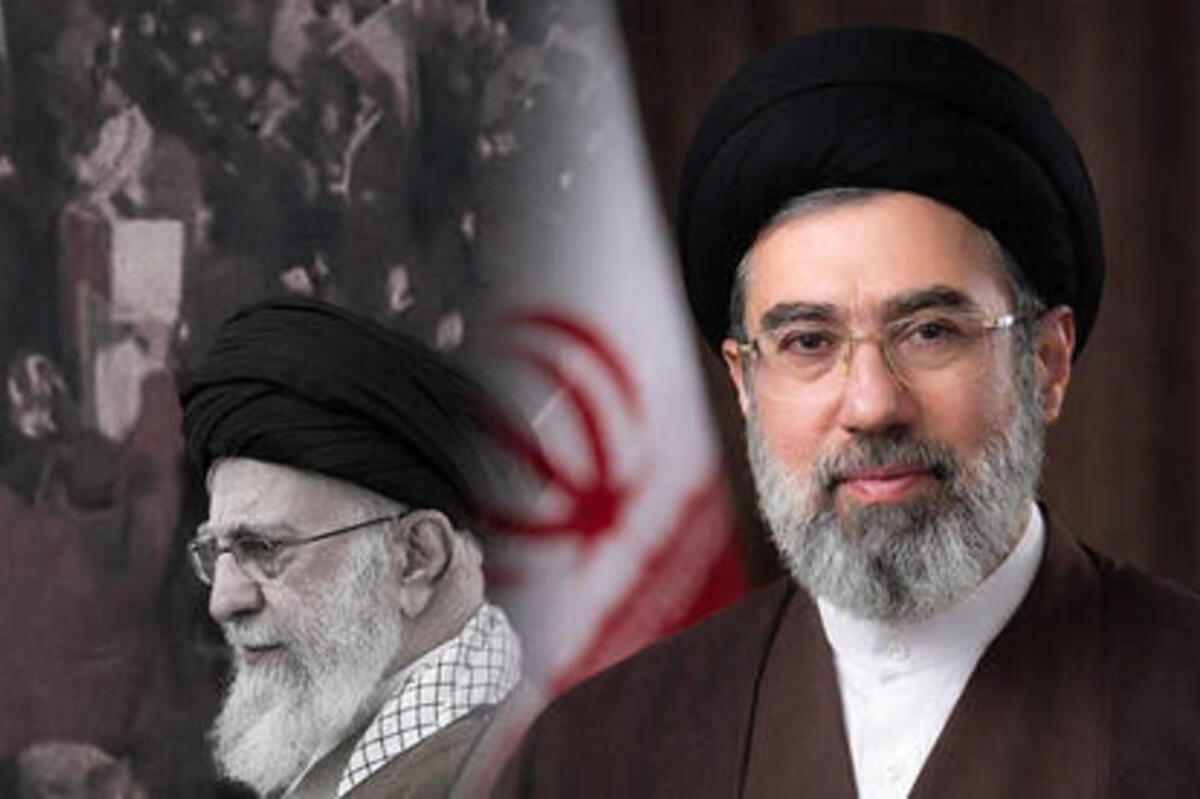
Iran strategy on US-Israel conflict is once again under global attention after Iranian Parliament Speaker Mohammad Baqer Qalibaf announced that Tehran plans to continue both military and diplomatic efforts simultaneously. The statement reflects Iran’s evolving approach during one of the region’s most sensitive geopolitical crises.
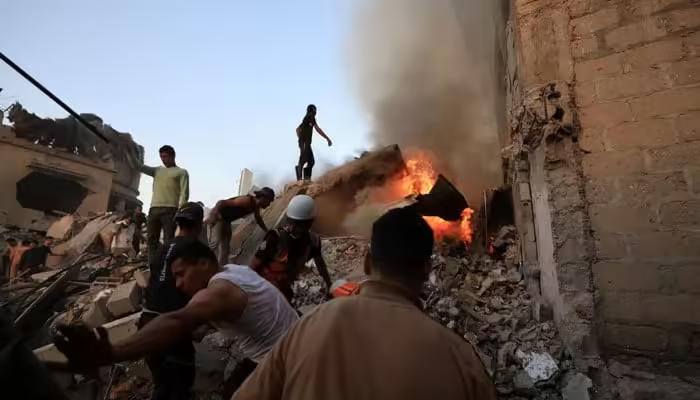
In an audio message addressed to the Iranian people, Qalibaf said Iran is fully prepared to resume military operations if the United States or Israel violate the ceasefire agreement reached earlier this year. His comments came shortly after Iran launched missile attacks against Israeli targets, claiming the strikes were a response to repeated ceasefire violations.
The Iran strategy on US-Israel conflict appears to focus on maintaining military readiness while also keeping diplomatic channels open. Iranian officials believe that relying only on force or only on negotiations would not be enough to protect the country’s interests in the current environment.
Ceasefire Tensions Continue
The fragile ceasefire announced in April was intended to reduce hostilities across the region, including in Lebanon. However, both sides have repeatedly accused each other of violating the agreement.
Iran claims that Israeli military actions and American support for regional operations have undermined the ceasefire process. In response, Tehran says it has the right to defend itself and respond when necessary.
The Iran strategy on US-Israel conflict therefore combines deterrence with diplomacy. Iranian leaders want to show that the country is willing to negotiate but will also respond strongly if attacked.
Diplomacy Still Remains Active
Despite military tensions, diplomatic discussions between Iran and the United States have not completely stopped. International mediators continue to push for a broader agreement that could permanently end the conflict and prevent another major regional war.
Iranian officials insist that negotiations should not be seen as weakness. According to Tehran, diplomacy is another tool to secure national interests and reduce long-term instability.
The Iran strategy on US-Israel conflict reflects this thinking by maintaining active communication with international mediators while keeping military forces on alert.
Political analysts say this dual-track policy is designed to strengthen Iran’s bargaining position. By demonstrating military capability, Iran may hope to gain leverage during negotiations with Western countries.
Regional Impact of the Conflict
The continuing tensions have affected several countries in the Middle East. Lebanon remains one of the most sensitive areas because clashes involving Hezbollah and Israeli forces have increased fears of wider escalation.
Oil markets and international shipping routes have also been impacted by uncertainty in the region, especially near the Strait of Hormuz. Investors and governments are closely monitoring developments because any major military escalation could affect global energy supplies.
The Iran strategy on US-Israel conflict also sends a message to regional allies and rivals. Iran wants to assure its allies that it remains committed to resistance while also signaling to international powers that it is open to political solutions.
Military Readiness and Public Messaging
Qalibaf’s statement was also important from a domestic political perspective. Iranian leaders are trying to maintain national unity and public confidence during a period of economic and political pressure.
By emphasizing both war preparedness and diplomacy, Iranian officials are presenting a balanced image to the public. The message suggests that Iran is neither backing down nor seeking endless conflict.
The Iran strategy on US-Israel conflict is therefore not only about military operations but also about shaping public perception and maintaining political stability inside the country.
International Reactions
Global reactions to Iran’s position have been mixed. Some countries have urged restraint and called for immediate diplomatic progress, while others remain concerned about the possibility of renewed military confrontation.
Western governments continue to watch Iran’s missile activities closely, while regional powers are encouraging both sides to avoid further escalation.
Analysts believe that the coming weeks will be critical. If ceasefire violations continue, the risk of a larger conflict could increase significantly.
The Iran strategy on US-Israel conflict demonstrates Tehran’s attempt to balance force with negotiation during a highly unstable period in the Middle East. By pursuing diplomacy while remaining militarily prepared, Iran aims to defend its interests without completely closing the door to political solutions.
Whether this approach leads to long-term peace or deeper confrontation will largely depend on how both regional and international actors respond in the months ahead.