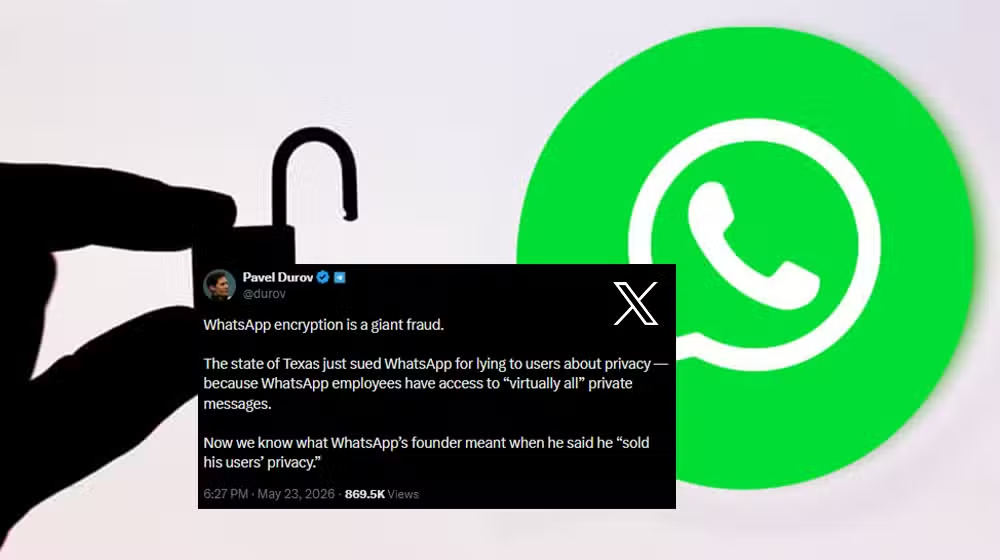
The WhatsApp encryption debate has once again gained global attention after Telegram founder Pavel Durov strongly criticized WhatsApp’s privacy system. In a post shared on X, Durov called WhatsApp’s encryption a giant fraud and accused the Meta-owned platform of misleading users about the true security of their private conversations.
His comments quickly sparked discussion across the technology world, with privacy advocates, cybersecurity experts, and social media users debating whether messaging apps are truly as secure as they claim to be. The controversy has also reignited long-standing concerns about data privacy, surveillance, and user trust in major tech companies.
As messaging apps continue to play a central role in daily communication, the WhatsApp encryption debate highlights how important digital privacy has become for billions of users worldwide.
What Pavel Durov Said About WhatsApp
Pavel Durov alleged that WhatsApp employees could access “virtually all” private messages despite the company promoting end-to-end encryption as one of its strongest security features.
He referenced legal scrutiny and past criticism directed at Meta regarding user privacy practices. Durov also mentioned a lawsuit filed in Texas that reportedly questioned whether WhatsApp accurately represented the level of privacy offered to users.
The Telegram founder further claimed that his own platform has never handed over private user messages to third parties. At the same time, he acknowledged facing legal investigations in France linked to broader issues involving Telegram.
The WhatsApp encryption debate intensified after these comments spread rapidly online, with many users questioning whether their private chats are truly secure.
How WhatsApp Encryption Works
WhatsApp has consistently maintained that its end-to-end encryption system protects user conversations from outside access. According to the company, messages are encrypted in a way that only the sender and recipient can read them.
This means even WhatsApp itself should not be able to view the contents of encrypted chats. The feature has been widely promoted as a major privacy advantage for the platform.
However, critics involved in the WhatsApp encryption debate argue that while messages may be encrypted, metadata and other forms of user information can still be collected. Metadata includes details such as contact lists, timestamps, device information, and usage patterns.
Cybersecurity experts often point out that strong encryption alone does not automatically guarantee complete privacy if other user data remains accessible.
Telegram vs WhatsApp Privacy Approaches
The rivalry between Telegram and WhatsApp has frequently centered around privacy and security. Telegram markets itself as a platform focused on freedom, encryption, and user control, while WhatsApp emphasizes simplicity and mainstream accessibility.
One key difference is that Telegram’s default chats are cloud-based and not always fully end-to-end encrypted unless users activate “Secret Chats.” WhatsApp, on the other hand, applies end-to-end encryption to personal chats by default.
The latest WhatsApp encryption debate has therefore become part of a larger competition between technology platforms trying to position themselves as the most secure communication service.
Supporters of Telegram argue that the company is more transparent about privacy. Meanwhile, WhatsApp supporters believe the platform still offers one of the strongest mainstream encryption systems available.
Growing Public Concerns About Privacy
Digital privacy has become a major concern globally, especially as governments, companies, and cybercriminals increasingly target online data. Users now expect messaging platforms to provide not only convenience but also strong protection for personal information.
The WhatsApp encryption debate reflects broader anxiety about how tech companies handle user data behind the scenes. Many people worry that privacy policies are difficult to understand and that users may not fully know what information is being collected.
Recent years have also seen growing public awareness about surveillance technologies, targeted advertising, and data-sharing practices among large technology firms.
As a result, debates involving apps like WhatsApp, Telegram, Signal, and others continue to shape how people choose communication platforms.
Experts Weigh In on Encryption Claims
Cybersecurity professionals often caution against making absolute claims regarding privacy. While end-to-end encryption is considered highly secure, experts say no digital system is completely immune from vulnerabilities.
The WhatsApp encryption debate also highlights the difference between message encryption and overall platform security. Even if message content is protected, user accounts can still be compromised through phishing attacks, malware, hacked backups, or device access.
Some experts believe users should focus not only on encryption technology but also on company transparency, security practices, and data collection policies.
Others argue that competition between messaging platforms may ultimately benefit users by encouraging stronger privacy protections across the industry.
Meta’s Position on Privacy
Meta, the parent company of WhatsApp, has repeatedly defended its encryption systems. The company insists that private conversations remain inaccessible to third parties due to end-to-end encryption technology.
WhatsApp officials have also rejected accusations suggesting that the company can freely read users’ personal messages. The platform continues to promote privacy-focused updates and security tools for its billions of users worldwide.
Still, the WhatsApp encryption debate is unlikely to disappear anytime soon, especially as privacy concerns continue to influence public opinion about major technology companies.
The Future of Secure Messaging
The competition between secure messaging apps is expected to grow in the coming years. Governments worldwide are also debating how encrypted platforms should operate while balancing privacy rights and security concerns.
Some lawmakers argue that strong encryption can make it harder for authorities to investigate crimes, while privacy advocates insist encryption is essential for protecting civil liberties and personal freedom.
The ongoing WhatsApp encryption debate shows how deeply connected technology, privacy, and public trust have become in the digital age.
Pavel Durov’s criticism of WhatsApp has reignited important conversations about online privacy, encryption, and user security. The WhatsApp encryption debate is not just about one messaging app but about how billions of people protect their digital communications in an increasingly connected world.
As users become more aware of privacy risks, messaging platforms will likely face growing pressure to improve transparency, strengthen security features, and clearly explain how user data is handled.