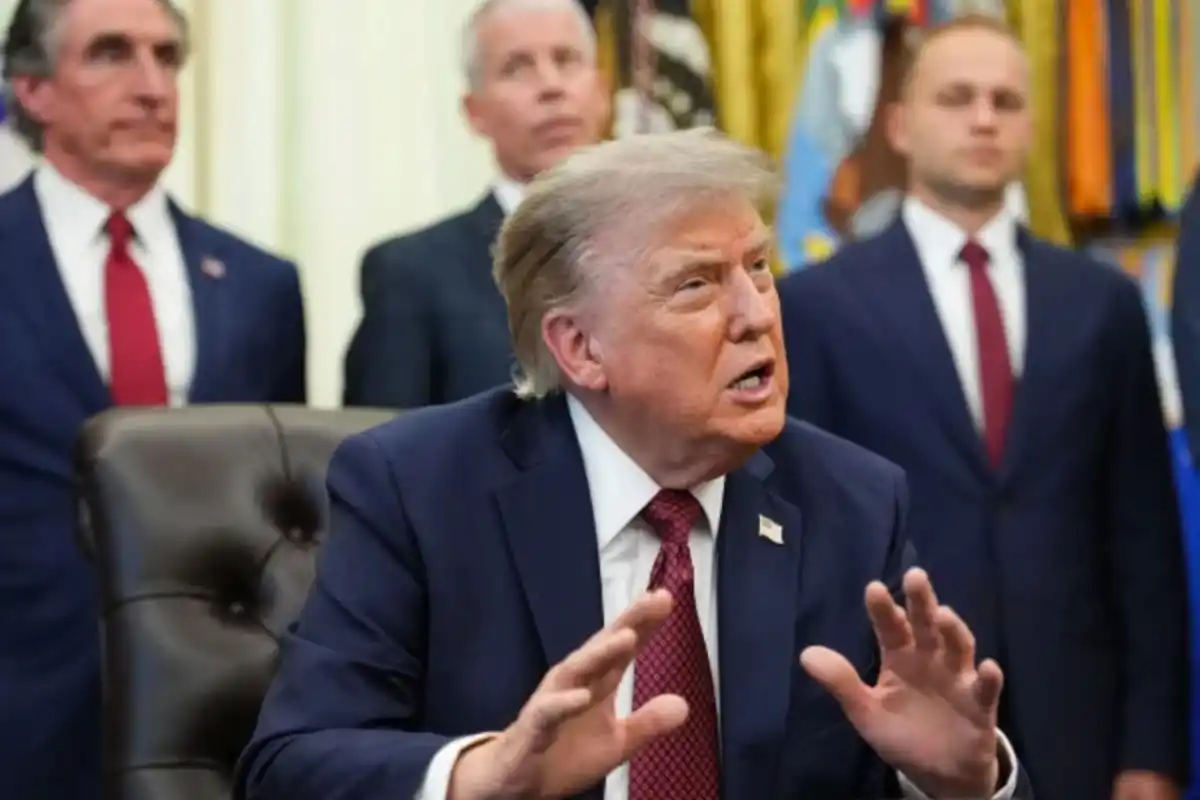
US President Donald Trump has announced new US drone tariffs targeting imported drones and drone components, including products from several major American allies. The administration says the measures are designed to reduce dependence on foreign-made unmanned aircraft systems and strengthen national security.
New Tariffs Target Imported Drones
Under a proclamation signed by Trump, certain imported drones considered particularly sensitive because of their size or capabilities will face a 100% ad valorem tariff. Smaller drones will be subject to a 25% tariff.
The new US drone tariffs also establish different rates for products originating from specific countries and trading blocs. According to the White House, drones and components from the European Union, Japan, Liechtenstein, South Korea, Switzerland and Taiwan will face a 15% tariff.
Products from the United Kingdom will be subject to a lower rate of 10%.
The measures represent another expansion of the Trump administration’s use of tariffs as a tool for addressing trade, industrial and national security concerns.
National Security Cited as Main Reason
Trump said Commerce Secretary Howard Lutnick had reviewed imports of unmanned aircraft systems, commonly known as UAS.
According to the president, the review concluded that foreign producers have a substantial presence in the US market and that the country has become too dependent on overseas suppliers for drones and their components.
The administration also raised concerns about security and safety risks associated with products manufactured by certain foreign entities.
The White House argues that the domestic drone industry does not currently have enough production capacity to satisfy the United States’ security requirements. The tariffs are therefore being presented as a way to encourage domestic manufacturing and reduce reliance on international suppliers.
Impact on Drone Manufacturers
The introduction of US drone tariffs could affect manufacturers, technology companies and other businesses that rely on imported aircraft or components.
Drones are used across a wide range of industries, including agriculture, photography, construction, surveying, logistics and infrastructure inspection. They are also increasingly important for military and national security applications.
Higher import costs could therefore affect companies throughout the supply chain. Businesses that depend heavily on foreign-made components may face higher production expenses if they are unable to source equivalent products domestically.
At the same time, US manufacturers could benefit from increased demand if imported products become more expensive.
The long-term effect will depend partly on whether domestic producers can expand capacity quickly enough to meet additional demand.
Different Rates for Different Products
The tariff structure does not apply a single rate to every drone or component.
The highest rate, 100%, is reserved for drones with certain sizes or capabilities that the administration considers particularly important from a national security perspective. Smaller drones will face a 25% tariff.
Meanwhile, specific trading partners will receive separate rates under the new framework.
The White House said a 15% tariff will apply to drones and components from the European Union, Japan, Liechtenstein, South Korea, Switzerland and Taiwan, while UK products will face a 10% rate.
This differentiated approach means the impact will vary depending on the product, its origin and whether it falls into a sensitive category.
When Will the Tariffs Take Effect?
The timing of the new US drone tariffs will also vary.
The White House said the main tariffs will take effect 21 days after Trump signed the proclamation. However, some products will receive a longer transition period.
For drone components that are not considered particularly sensitive, tariffs will begin after 180 days.
The same 180-day period will apply to certain products approved by the Pentagon for an exemption from the Federal Communications Commission’s Covered List within 20 days of the proclamation.
This phased implementation gives businesses additional time to assess their supply chains and prepare for the new costs.
Part of a Broader Trade Strategy
The drone measures come as the Trump administration continues to rely heavily on tariffs as part of its broader economic and trade policy.
Supporters of the approach argue that tariffs can encourage domestic production, protect strategically important industries and reduce dependence on foreign suppliers.
Critics, however, have warned that tariffs can increase costs for American businesses and consumers, particularly when domestic alternatives are limited.
For the drone sector, the debate is particularly relevant because the United States is seeking to strengthen its domestic technological capabilities while maintaining access to advanced equipment.
What the New Policy Means
The US drone tariffs mark an important shift in how Washington is treating unmanned aircraft technology. The policy combines trade measures with national security concerns and places greater emphasis on developing domestic production capacity.
For foreign manufacturers, the tariffs could make access to the US market more expensive. For American companies, they could create new opportunities to expand production and compete with overseas suppliers.
Whether the policy succeeds in reducing foreign dependence will ultimately depend on the ability of US manufacturers to increase output, develop competitive technology and build reliable domestic supply chains.
As the tariffs move toward implementation, drone companies and international suppliers will be closely watching how the new rules affect prices, production and competition in one of the world’s fastest-growing technology sectors.