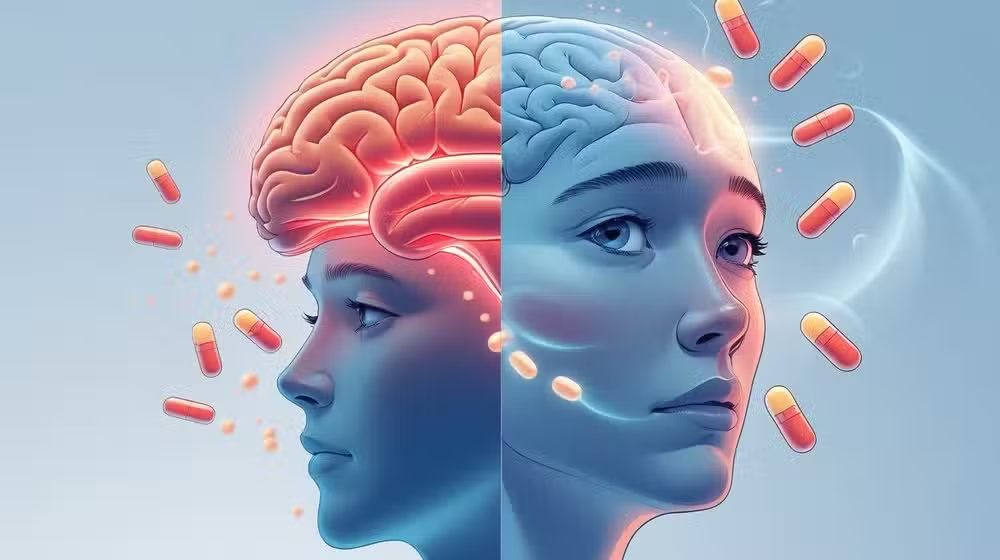
A new scientific investigation into choline deficiency anxiety brain study findings has revealed a possible link between low levels of choline and anxiety disorders. Researchers from UC Davis Health found that individuals with anxiety may have reduced levels of choline, an essential nutrient closely tied to brain function, emotional regulation, and cognitive health.
The choline deficiency anxiety brain study was published in Molecular Psychiatry and analyzed data from 25 datasets covering 370 individuals diagnosed with anxiety disorders and 342 without anxiety. The study focused on conditions such as generalized anxiety disorder, panic disorder, and social anxiety disorder. By reviewing multiple studies, researchers aimed to identify consistent biochemical differences in the brain.
To measure brain chemistry, scientists used a specialized imaging technique called proton magnetic resonance spectroscopy (1H-MRS). This method allows researchers to observe chemical compounds in the brain in real time. The choline deficiency anxiety brain study specifically examined changes in brain metabolites linked to emotional and cognitive processing.
One of the key findings was an average 8% reduction in choline-containing compounds in individuals with anxiety disorders. This reduction was most noticeable in the prefrontal cortex, a critical brain region responsible for decision-making, emotional control, planning, and behavioral regulation. According to researchers, this pattern suggests a possible biological connection between anxiety and brain chemistry changes.
The choline deficiency anxiety brain study was co-authored by Jason Smucny, who explained that the findings point toward a consistent chemical pattern associated with anxiety disorders. While the results are significant, he emphasized that they do not yet confirm a direct cause-and-effect relationship.
Choline plays an essential role in maintaining healthy brain function. It is involved in building cell membranes and supporting processes related to memory, learning, mood regulation, and muscle control. The body produces small amounts of choline, but most of it must come from dietary sources. Foods such as eggs, salmon, poultry, soybeans, and leafy vegetables are rich in this nutrient. The choline deficiency anxiety brain study highlights how important adequate intake may be for mental health.
Researchers also noted that many people in the United States do not consume the recommended daily amount of choline. This widespread deficiency could potentially contribute to long-term neurological effects. The choline deficiency anxiety brain study suggests that prolonged anxiety might increase the brain’s demand for choline-related compounds, potentially leading to imbalances over time.
However, scientists have urged caution in interpreting the results. Senior researcher Richard Maddock stressed that the study does not prove that low choline levels cause anxiety disorders. Likewise, it does not confirm that choline supplements can be used as a treatment for anxiety. The choline deficiency anxiety brain study is observational and highlights correlation rather than causation.
Experts also warned against self-medicating with high doses of choline supplements. While the nutrient is essential, excessive intake can lead to side effects and potential health risks. Medical supervision is necessary before considering supplementation, especially for mental health conditions.
Another interesting aspect of the choline deficiency anxiety brain study was the observation of reduced cortical N-acetylaspartate levels after excluding certain data outliers. This may suggest changes in neuronal function, although researchers noted that the choline-related findings were the most consistent and reliable outcome.
The study opens new possibilities for understanding how nutrition and brain chemistry interact in mental health conditions. While anxiety disorders are complex and influenced by genetic, environmental, and psychological factors, nutritional elements like choline may play a supporting role. The choline deficiency anxiety brain study adds to growing evidence that brain health is closely connected to diet.
Despite the promising insights, researchers emphasize the need for further investigation. Larger and more controlled studies are required to determine whether improving choline intake can directly influence anxiety symptoms. The choline deficiency anxiety brain study therefore serves as an early step toward exploring nutritional approaches to mental health.
The research from UC Davis Health highlights a potential link between lower choline levels and anxiety disorders, particularly in brain regions responsible for emotional regulation. While the findings are not yet conclusive, they provide valuable direction for future studies. The choline deficiency anxiety brain study underscores the importance of continued research into how diet and brain chemistry interact, offering hope for new insights into anxiety management in the future.