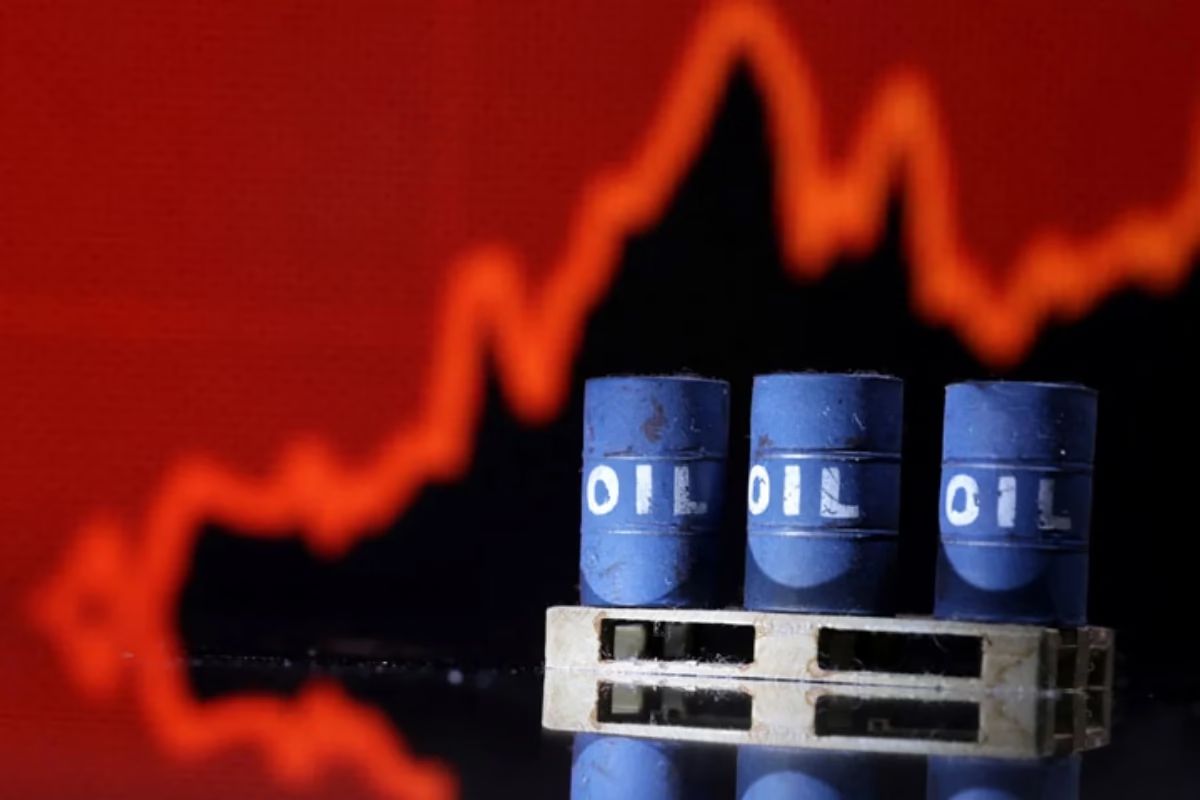
The rising US Iran tension oil prices situation is once again shaking global energy markets, pushing crude oil rates higher and creating uncertainty for economies worldwide. As diplomatic efforts stall and geopolitical risks increase, oil traders are reacting quickly, leading to noticeable price surges across major benchmarks.
Tensions between the United States and Iran have intensified in recent weeks, with concerns growing over the possibility of disruptions in key oil supply routes. One of the biggest fears is related to the Strait of Hormuz, a critical passage through which a large portion of the world’s oil supply is transported. Any blockade or restriction in this region can significantly impact global supply chains, which directly influences the US Iran tension oil prices trend.
Recent market data clearly reflects this pressure. Brent crude oil has surged by more than 3%, crossing the $101 mark per barrel. Similarly, WTI crude has risen close to $92 per barrel, while Murban crude from Abu Dhabi has seen an even sharper increase of nearly 5%. These figures highlight how sensitive the oil market is to geopolitical developments and how quickly prices react to potential supply disruptions tied to US Iran tension oil prices.
The primary reason behind this upward trend is uncertainty. When markets sense risk especially in regions that play a central role in global energy supply prices tend to rise as a precaution. Traders anticipate possible shortages, leading to increased buying activity. This pattern is clearly visible in the current US Iran tension oil prices scenario, where even the threat of conflict or blockade is enough to trigger price spikes.
According to reports from Reuters, the risk of further increases in crude oil prices remains high. Analysts believe that unless there is a breakthrough in diplomatic talks, oil prices could continue to climb. The US Iran tension oil prices situation is therefore not just a short-term fluctuation but a potentially long-term concern for global markets.
The impact of rising oil prices goes beyond just the energy sector. Higher crude oil costs often lead to increased prices for petrol, diesel, and other petroleum products. This, in turn, affects transportation, manufacturing, and everyday consumer goods. Countries that rely heavily on oil imports are particularly vulnerable, as their economies can face inflationary pressure due to the ongoing US Iran tension oil prices trend.
For developing nations, the situation can be even more challenging. Increased fuel costs can strain government budgets, especially in countries that subsidize energy prices. As the US Iran tension oil prices situation continues, policymakers may be forced to make difficult decisions regarding fuel pricing and economic management.
Another important factor is investor sentiment. Rising geopolitical tensions often lead to volatility in financial markets. Investors tend to shift their focus toward safer assets, while commodities like oil become more attractive due to their rising value. This behavior further fuels the upward momentum in the US Iran tension oil prices trend.
The Strait of Hormuz remains at the center of global attention. As one of the world’s most important oil transit routes, any disruption here can have immediate and widespread consequences. Even a temporary blockage could significantly reduce oil supply, pushing prices even higher. This is why the US Iran tension oil prices situation is being closely monitored by governments and industries around the world.
While some experts believe that diplomatic solutions are still possible, others warn that the situation could escalate further if tensions are not managed carefully. The uncertainty itself is enough to keep markets on edge. As a result, the US Iran tension oil prices trend is likely to remain a key topic in global economic discussions in the coming weeks.
The ongoing US Iran tension oil prices situation highlights the strong connection between geopolitics and global energy markets. Rising crude oil prices are a direct reflection of increasing uncertainty and supply risks. As long as tensions persist and no clear agreement is reached, the possibility of further price increases remains high. For consumers, businesses, and governments alike, this serves as a reminder of how global events can quickly impact everyday economic realities.