The global energy crisis is increasingly reshaping how countries plan their future investments in power, fuel, and infrastructure. According to the International Energy Agency (IEA), the global energy crisis triggered by ongoing Middle East tensions is forcing nations to rethink supply chains, diversify energy sources, and accelerate domestic production strategies.
A historic shift in global energy security
The IEA has described the current situation as the most severe global energy crisis in modern history, drawing comparisons with the oil shocks of the 1970s. Energy experts believe this crisis is not temporary but a structural shift that will redefine how the world produces and consumes energy.
As countries face uncertainty in oil and gas supply routes, especially through strategic chokepoints, governments are actively seeking alternatives. The global energy crisis has therefore become a major driver of policy change across both developed and developing economies.
Diversification of energy sources and supply routes
One of the most visible impacts of the global energy crisis is the rapid diversification of energy supply routes. Countries are investing in new pipelines, expanding liquefied natural gas (LNG) infrastructure, and strengthening regional energy cooperation to reduce dependence on unstable regions.
At the same time, many nations are shifting toward domestic energy resources. Renewable energy, nuclear power, and even coal are being reconsidered as part of a broader strategy to ensure energy security during the global energy crisis.
This shift reflects a growing realization that relying heavily on imported fuel can expose economies to geopolitical risks and price volatility.
Investment trends reaching new highs
Despite global uncertainty, energy investments are projected to reach record levels. The International Energy Agency estimates that global energy investment could reach $3.4 trillion in 2026, with a significant portion directed toward clean and low-emission technologies.
A large share of this investment is expected to go into power grids, energy storage systems, renewable energy projects, nuclear power, and energy efficiency solutions. These sectors are becoming central to how countries respond to the global energy crisis.
However, traditional fossil fuels such as oil, gas, and coal are still attracting substantial investment, highlighting a transitional phase in the global energy system.
Decline in oil investment, rise in gas and renewables
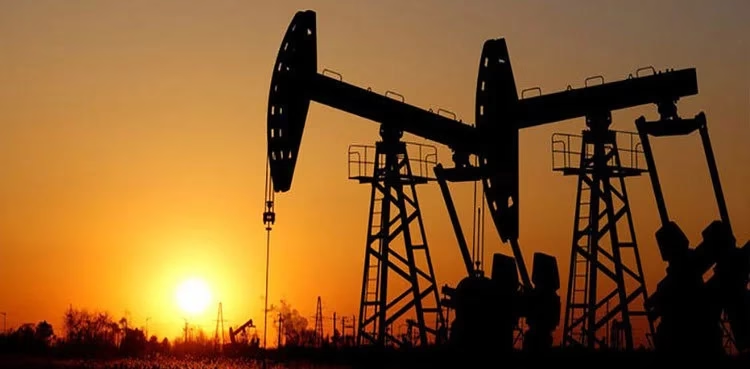
Interestingly, oil investment is expected to decline for the third consecutive year, even as crude prices remain high. Analysts suggest that uncertainty about long-term demand and project risks is discouraging large-scale oil exploration and development.
On the other hand, natural gas investment is rising, driven by new LNG projects, particularly in the United States and Qatar. This indicates that gas is playing a bridging role during the global energy crisis, helping countries transition toward cleaner alternatives while maintaining supply stability.
Renewable energy remains the fastest-growing sector. Solar energy alone accounts for hundreds of billions in investment, reflecting its increasing affordability and scalability. Wind, hydro, and battery storage projects are also expanding rapidly as nations seek sustainable solutions to the global energy crisis.
Coal and nuclear energy regain attention
In a surprising trend, coal investment has also increased in some regions due to energy security concerns. Some countries in Asia are extending the lifespan of coal-fired plants to ensure stable electricity supply during the global energy crisis.
At the same time, nuclear energy is experiencing renewed interest. Governments are investing heavily in nuclear projects as a reliable, low-carbon energy source that can provide consistent baseload power.
A long-term transformation of the energy sector
Experts believe the global energy crisis is not just a short-term disruption but a long-term transformation of the global energy landscape. Investment decisions being made today will shape the world’s energy mix for decades to come.
Countries are no longer focusing solely on cost efficiency but are prioritizing energy security, resilience, and sustainability. This shift marks a major turning point in global economic and industrial planning.
The global energy crisis is forcing a fundamental rethink of how the world produces, transports, and consumes energy. While fossil fuels remain important, the strong push toward renewables, nuclear power, and diversified supply chains signals a major transition.
As investments reach historic levels, the global energy crisis is ultimately reshaping the future of global energy systems, driving nations toward a more balanced and secure energy mix.