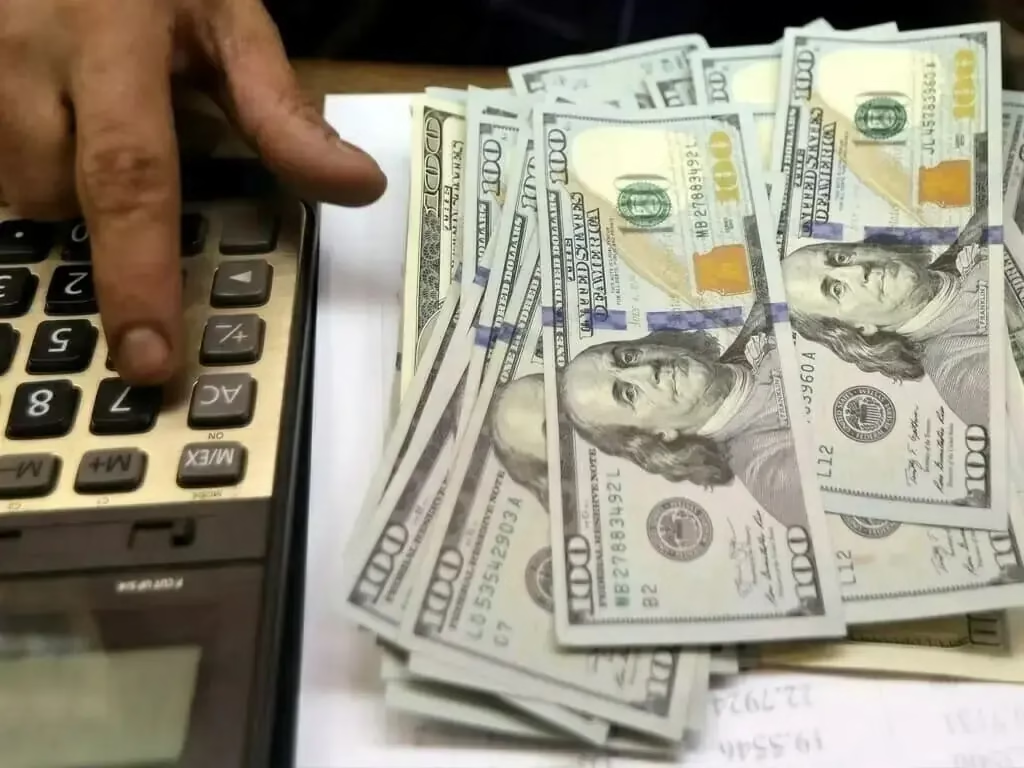
Pakistan repays $2 billion UAE loan marks another significant moment in the country’s ongoing effort to manage external financing and maintain financial stability. The repayment reflects Islamabad’s commitment to honoring international obligations while balancing pressure on foreign exchange reserves amid challenging economic conditions.
Pakistan repays $2 billion UAE loan has come at a time when the country is working under an IMF-supported programme and trying to strengthen its foreign reserves position. According to officials, the repayment was made as part of scheduled financial obligations, while new inflows from allied countries have helped cushion the impact on reserves.
Strengthening financial discipline amid repayments
The repayment of the UAE deposit highlights Pakistan’s efforts to maintain credibility in international financial markets. Over the past few years, the country has relied heavily on bilateral deposits and rollovers from friendly countries to stabilize its external account. In this context, Pakistan repays $2 billion UAE loan is not just a routine transaction but also a signal of improving financial coordination.
Officials from the State Bank have indicated that while the outflow appears large, it does not necessarily create immediate pressure on reserves due to simultaneous inflows from other partners. This balancing act is essential for maintaining stability in the currency market and avoiding sharp fluctuations in the rupee.
Role of bilateral support in economic stability
A key factor supporting Pakistan’s external position has been continued assistance from Gulf partners. Saudi Arabia, in particular, has increased its financial support through deposits and extended rollover arrangements. These inflows help offset major repayments such as when Pakistan repays $2 billion UAE loan, ensuring that reserves remain within manageable levels.
In recent months, Pakistan has also repaid other international obligations, including Eurobond maturities. Despite these repayments, the overall reserve position has not deteriorated significantly due to compensating inflows from friendly nations and multilateral institutions.
IMF programme and reserve targets
The repayment also ties into broader macroeconomic goals under the IMF programme. Pakistan aims to maintain foreign exchange reserves above $18 billion by the end of the fiscal period. This target is considered crucial for import coverage and overall macroeconomic stability.
Within this framework, Pakistan repays $2 billion UAE loan is being viewed as part of a structured debt management strategy rather than an isolated financial strain. Policymakers are focused on ensuring that repayments are matched with inflows, particularly from bilateral partners and external financing arrangements.
Pressure on external accounts remains
Despite recent improvements, Pakistan’s external sector continues to face challenges. High import bills, debt servicing requirements, and fluctuating global commodity prices keep pressure on the balance of payments. In this environment, Pakistan repays $2 billion UAE loan underscores the importance of continued financial discipline and strategic borrowing.
Economists note that while repayments strengthen long-term credibility, short-term liquidity management remains critical. Any delay or reduction in expected inflows could put pressure on reserves and the currency market.
Outlook for financial stability
Looking ahead, Pakistan’s financial outlook depends on sustained inflows, successful IMF programme implementation, and stable remittance growth. If these factors remain aligned, the impact of repayments like Pakistan repays $2 billion UAE loan can be effectively absorbed without major disruption.
Authorities remain confident that with continued support from friendly countries and multilateral lenders, reserve targets can be achieved. However, experts caution that careful monitoring of external liabilities is essential to avoid future pressure.
Pakistan repays $2 billion UAE loan reflects both the challenges and progress in managing external debt. While repayments highlight financial obligations, they also demonstrate improving coordination with international partners. As Pakistan continues its economic adjustment path, maintaining this balance between repayments and inflows will be key to achieving long-term stability.