
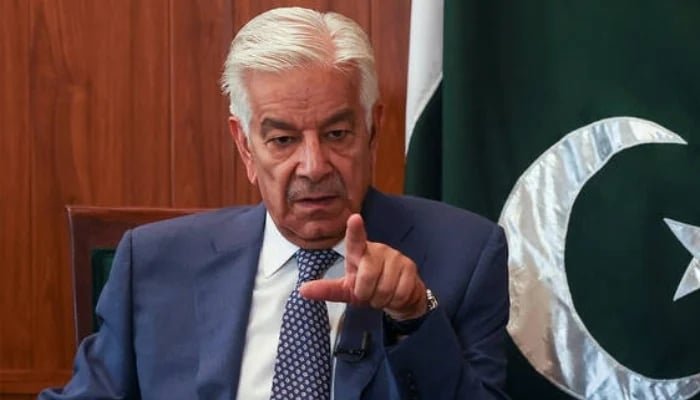
The Pakistan Saudi defence pact will include discussions on the ongoing conflict between Saudi Arabia and Houthi fighters in Yemen, Defence Minister Khawaja Asif has confirmed. Officials from Pakistan, Saudi Arabia and Turkiye are expected to attend a high-level meeting in Islamabad to discuss regional security challenges and strengthen cooperation under their mutual defence agreement.
Speaking to AFP, Asif said the continued instability south of Saudi Arabia would be an important item on the meeting’s agenda. He described the situation as a significant concern for the three countries and stressed the importance of addressing threats to regional stability.
The meeting is expected to bring together defence and foreign ministers from the participating countries, providing an opportunity to discuss security developments and determine how the newly established agreement will operate.
Saudi Arabia’s Conflict With Houthi Fighters
Saudi Arabia has faced repeated attacks from Houthi fighters in Yemen, who have targeted cities, oil facilities and shipping routes as the country’s civil war has intensified.
The Houthis control large areas of Yemen, including the capital, Sanaa. Their military activities have raised concerns across the Gulf region, particularly because of the potential threat to Saudi Arabia’s security and important energy infrastructure.
Khawaja Asif said the situation in Yemen would naturally be discussed during the Islamabad meeting. He also praised Saudi Arabia’s handling of the conflict and emphasised that the security of the Gulf kingdom was directly connected to Pakistan and Turkiye.
According to Asif, any threat to Saudi Arabia would also represent a threat to the other countries under the terms of their defence agreement.
His remarks underline the strategic importance of the Pakistan Saudi defence pact, particularly as regional tensions continue to affect the security environment across the Middle East.
Pakistan, Saudi Arabia and Turkiye Strengthen Defence Cooperation
Pakistan, Saudi Arabia and Turkiye signed their mutual defence agreement in August. Under the arrangement, the three Muslim-majority countries pledged to support one another if any member faced an attack.
The agreement aims to strengthen military coordination and establish a framework for cooperation on shared security concerns.
However, Asif acknowledged that the arrangement was still in its early stages. He described the pact as being at a nascent stage, explaining that regular meetings would be necessary to develop its structure and determine how it would function.
He said the three countries needed frequent consultations during the initial phase to ensure that the necessary arrangements were completed over the coming months.
The defence minister indicated that the immediate priority was to establish a clear mechanism for cooperation so the participating countries could move forward with practical implementation.
Although the agreement establishes a commitment to mutual assistance, several operational details still need to be worked out.
Israel and Regional Security Concerns
Beyond the Yemen conflict, Asif also identified Israel as a potential source of security concerns for countries across the region.
He said the possibility of Israeli aggression or further conflict could not be ignored, adding that regional countries needed to strengthen their cooperation and remain united.
The comments reflect growing concerns about the wider security situation in the Middle East, where military confrontations and political tensions have affected several countries.
Asif declined to explain how the Pakistan Saudi defence pact would respond if Iran directly attacked Saudi Arabia. However, he reiterated that the agreement clearly established a shared security commitment among its members.
His remarks suggest that the upcoming discussions will extend beyond Yemen and could address broader threats facing the region.
Pakistan’s Role in US-Iran Diplomatic Efforts
Pakistan has also played an important diplomatic role in efforts to reduce tensions between the United States and Iran.
According to Asif, Islamabad helped broker a June agreement that temporarily halted fighting between Washington and Tehran. The arrangement also provided a roadmap for further negotiations concerning the reopening of the strategically important Strait of Hormuz and Iran’s nuclear programme.
However, the ceasefire eventually collapsed as both sides accused each other of violating the agreement.
Since then, diplomatic efforts have continued to restore the truce, with Pakistan and Qatar playing important roles in mediation.
Asif described Pakistan’s contribution to the diplomatic process as very constructive but warned that the situation remained fragile. He said lasting peace had not yet been established despite continued negotiations.
Islamabad Meeting Could Shape Future Regional Cooperation
The upcoming meeting in Islamabad could become an important step towards strengthening cooperation between Pakistan, Saudi Arabia and Turkiye.
With security concerns increasing across the Middle East, the three countries are expected to focus on developing practical arrangements under their defence agreement.
The Yemen conflict, Houthi attacks, potential regional aggression and wider Middle Eastern tensions are likely to remain important issues during discussions.
For Pakistan, the agreement represents an opportunity to strengthen strategic relations with two influential regional partners while maintaining its diplomatic role in efforts to reduce tensions.
The meeting will also provide an opportunity to clarify how the countries intend to translate their mutual defence commitments into practical cooperation in the months ahead.