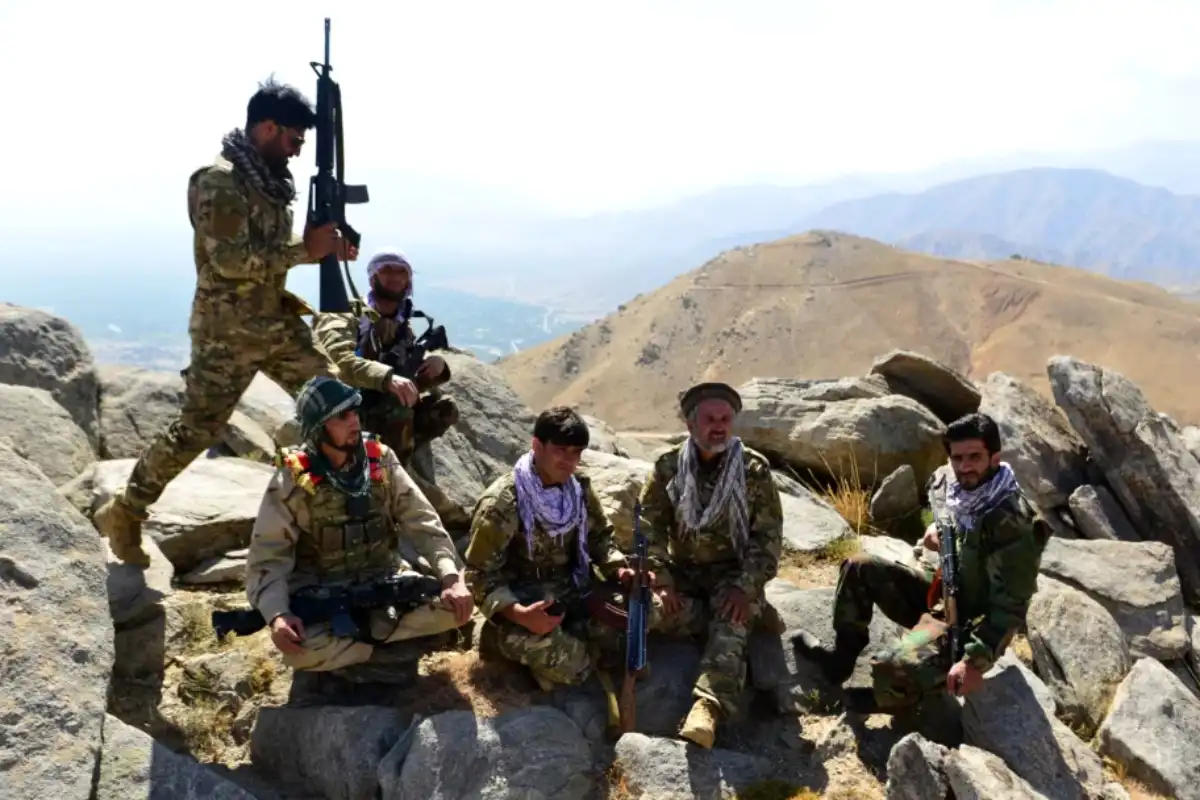
Armed opposition to Afghanistan’s Taliban government appears to be continuing across several parts of the country, with multiple resistance groups claiming attacks against Taliban personnel between November 19 and 22. Reports describe nine incidents across nine provinces, with the groups claiming that 20 Taliban members were killed and four others injured. These reported Taliban resistance attacks have renewed attention on the security situation and the challenges facing the country’s ruling authorities.
The incidents were reported in Sar-e-Pol, Faryab, Badakhshan, Ghor, Paktia, Kunar, Wardak, Bamyan and Kandahar. Different armed groups claimed responsibility for the attacks, including the National Islamic Front (NIF), Afghanistan United Front (AUF), Afghanistan Freedom Front (AFF) and Afghan Green Trend.
However, the casualty figures and operational details largely come from statements issued by the groups claiming responsibility and have not been independently established in the information provided.
National Islamic Front Claims Attacks in Three Provinces
The National Islamic Front claimed several operations against Taliban personnel during the reported period, including attacks in Kandahar, Bamyan and Wardak.
On November 21, the group said it launched a rocket attack on a checkpoint used by special guards of Taliban leader Sheikh Hibatullah Akhundzada in Kandahar’s ninth security district. According to the NIF, five guards were killed and two others seriously injured.
The claim is significant because the reported target was associated with the security arrangements surrounding the Taliban’s supreme leader. However, no independent confirmation of the reported casualties or the extent of the damage was included in the available account.
A day later, on November 22, the NIF claimed responsibility for an ambush against Taliban personnel in Bamyan province. The group said nine Taliban members were killed during the operation and that military equipment was seized.
The group had also reported an attack on a Taliban security checkpoint in Wardak province’s Jalrez district on November 19. It claimed that two Taliban personnel were killed and that weapons and ammunition were taken following the incident.
These claims account for several of the incidents attributed to the National Islamic Front during the four-day period.
Afghanistan United Front Reports Four Operations
The Afghanistan United Front also claimed responsibility for attacks against Taliban forces in four provinces on November 22.
According to the group, its operations targeted Taliban personnel in Sar-e-Pol, Faryab, Ghor and Paktia. It reported that three Taliban members were killed in the attacks.
Among those allegedly killed were the head of the Ministry for the Propagation of Virtue and Prevention of Vice in Ghor province and an intelligence officer. The group also claimed that a vehicle was destroyed during an operation in Paktia.
The reported incidents indicate that the Afghanistan United Front is claiming activity across different parts of the country. However, details about the circumstances of each attack, the identities of other possible casualties and the extent of the damage remain limited.
Afghanistan Freedom Front Claims Kunar Attack
The Afghanistan Freedom Front said it carried out an attack against a Taliban checkpoint in Kunar province on November 19.
In a statement, the group claimed that one Taliban member was killed and two others were injured. The incident was among the attacks reported during the period of November 19 to 22.
Meanwhile, the Afghan Green Trend reportedly targeted a Ranger vehicle belonging to the Taliban’s 219th Division on November 20. The attack allegedly took place along the Kashm-Faizabad highway in Badakhshan province.
The reported incident added another location to the list of provinces where armed opposition groups claimed operations against Taliban forces.
Why Resistance to Taliban Rule Is Growing
Security developments are taking place against a background of continued public criticism of Taliban policies and restrictions imposed since the group returned to power in Afghanistan in August 2021.
Experts cited in reports identify restrictions on women’s education, limits on freedom of expression and arbitrary arrests as important sources of public frustration. They argue that these policies, along with allegations of violence and human rights abuses, are contributing to opposition against the authorities.
Restrictions on girls’ and women’s access to education have remained a particularly contentious issue. Limits on public participation and other personal freedoms have also drawn criticism from Afghans and international observers.
Such grievances form part of the wider political and social environment in which resistance groups are attempting to challenge Taliban authority. Nevertheless, public dissatisfaction does not necessarily translate into support for armed opposition, and the extent of backing for these groups remains difficult to establish from attack claims alone.
Afghanistan’s Security Situation Remains Uncertain
The reported incidents across nine provinces highlight the continued presence of armed groups seeking to challenge Taliban forces. The claims also suggest that opposition activity is not limited to a single region, although the available reports do not establish the overall strength or operational reach of these organisations.
The Taliban government continues to face criticism over its domestic policies, particularly restrictions affecting women and political freedoms. At the same time, claims of attacks and casualties require independent verification before their full impact can be assessed.
For now, the latest Taliban resistance attacks underline the security and political pressures confronting Afghanistan. Whether these incidents develop into a sustained challenge to Taliban rule will depend on the groups’ capabilities, public support and the government’s response in the coming months.