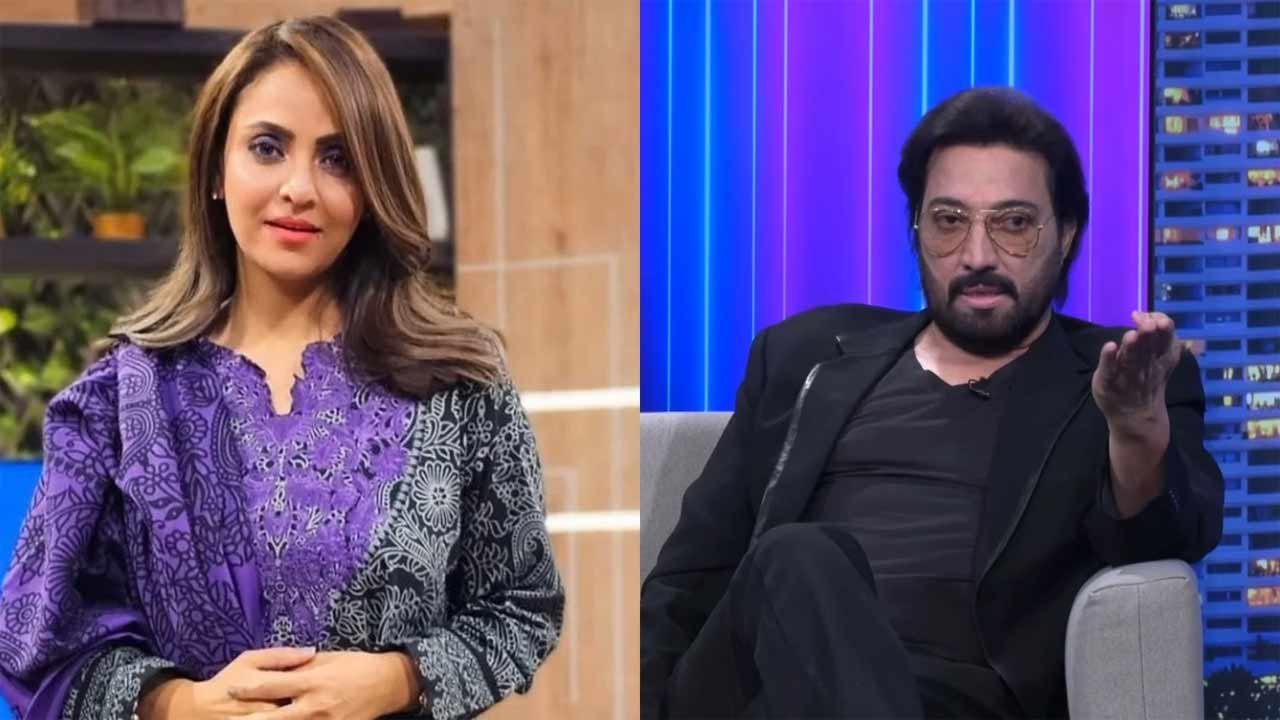
Pakistani actor Saud has shared his concerns about the growing trend of celebrities discussing past controversies to gain public attention. Speaking during a private television programme, Saud on controversial podcasts said that respect among people in the entertainment industry was declining and criticised interviews that rely on provocative questions about other celebrities. His remarks also brought television host Nadia Khan into the discussion over her interview style and its impact on relationships within showbiz.
Saud Raises Concerns About Celebrity Podcasts
During the programme, Saud answered questions from audience members about current trends in the entertainment industry. One woman asked for his opinion on podcasts and interviews in which people revisit old incidents to attract attention and build their public profiles.
Responding to the question, Saud said the practice had become increasingly common. He expressed concern that conversations about past disputes could damage mutual respect and encourage unnecessary disagreements between public figures.
According to the actor, some interviews focus heavily on controversial subjects rather than discussing professional achievements, creative work or the experiences that have shaped an artist’s career.
His comments reflect a broader debate in Pakistan’s entertainment industry about the influence of podcasts, celebrity interviews and online discussions. As digital platforms continue to attract large audiences, controversial statements can quickly become popular topics across social media.
Nadia Khan Comes Under Criticism
During his response, Saud referred to television host Nadia Khan and criticised her approach to asking questions about other celebrities.
He alleged that some of her interviews had created tension within the entertainment industry. He also referred to discussions involving actor Humayun Saeed and actress Atiqa Odho, suggesting that controversial remarks about prominent personalities could contribute to misunderstandings and resentment.
Saud’s comments represented his personal assessment of the situation. The remarks do not, by themselves, establish that the interviews caused lasting damage to the relationships between the celebrities mentioned.
Nevertheless, the criticism highlights the sensitivity surrounding celebrity interviews in Pakistan, where discussions about professional disagreements and personal experiences can attract considerable public attention.
For established actors, such conversations can shift attention away from their work and towards disputes that may have occurred years earlier.
Why Controversial Interviews Attract Attention
Celebrity podcasts and interviews have become an important part of the modern entertainment landscape. They allow actors, musicians, television hosts and other public figures to share their experiences directly with audiences.
Unlike traditional promotional interviews, many digital programmes explore personal stories, disagreements and previously undisclosed details about the industry. This format can offer audiences a different perspective on familiar personalities.
However, interviews built around contentious questions can also create difficulties. A short remark taken out of context may circulate widely online, while disagreements between public figures can become the focus of headlines and social media debates.
The discussion surrounding Saud on controversial podcasts illustrates the tension between attracting an audience and maintaining respectful professional relationships.
Controversy can generate immediate attention, but it may also overshadow more meaningful conversations about acting, filmmaking, television production and the challenges facing entertainment professionals.
Saud Defends Pakistan’s Entertainment Industry
Despite his criticism of certain interview practices, Saud expressed a positive view of Pakistan’s showbiz community. He described the industry as a good one and suggested that controversies often dominate public discussion for only a short period.
According to his remarks, disagreements may become prominent for a few days before attention moves elsewhere.
His observation reflects the fast-moving nature of online entertainment news. A statement made during a television appearance can become a trending topic almost immediately, only to be replaced by another celebrity story soon afterwards.
This cycle can place pressure on public figures to respond quickly to criticism, clarify their statements or defend their reputations.
At the same time, audiences may not always have access to the full context behind a disagreement, making it important to distinguish between confirmed information and personal opinions.
The Responsibility of Interviewers and Celebrities
The debate also raises questions about the responsibilities of both interviewers and the celebrities who participate in their programmes.
Interviewers often seek engaging questions that encourage guests to speak openly. Asking about difficult experiences is not necessarily inappropriate, particularly when the discussion provides meaningful context or addresses issues of public interest.
However, the way questions are framed can influence the direction of a conversation. Personal attacks, unverified allegations and attempts to provoke conflict may shift an interview from informative discussion towards sensationalism.
Celebrities also have a role in ensuring that their statements are accurate and fair, particularly when discussing people who are not present to respond.
The comments by Saud encourage a wider discussion about whether entertainment programmes should prioritise short-term attention or focus on thoughtful conversations that respect the people involved.
What Saud’s Comments Mean for Showbiz
The remarks by Saud have added to the ongoing conversation about celebrity culture, online fame and the growing popularity of podcasts in Pakistan.
The actor’s central concern was that repeatedly revisiting old controversies could weaken mutual respect within the industry. His criticism of Nadia Khan reflects his view that interviews should avoid creating unnecessary hostility between public figures.
Ultimately, podcasts and television programmes can provide valuable opportunities for celebrities to discuss their careers and share their experiences. Their impact depends largely on how those conversations are conducted and understood by audiences.
As digital media continues to shape entertainment news, the challenge will be to balance audience interest with accuracy, context and respect. Saud’s comments highlight why that balance remains an important issue for Pakistan’s showbiz industry.