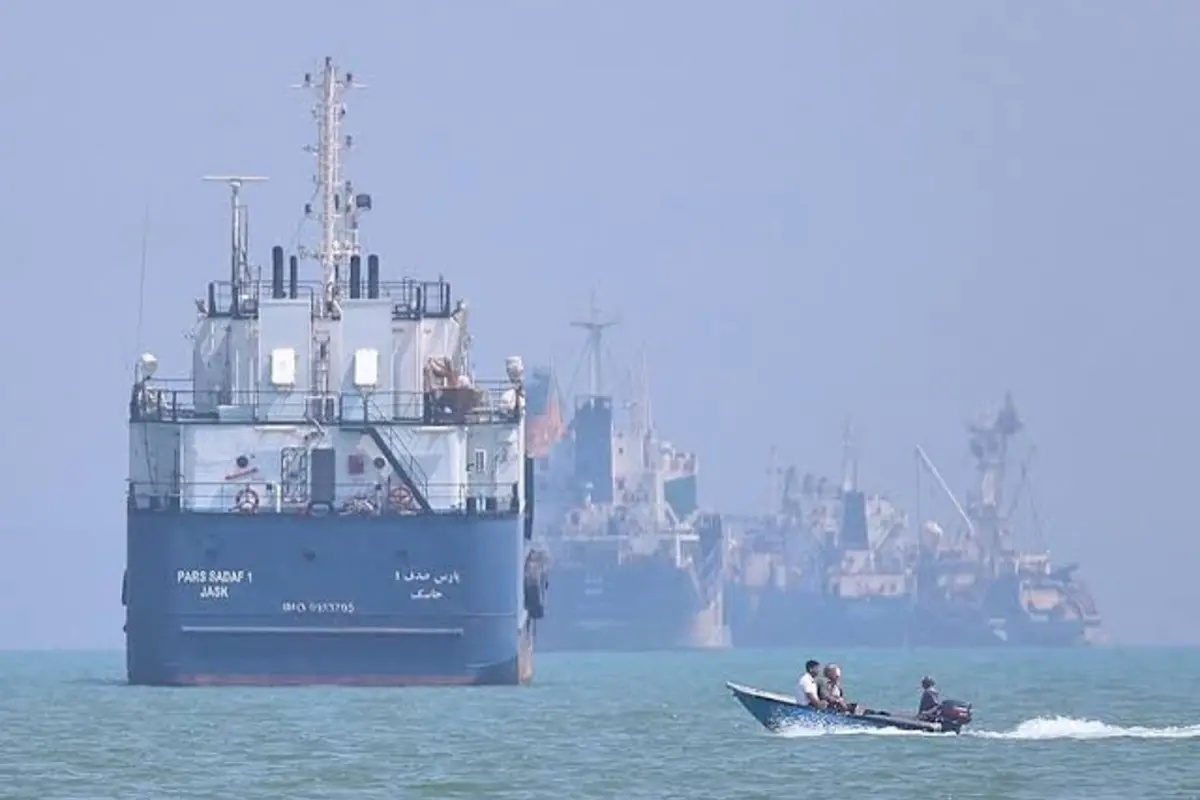
The Strait of Hormuz crisis has intensified following a reported supertanker explosion and fire, with Iran’s Islamic Revolutionary Guard Corps (IRGC) warning commercial and military vessels against switching off their navigation and identification systems. The IRGC said the tanker struck a naval mine while attempting to cross the strategic waterway. The incident comes amid rising regional tensions and diplomatic disagreements over the conditions required to restore normal maritime traffic. citeturn855266search4turn855266search11
Supertanker Reportedly Hits a Naval Mine
According to the IRGC Navy, the oil supertanker suffered a powerful explosion after entering a route that Iranian authorities had designated as unauthorised. The blast reportedly caused a fire in the vessel’s engine room.
Iranian officials said the ship had switched off its navigation and positioning systems before attempting to transit the strait. The IRGC warned that vessels disabling these systems would be considered hostile and could face action.
The authorities have not publicly identified the tanker in the reports reviewed. The IRGC’s account of a mine strike has also not been independently confirmed. Separately, the United Kingdom Maritime Trade Operations agency reported that a tanker had been hit by an unknown projectile, causing a fire onboard. Its report said the crew was safe, while the extent of the damage and any environmental impact remained unclear. citeturn855266search9turn855266search11
The incident highlights the dangers facing commercial shipping as competing authorities issue warnings and vessels navigate an increasingly uncertain security environment.
Iran Issues Warning to Commercial Shipping
The IRGC’s warning reflects Tehran’s determination to enforce its restrictions on maritime movement through the Strait of Hormuz. Iranian officials have said ships using routes that Tehran considers unauthorised may be treated as security threats.
Such warnings create additional challenges for shipping companies, tanker operators and maritime insurers. Vessel operators must assess navigation instructions, security risks and the potential consequences of attempting passage during a period of heightened tension.
The Strait of Hormuz crisis is particularly significant because the waterway connects the Persian Gulf with the Gulf of Oman and the wider Arabian Sea. It serves as a major route for international oil and liquefied natural gas shipments, making disruptions a concern for energy producers and importing countries.
Any prolonged interruption could affect shipping schedules, transport costs and global energy markets. However, the ultimate economic impact would depend on the duration and scale of the disruption, as well as the availability of alternative supply routes.
Iran Says Military Action Cannot Resolve the Crisis
Iranian Deputy Foreign Minister Kazem Gharibabadi has maintained that military pressure will not provide a lasting solution to the dispute. Tehran has called on Washington to meet its commitments under an existing interim understanding before Iran takes steps towards reopening the waterway.
Iranian officials have also said they are reviewing proposals from the United States and will communicate their position through mediators. This indicates that diplomatic contacts remain part of the broader effort to address the standoff, although there is no confirmed agreement on a timetable for restoring normal passage.
The Strait of Hormuz crisis therefore involves more than the immediate safety of vessels. It is also connected to wider disagreements over security arrangements, sanctions and the implementation of commitments between Tehran and Washington.
Iran and Oman Discuss Maritime Arrangements
Iran and Oman have been working on arrangements for managing shipping through the strait. Gharibabadi has said that an understanding between the two countries would not automatically mean the waterway had reopened.
Previous reporting described discussions about a temporary shipping corridor intended to coordinate the movement of vessels through Iranian and Omani waters. However, Iran has linked implementation to the fulfilment of commitments by the United States. citeturn380785search0turn380785search4
The proposed arrangement illustrates the difficulty of separating practical maritime coordination from the wider political dispute. Even if Iran and Oman establish a framework for vessel movements, disagreements involving Washington could continue to delay implementation.
Registering an agreement internationally would also not, by itself, settle every question surrounding access, security and the conditions for safe passage.
Global Energy Markets Face Continued Uncertainty
The Strait of Hormuz remains a vital link in international energy trade. A serious security incident can prompt shipping companies to reassess routes, delay voyages or seek additional protection, potentially increasing freight and insurance costs.
For countries dependent on imported energy, prolonged uncertainty could create pressure on fuel prices and supply planning. Oil producers and traders would also need to account for the possibility of further interruptions.
At the same time, market reactions depend on multiple factors, including available inventories, production levels and expectations about diplomatic progress. A single reported incident does not automatically determine the direction of global oil prices.
The immediate priority is to establish the circumstances surrounding the tanker incident and reduce risks to commercial crews and vessels. Independent confirmation of the cause of the explosion, the ship’s condition and any environmental consequences remains important.
Diplomatically, progress will depend on whether Iran and the United States can resolve their outstanding disagreements and agree on practical arrangements for maritime access.
The Strait of Hormuz crisis remains a serious regional and international concern because shipping security, energy supplies and wider diplomatic relations are closely connected. Until there is greater clarity over the rules governing passage and the commitments required for reopening, commercial operators are likely to face continued uncertainty in one of the world’s most strategically important waterways.