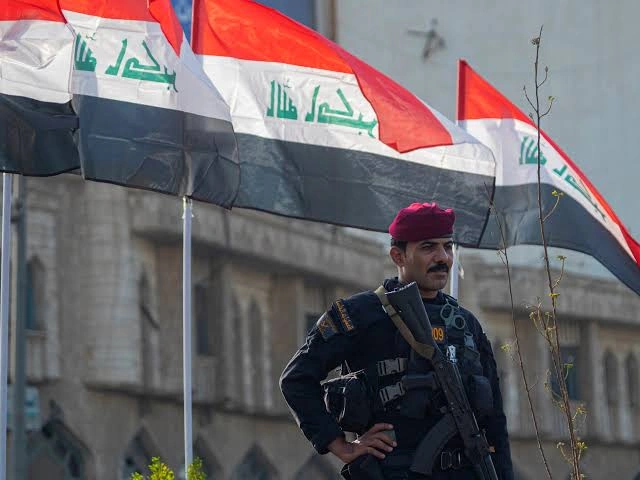
The US military withdrawal from Iraq has been welcomed by Iraqi resistance group Asa’ib Ahl al-Haq, which described the end of the American military presence as an “important milestone” for restoring Iraq’s sovereignty. The group also called on Baghdad to strengthen its air defenses and urged the departure of Turkish forces from positions in Iraq’s semi-autonomous Kurdistan region.
Asa’ib Ahl al-Haq Welcomes the Withdrawal
In a statement issued on Wednesday, Asa’ib Ahl al-Haq said the conclusion of the US military mission represented the outcome of a lengthy political process. The group also attributed the development to what it described as the sacrifices and resistance of Iraqis who had sought an end to foreign military deployments.
The group argued that the US military withdrawal from Iraq should be followed by broader efforts to increase Iraqi control over national affairs. In particular, it called for an end to what it described as Washington’s financial and economic influence over Iraqi assets.
According to the group, ending the military presence should not be viewed only as a security development. It should also lead to greater independence in Iraq’s economic and financial decision-making.
Call for Stronger Iraqi Air Defenses
Alongside its response to the American departure, Asa’ib Ahl al-Haq urged the Iraqi government to acquire advanced air defense systems.
The call reflects concerns about Iraq’s ability to protect its airspace independently as foreign military forces reduce their presence. For Baghdad, maintaining effective air surveillance and defense capabilities could become increasingly important as the country assumes greater responsibility for its own security.
The group also called for Turkish forces to leave positions in the Kurdistan region. Turkey has maintained military operations and positions in northern Iraq as part of its campaign against the Kurdistan Workers’ Party, or PKK. The issue remains sensitive because Baghdad and Ankara have differing security priorities in the region.
Kata’ib Hezbollah Questions the Withdrawal
While Asa’ib Ahl al-Haq welcomed the US military withdrawal from Iraq, another Iraqi resistance group, Kata’ib Hezbollah, questioned whether the process had actually been completed.
The group claimed that American reconnaissance and fighter aircraft were still operating in Iraqi airspace. It said its intelligence units had recorded what it described as violations and suggested that some US personnel could remain in the country until October 30.
However, the group did not provide independent evidence to substantiate those claims. As a result, the allegations remain unverified.
The conflicting statements highlight the uncertainty surrounding the final stages of the American military presence in Iraq. While the formal process has been presented as the conclusion of the US-led coalition’s military mission, questions remain among some Iraqi political and armed groups about what activities may continue after the announced deadline.
Baghdad Says the Deadline Is Final
Iraqi Prime Minister Ali al-Zaidi has maintained that September 30 is the fixed and final deadline for ending the US-led coalition’s military presence and completing the troop withdrawal.
The government’s position indicates that Baghdad considers the timeline settled despite questions raised by groups such as Kata’ib Hezbollah.
The US military withdrawal from Iraq comes after more than two decades of American military involvement in the country. The relationship has changed considerably since the US-led invasion in 2003, with American forces later returning to Iraq as part of the international campaign against the Islamic State group.
Over the years, the role of US forces has shifted from large-scale combat operations toward training, advising and supporting Iraqi security forces.
A New Security Responsibility for Iraq
The completion of the US military withdrawal from Iraq places greater responsibility on Iraqi institutions to manage national security and protect the country’s airspace and borders.
For supporters of the withdrawal, the development represents a step toward stronger national sovereignty. For others, the transition raises questions about whether Iraqi security forces have sufficient capabilities to address threats without extensive foreign military support.
The debate is therefore likely to continue even after the formal withdrawal deadline. Iraq will need to balance its security relationships with neighboring countries while strengthening its own military capabilities.
The US military withdrawal from Iraq also has wider regional implications. The departure of American troops could affect the security calculations of Iraq’s neighbors and the broader Middle East, particularly as Baghdad seeks to maintain control over its territory while managing relationships with multiple regional powers.
Iraqi officials have presented the September 30 deadline as final. The coming months will show how Iraq manages its new security responsibilities and whether questions about foreign military activity inside the country are fully resolved.