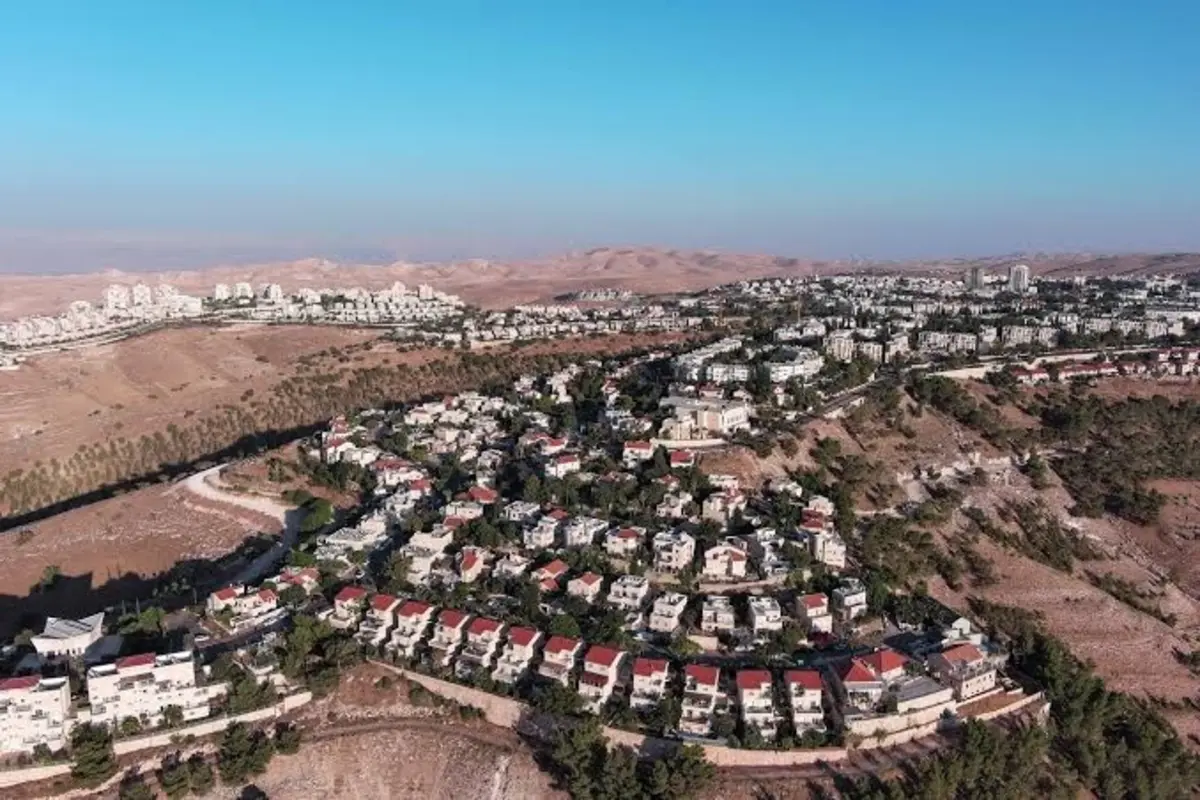
Israeli Finance Minister Bezalel Smotrich has announced plans to establish 1,000 new settler housing units in the northern occupied West Bank, putting the issue of West Bank settlements back at the center of international attention. The announcement came only a day after 12 European countries said they would pursue trade restrictions on products originating from Israeli settlements.
Smotrich said Israeli authorities had seized 1,665 dunams of Palestinian land and incorporated the area into the Kida and Havat settlements for planned construction. He described the move as another major stage in what he called the “settlement revolution.”
The announcement has drawn attention because of the continuing international dispute over Israeli settlement activity in territory claimed by Palestinians for a future state.
1,000 Housing Units Planned
According to Smotrich, the newly seized land will be used for the construction of approximately 1,000 housing units. The land has reportedly been added to the Kida and Havat settlements in the northern occupied West Bank.
Smotrich, who leads Israel’s Religious Zionism party, said procedures were also being advanced to legalize the two settlements. Kida was established in 2003, while Havat was established in 2001, according to the information provided.
The announcement represents another step in Israel’s ongoing settlement policy in the West Bank settlements area. Supporters of the policy argue that Jewish communities in the territory should be expanded, while Palestinians and many international bodies oppose settlement construction and regard it as a major obstacle to a political resolution.
European Countries Announce Trade Restrictions
The settlement announcement came shortly after 12 European countries announced plans to impose trade restrictions targeting products originating from Israeli settlements.
The countries identified were the United Kingdom, Canada, Denmark, Finland, France, Iceland, Ireland, Norway, Poland, Portugal, Spain and Sweden.
Their decision signals growing concern among some Western governments about continued settlement expansion and its impact on the situation in the occupied Palestinian territory.
Trade restrictions can take different forms, but the announcement specifically focused on products sourced from Israeli settlements. The move adds an economic dimension to the wider diplomatic debate surrounding Israeli policies in the West Bank.
The timing of the announcements has also highlighted the contrasting positions between Israeli officials seeking further settlement development and governments calling for greater pressure over settlement activity.
Settlement Population Continues to Grow
Palestinian figures estimate that around 750,000 Israeli settlers currently live across 156 settlements and approximately 360 outposts in the occupied West Bank, including East al-Quds.
The expansion of West Bank settlements has been accompanied by continuing reports of violence and confrontations involving Israeli settlers and Palestinians.
Settlement activity has remained one of the most sensitive issues in the Israeli-Palestinian conflict. Palestinians argue that the expansion of settlements reduces the territory available for an independent Palestinian state and contributes to displacement and tensions.
Israeli authorities and settlement supporters have a different position, emphasizing security, historical and religious connections to the territory.
International Law Remains a Major Issue
The legal status of Israeli settlements has been repeatedly challenged by international institutions.
The United Nations considers Israeli settlements in occupied Palestinian territory illegal under international law, including provisions associated with the Geneva Conventions. The UN Security Council has also adopted multiple resolutions addressing settlement activity and calling for an end to expansion.
The issue has therefore remained a significant part of discussions about the Israeli-Palestinian conflict and the prospects for a negotiated settlement.
In July 2024, the International Court of Justice issued an advisory opinion concerning Israel’s continued presence in the occupied Palestinian territory. The court concluded that Israel’s continued presence there is unlawful and called for an end to the occupation and the evacuation of settlers.
The opinion has since been cited in international discussions over Israeli policies in the territory.
Smotrich’s Settlement Policy
Smotrich has been one of the most prominent Israeli political figures advocating expanded settlement activity. His latest announcement reflects his stated commitment to increasing Jewish communities in the occupied West Bank.
By describing the move as part of a broader “settlement revolution,” Smotrich presented the planned housing construction as part of a wider policy rather than an isolated development.
The proposed expansion could further intensify disagreement between Israel and countries seeking to discourage settlement growth.
For Palestinians, the expansion of West Bank settlements remains closely connected to concerns about land, displacement and the possibility of establishing a viable independent state.
Wider Diplomatic Consequences
The simultaneous developments involving new Israeli housing plans and European trade restrictions demonstrate the growing divide over settlement policy.
While Israeli officials continue to promote settlement development, several European governments are exploring economic measures aimed specifically at settlement-linked products.
The dispute is likely to remain an important issue in Israel’s relations with European countries and in broader international discussions about the future of the occupied Palestinian territories.
Smotrich’s announcement signals that settlement construction remains a priority for influential members of Israel’s government, while the European response shows that opposition to settlement expansion continues to carry diplomatic and economic consequences.
The future of West Bank settlements will remain closely tied to the wider conflict, international law and efforts to determine the political status of the territory.