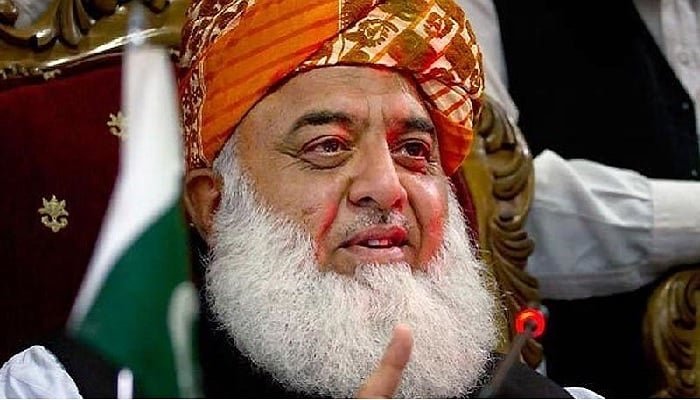
Jamiat Ulema-e-Islam-Fazl (JUI-F) chief Maulana Fazlur Rehman has called for a detailed national debate before any decisions are taken on new provinces in Pakistan, warning that unilateral measures could deepen political divisions. Addressing a Khatm-e-Nabuwwat conference in Lahore, Fazl said he was not opposed to creating new administrative units in principle, but argued that timing, circumstances and political consensus must be carefully considered.
His comments come as political leaders continue to debate whether Pakistan should create additional provinces or instead strengthen local governments and transfer more authority to districts.
Fazl Opposes Unilateral Decisions
Speaking at the conference held at Wahdat Road Cricket Ground, Fazlur Rehman said decisions concerning new provinces in Pakistan should not be imposed without consultation.
“We are not against provinces, but the time and circumstances must also be considered,” he said, stressing that the issue required debate rather than unilateral action.
Fazl pointed to the 18th Amendment, under which provinces exercise significant authority over areas including natural resources. He argued that political parties therefore have an important role in determining how any future administrative restructuring should take place.
The JUI-F chief also criticized major political parties for what he described as inconsistent positions on the issue. He said the Pakistan Peoples Party had largely discussed the matter in relation to Sindh, while the Pakistan Muslim League-Nawaz had remained comparatively silent.
For Fazl, the debate is not simply about drawing new boundaries. He linked the question to political stability, national unity and the ability of the state to protect and respect its citizens.
Concerns Over National Unity
Fazlur Rehman argued that political, social and ethnic divisions had weakened Pakistan over time. He said the country had struggled to develop a unified national identity and had experienced violence associated with ethnic divisions.
He also connected the debate over new provinces in Pakistan with what he described as a broader pattern of division within the country.
According to Fazl, a strong state depends on the security and dignity of its people. He warned against what he described as “division upon division” and argued that political structures should ultimately serve citizens rather than deepen existing differences.
The JUI-F leader said his party wanted to improve conditions for ordinary Pakistanis and provide disadvantaged communities with a life of dignity. He also criticized what he called elite and oppressive politics, arguing that political systems based on imposing power on people would eventually fail.
Economic Dependence Also Criticized
Fazlur Rehman also used his address to criticize Pakistan’s economic dependence on foreign lenders.
He argued that while formal colonialism had ended, international financial institutions continued to influence important economic decisions. Referring to Pakistan’s reliance on loans from the World Bank and International Monetary Fund, he questioned whether a country could be fully independent if external institutions had significant influence over its economic policies.
His remarks reflected a broader criticism of Pakistan’s economic challenges and dependence on external financing.
Fazl maintained that national decision-making should ultimately serve the interests of Pakistan’s people. His comments suggested that political restructuring and economic independence should be considered as part of a wider discussion about the country’s future.
Debate Over Administrative Restructuring
The discussion surrounding new provinces in Pakistan gained renewed momentum after Interior Minister Mohsin Naqvi called for fundamental changes to the country’s governance system.
Naqvi argued that Pakistan’s existing administrative structure required major reforms and suggested that provinces could be reorganized to improve governance and accelerate development. He said new administrative units could be created with greater powers transferred to lower levels of government.
The proposal faced opposition from the PPP, which said no concrete restructuring plan had been presented to the party.
The debate expanded further when Planning and Development Minister Ahsan Iqbal called for a national discussion and proposed considering between 12 and 15 provinces. He argued that Pakistan’s existing provinces had become overly centralized, with significant authority concentrated in provincial capitals.
Provinces or Stronger District Governments?
Ahsan Iqbal has also proposed empowering around 160 district governments, arguing that effective governance is difficult when provincial administrations are concentrated in major cities.
His position has introduced another dimension to the debate. Instead of creating new provinces in Pakistan, greater administrative power could potentially be transferred to districts and local governments within the existing provincial framework.
The two approaches represent different solutions to the same concern: how to make government more accessible and responsive to citizens.
Supporters of additional provinces argue that smaller administrative units could improve service delivery and reduce excessive centralization. Opponents may worry that creating more provinces could increase political tensions and administrative complexity.
Fazl Raises Other Political Issues
Fazlur Rehman also said his party would oppose any movement aimed at repealing Pakistan’s blasphemy laws. He framed the issue as part of JUI-F’s broader political position.
He also referred to September 6, 1965, as an important episode in the defense of Pakistan’s geographical boundaries, using the occasion to emphasize national security and unity.
His overall message was that Pakistan’s political challenges could not be addressed through hurried decisions or the simple redrawing of administrative boundaries.
The debate over new provinces in Pakistan is likely to continue as political parties consider competing proposals for administrative reform.
Fazlur Rehman’s position is not an outright rejection of new provinces. Instead, he is calling for political consultation, careful consideration of national circumstances and agreement among stakeholders.
At the same time, proposals for stronger district governments offer an alternative to changing provincial boundaries altogether.
The question is whether Pakistan can improve governance through creating additional provinces, devolving authority to local governments, or combining both approaches. Any major change will require political consensus and careful consideration of its impact on national unity, administration and public services.
Fazlur Rehman’s call for debate adds another influential voice to an increasingly important national discussion about Pakistan’s political and administrative future.