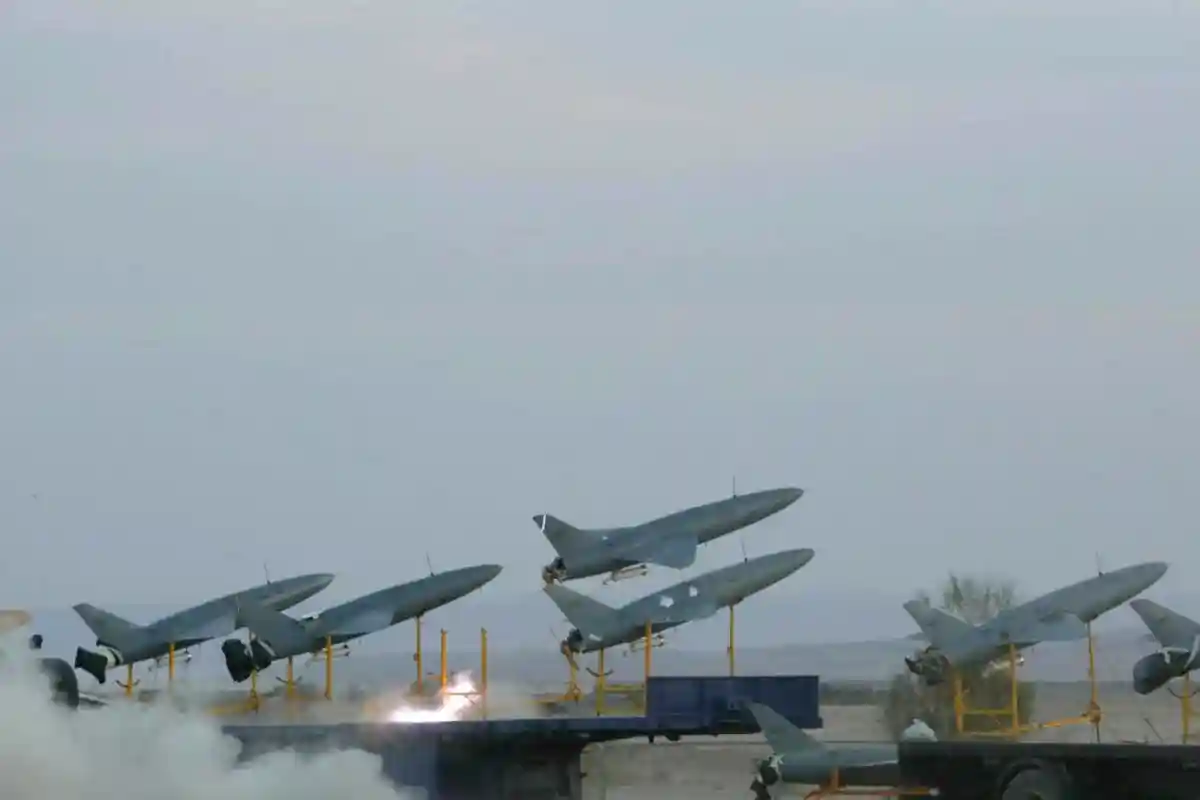
Iran’s Army says it carried out Iran missile strikes and drone attacks against US military facilities in Kuwait and the United Arab Emirates early Thursday. The attacks reportedly targeted satellite communication systems, equipment depots, fighter aircraft hangars, troop positions and radar installations as part of the 31st wave of Iran’s Saeqeh, or “Lightning,” Operation.
According to the Iranian Army, the strikes were launched in response to the deaths of Iranian civilians and military personnel in what Tehran described as unprovoked US aggression. The latest attacks represent a significant escalation in the confrontation between Iran and the United States, extending the conflict to American military facilities in the Gulf.
US Base in Kuwait Targeted
The Iranian Army said missiles and attack drones were used against the US-run Ahmed al-Jaber Air Base in Kuwait.
Iran claimed that communications systems and fighter aircraft hangars at the facility were damaged during the operation. The Iranian military described Ahmed al-Jaber as an important logistics and support facility for US forces operating in West Asia.
The base reportedly plays a role in supporting American air operations and regional surveillance activities. Its location makes it an important part of the US military presence in the Gulf.
The reported Iran missile strikes against the facility could therefore have implications for US military operations in the region if further attacks target similar infrastructure.
Attack Reported at UAE Air Base
Iranian forces also targeted Al Minhad Air Base in the United Arab Emirates, according to the Iranian Army.
The military said missiles and drones struck areas used for troop deployments as well as radar systems. Iran described Al Minhad as an important hub for air support and the transportation of foreign forces.
The reported attacks demonstrate the geographic reach of Iran’s retaliatory operations. Instead of limiting its response to targets inside the immediate conflict zone, Tehran says it is targeting US military infrastructure located in regional partner countries.
The Iran missile strikes also raise concerns about the potential for the conflict to place additional pressure on Gulf states hosting American military facilities.
Response Follows Deadly US Strikes
The Iranian announcement came shortly after a new wave of US strikes on cities in southern Iran.
Iran’s Health Ministry said the latest attacks killed at least 18 people and injured 142 others. One reported strike hit a residential property where a wedding ceremony was taking place in Kouhestak, located in Hormozgan Province’s Sirik County.
According to the Iranian account, five civilians were killed in that incident, including a four-year-old child, while more than 70 people were wounded.
Iran has described the US military campaign as aggression and says its retaliatory operations are intended to respond to attacks against civilians and members of its armed forces.
Iran Warns of Further Retaliation
The Iranian Army issued a strong warning following the latest operation, saying its response to future US attacks would remain severe.
The statement indicated that Iran intends to continue its military response until what it described as final victory and punishment of the aggressor.
The warning adds to concerns that the confrontation could continue expanding if additional attacks are launched by either side. The reported Iran missile strikes show that American military facilities across the region could remain potential targets as tensions increase.
Kuwait Reports Attacks and Airport Disruption
Arab sources also reported missile and drone attacks against US bases in Kuwait.
Reports indicated that a key location at a US military facility was hit. At the same time, flight activity at Kuwait International Airport was suspended because of concerns about the possibility of additional air attacks.
The developments illustrate how military operations involving Iran and the United States can affect countries beyond the immediate battlefield. Gulf states hosting foreign military forces may face increased security risks as both sides expand their operations.
Wider Regional Risks
The latest Iran missile strikes could further complicate the already tense security situation across the Middle East. US military facilities in several countries serve as important components of Washington’s regional operations, while Iran has repeatedly warned that countries supporting American military activity could become involved in the conflict.
The use of both missiles and drones also demonstrates the range of capabilities being employed in the confrontation. Military bases, communication infrastructure, radar systems and aircraft facilities could all face risks if the exchange of attacks continues.
Iran’s Army says its retaliatory campaign will continue in response to further US attacks. The Iran missile strikes against facilities in Kuwait and the UAE mark another major development in the conflict and underline the growing possibility that the confrontation could have wider consequences across the Gulf region.