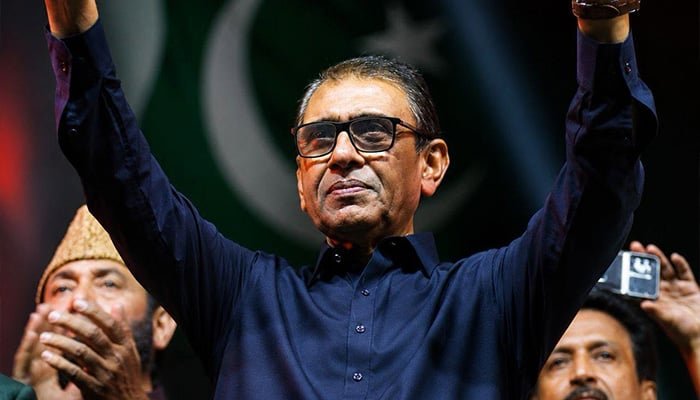
Federal Minister and Muttahida Qaumi Movement-Pakistan (MQM-P) Chairman Dr Khalid Maqbool Siddiqui has renewed the debate over new provinces in Pakistan, arguing that population growth and administrative challenges make changes to the country’s existing provincial structure increasingly necessary.
Speaking to Geo News during a visit to Dallas, Texas, Siddiqui said Pakistan needed a stronger third tier of government to ensure that democratic benefits reached ordinary citizens. He argued that administrative structures should evolve as the population grows, just as new districts and divisions are created to improve governance.
Why Siddiqui Supports New Provinces
Siddiqui rejected the idea that the demand for new provinces in Pakistan was simply political rhetoric. He compared the proposal with the creation of new districts and divisions, saying population growth naturally creates a need for administrative expansion.
According to the MQM-P leader, larger provinces can make it difficult for governments to effectively respond to the needs of communities located far from provincial centres. Smaller administrative units, he suggested, could bring decision-making closer to citizens.
He also called for a stronger third tier of government alongside the federal and provincial systems. In his view, empowered local governments could give communities greater authority over issues directly affecting their daily lives.
Debate Over the Provincial Structure
Siddiqui also criticised the way Pakistan’s administrative divisions have developed. He argued that structures based heavily on linguistic identities have contributed to political polarisation and social divisions.
The question of new provinces in Pakistan has historically generated strong political reactions because provincial boundaries are connected to questions of identity, resources and political representation.
Supporters of creating additional provinces often argue that smaller administrative units could improve governance and service delivery. Critics, however, may fear that creating provinces could increase political competition, administrative costs or tensions over boundaries and resources.
Any major change would require broad political agreement and constitutional procedures.
Karachi at the Centre of the Debate
Karachi featured prominently in Siddiqui’s comments. He highlighted the city’s historical and economic importance and questioned the circumstances through which Karachi became part of Sindh after previously serving as Pakistan’s federal capital.
The MQM-P chairman argued that such questions should be addressed through democratic and constitutional processes with public participation.
He described Karachi as the economic engine of Sindh and a major contributor to Pakistan’s national economy.
“Karachi runs, and the whole country is sustained,” he said, arguing that political or administrative policies affecting the city ultimately have wider consequences for Pakistan.
The discussion over new provinces in Pakistan is closely linked to Karachi because some political groups have historically demanded greater administrative autonomy or a separate province for urban Sindh.
Siddiqui Defends MQM-P’s Support Base
Siddiqui also rejected claims that MQM-P had lost its political relevance because of internal divisions and leadership changes.
He argued that political movements should not necessarily be considered divided simply because individual leaders leave. According to him, the party’s workers and voters remain an important part of its political identity.
Siddiqui claimed that between 80 and 90 percent of MQM workers remained together and suggested that some people who had moved away under pressure could return if political circumstances changed.
He also alleged that MQM had lost seats because of electoral manipulation during the 2018 general elections.
Response to Form 47 Allegations
The MQM-P chairman strongly rejected allegations that the party’s recent electoral victories resulted from manipulation of Form 47 election documents.
Siddiqui said the MQM had won elections in Karachi for decades and maintained that those challenging election results should use the legal system to pursue their claims.
He described the party’s political identity as being rooted in its history and workers rather than electoral documents.
“Our identity is not Form 47. Our identity is 1947,” he said.
The Post-Altaf Political Landscape
Questions about the MQM’s relationship with its former founder, Altaf Hussain, also featured in the interview.
When asked whether a political strategy designed to remove Hussain’s influence had succeeded, Siddiqui avoided directly focusing on the former leader. Instead, he emphasized that MQM was an ideological movement rather than a political dynasty.
He said the party belonged to its workers and that its political identity should not depend on one individual.
This position reflects the significant changes within the MQM political landscape over recent years, including divisions and the emergence of separate political factions.
What the Debate Means for Pakistan
The renewed discussion about new provinces in Pakistan reflects broader questions about governance, representation and the distribution of political power.
Pakistan’s population has grown significantly since the country’s existing provincial structure was established, while major cities such as Karachi have expanded into large metropolitan centres with complex administrative needs.
Creating new provinces would be a major constitutional and political undertaking, requiring consensus among political parties and affected communities.
Siddiqui’s remarks have added fresh momentum to an issue that has repeatedly returned to Pakistan’s political debate.
Whether Pakistan eventually creates additional provinces or strengthens local governments within the existing structure, the central challenge remains the same: ensuring that government institutions can effectively respond to the needs of a growing population.
Siddiqui’s call for new provinces in Pakistan therefore represents not only a debate about boundaries, but also a wider discussion about how power should be distributed and how democratic governance can be brought closer to ordinary citizens.