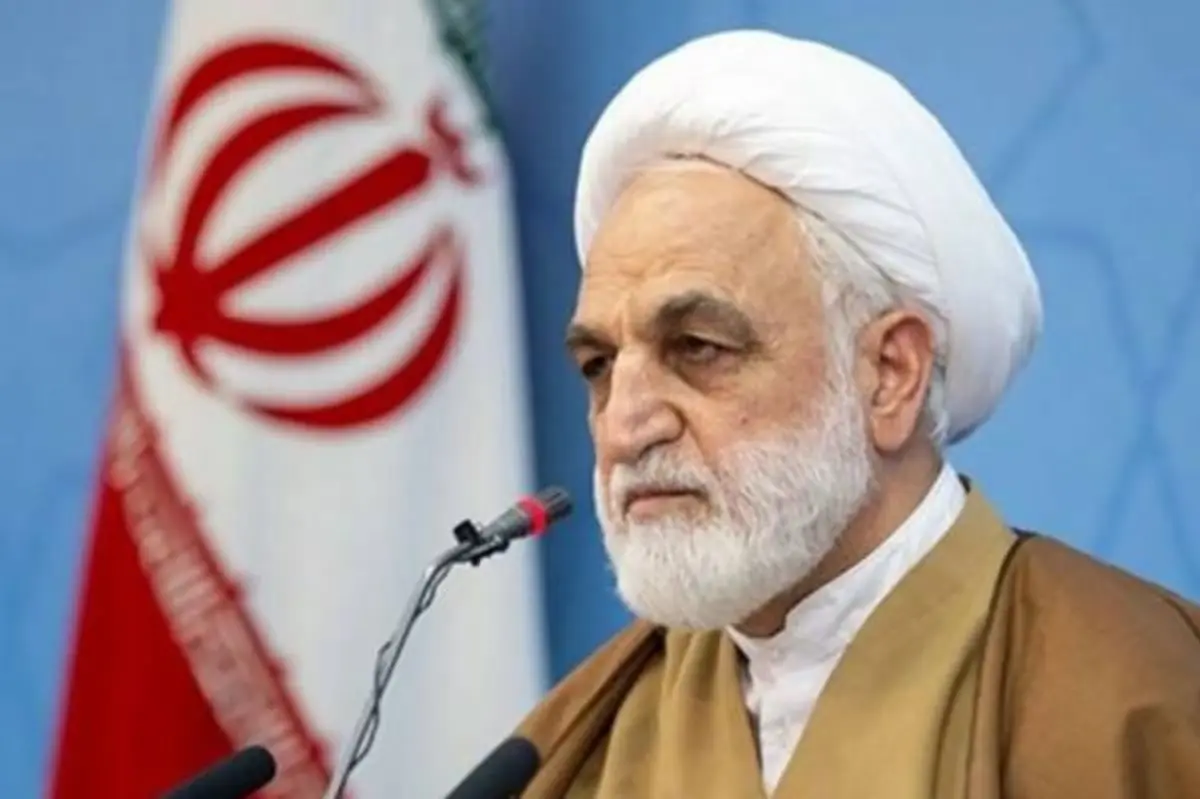
Iran has strongly rejected recent comments by US President Donald Trump concerning the Strait of Hormuz, with Judiciary Chief Gholam-Hossein Mohseni-Eje’i describing the remarks as baseless and insisting that Iran considers the strategic waterway an inseparable part of its territorial and border domain. His comments add to growing tensions between Tehran and Washington over one of the world’s most important maritime routes.
Iran Rejects US Claims
In a social media post on Saturday, Mohseni-Eje’i dismissed Trump’s remarks and argued that statements from Washington could not change what Tehran considers established realities.
He said Iran would not accept claims that challenge its sovereignty and emphasized that the country had already demonstrated its position through its military capabilities.
The judiciary chief also warned that any hostile action or what he described as “adventurism” in the area would receive a strong response from Iran.
His comments reflect the increasingly confrontational rhetoric surrounding the Strait of Hormuz, particularly as disagreements between Iran and the United States continue to involve military, political and economic issues.
Why the Strait of Hormuz Matters
The Strait of Hormuz is a narrow maritime passage connecting the Persian Gulf with the Gulf of Oman. Despite its relatively limited geographical size, it has enormous importance for international trade and energy markets.
Large volumes of oil and other energy products pass through the waterway, making its security a major concern for countries around the world.
Any serious disruption could affect shipping routes, energy supplies and global markets. As a result, developments involving the waterway are closely monitored by governments, energy companies and financial markets.
For Iran, the waterway is also strategically important because of its geographical position and its proximity to the country’s southern coastline.
Trump’s Controversial Statement
The latest dispute followed comments from Donald Trump in which he said that, after what he described as Iran’s defeat, he would declare the Strait of Hormuz a territory of the United States.
Iran immediately rejected the idea.
Mohseni-Eje’i characterized Trump’s remarks as reflecting what he called political and military “delusions” and argued that such statements could not alter the existing situation.
The Iranian official also used strong language to criticize the US president, describing him as a political and military “loser.”
The exchange illustrates the sharp tone that has developed between Tehran and Washington, with both sides making increasingly forceful statements about military strength and national sovereignty.
Iran Emphasizes Sovereignty
Iran’s leadership has repeatedly emphasized its position that the waterway falls within its national security interests and that attempts to challenge its authority would not be accepted.
Mohseni-Eje’i said Iran’s military capabilities had already demonstrated its ability to respond to threats.
He also referred to international law and national sovereignty in defending Tehran’s position.
The legal status and navigation rules surrounding international maritime passages are complex, however, and sovereignty over coastal waters does not necessarily mean a state can prevent all international navigation through a strategic strait. These legal questions are particularly important because the waterway is used by international commercial shipping.
Growing Geopolitical Tensions
The dispute over the Strait of Hormuz comes at a time when relations between Iran and the United States remain highly strained.
The waterway has historically been an important point of geopolitical pressure because Iran’s location gives it significant influence over maritime traffic entering and leaving the Persian Gulf.
Any escalation involving military forces could therefore have consequences far beyond Iran and the United States.
Oil prices could react to concerns about supply disruptions, while shipping companies could face higher insurance and transportation costs. Countries that depend heavily on energy imports could also be affected if instability significantly reduces the volume of oil moving through the region.
International Concerns
Because of its importance to global energy trade, stability around the Strait of Hormuz is a concern for many countries, not just those directly involved in the dispute.
Governments generally have an interest in keeping major maritime routes open and commercial shipping safe. A prolonged confrontation could increase uncertainty for global markets and place additional pressure on already sensitive regional relations.
At the same time, strong rhetoric does not necessarily mean that military confrontation will follow. Diplomatic channels and negotiations can still play an important role in preventing disagreements from escalating.
The latest exchange demonstrates that the Strait of Hormuz remains at the center of a wider geopolitical dispute between Iran and the United States.
Iran’s leadership has made clear that it will strongly resist any claim that it believes threatens its sovereignty or security interests. Washington, meanwhile, continues to use forceful language regarding Iran and the strategic waterway.
The coming weeks will show whether the rhetoric develops into further confrontation or whether diplomatic efforts can reduce tensions.
For the international community, the priority remains clear: maintaining stability around the Strait of Hormuz is essential for maritime security, energy supplies and global economic stability.