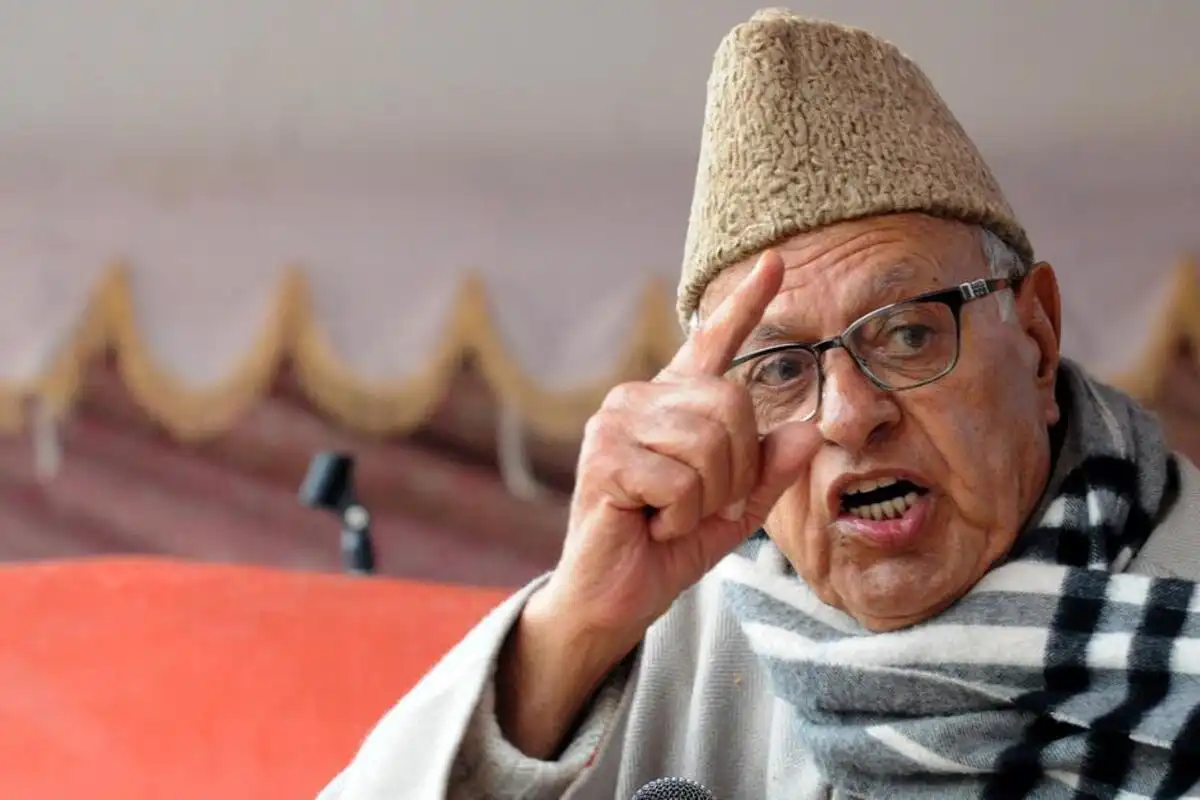
The Kulgam Incident has once again brought the security situation in Jammu and Kashmir into sharp focus after former Chief Minister Farooq Abdullah questioned the Indian government’s handling of the attack. Speaking to the media, Abdullah called for a transparent and impartial investigation into the killing of innocent labourers, arguing that the truth should be established through evidence rather than assumptions. His remarks have sparked fresh political debate over security, governance, and the broader situation in the region.
Farooq Abdullah Questions Security Claims
Farooq Abdullah expressed concern over the recent violence in Kulgam and challenged official claims that the security situation in Jammu and Kashmir has significantly improved.
He questioned how attackers were able to carry out the assault if border security and internal surveillance are as effective as authorities claim. According to Abdullah, such incidents raise important questions that deserve credible answers.
He also rejected attempts to assign responsibility without presenting clear evidence, stressing that investigations should be based on facts rather than speculation.
Call for an Independent Investigation
A major focus of Abdullah’s remarks was the need for a fair and transparent inquiry into the Kulgam Incident.
He argued that the families of those who lost their lives deserve an honest investigation that determines exactly what happened, who was responsible, and whether any security lapses occurred.
According to Abdullah, accountability is essential for maintaining public confidence in law enforcement and governance.
Calls for impartial investigations often emerge after major security incidents, particularly when public concern and political debate intensify.
Questions Over Regional Security
The attack has renewed discussions about the overall security environment in Jammu and Kashmir.
Despite repeated official statements highlighting improvements in security, incidents involving civilians continue to raise concerns among political leaders and local communities.
Abdullah questioned how armed attackers could carry out such operations if security arrangements are fully effective.
His remarks reflect wider concerns about ensuring the safety of civilians, particularly workers and laborers who often travel to different parts of the region for employment.
Debate Over Statehood Restoration
The Kulgam Incident has also become part of a broader political discussion surrounding Jammu and Kashmir’s constitutional and administrative future.
Abdullah questioned why violent incidents continue to occur at a time when discussions regarding the restoration of statehood have gained momentum.
He suggested that these developments have increased public concern and highlighted the importance of maintaining transparency during sensitive political periods.
The issue of statehood remains one of the central topics in regional political discourse.
Political Reactions Continue
Leaders from different political parties have responded to the incident with varying perspectives.
Some National Conference leaders have reportedly questioned whether the circumstances surrounding the attack require closer scrutiny, while others have emphasized the need for a comprehensive investigation before drawing conclusions.
The differing political responses demonstrate how security incidents often become part of wider debates over governance, accountability, and public policy.
Regardless of political differences, there is broad agreement that civilian safety must remain a top priority.
Importance of Public Confidence
Public trust plays a crucial role in maintaining peace and stability during periods of uncertainty.
Transparent investigations help reassure citizens that authorities are committed to uncovering the facts and delivering justice.
When investigations are conducted openly and professionally, they can reduce speculation and strengthen confidence in public institutions.
Many analysts believe that clear communication and evidence-based findings are essential for preventing misinformation and maintaining social stability.
Security Challenges in Jammu and Kashmir
Jammu and Kashmir has experienced security challenges for decades, making every major incident particularly significant.
Authorities continue to face the difficult task of protecting civilians while responding to evolving security threats.
Improving intelligence gathering, strengthening local coordination, and ensuring rapid emergency responses remain important priorities for maintaining peace.
At the same time, political leaders continue to emphasize the importance of dialogue, transparency, and public engagement alongside security measures.
Protecting Civilian Lives
The loss of innocent civilian lives remains one of the most tragic consequences of violence.
Labourers and daily wage workers often travel to different areas in search of employment, making their safety an important concern.
Ensuring secure working conditions, improving local security coordination, and responding quickly to emerging threats can help reduce risks faced by vulnerable communities.
Many observers believe that protecting civilians should remain the highest priority regardless of political disagreements.
The Kulgam Incident is likely to remain an important topic in both political and public discussions over the coming weeks.
Investigators are expected to continue examining available evidence while authorities work to determine the circumstances surrounding the attack.
Political leaders from across the spectrum are likely to continue debating broader questions related to security, governance, and the future of Jammu and Kashmir.
A transparent investigation may help provide greater clarity while addressing public concerns.
The Kulgam Incident has intensified debate over security, accountability, and governance in Jammu and Kashmir. Farooq Abdullah’s call for an independent investigation reflects growing demands for transparency following the tragic killing of innocent labourers. His remarks have also renewed discussion about regional security and the broader political landscape.
As investigations move forward, the focus will remain on establishing the facts, ensuring accountability, and strengthening measures that protect civilians. Regardless of political viewpoints, a credible and impartial inquiry will be essential for building public trust and promoting long-term stability in the region.