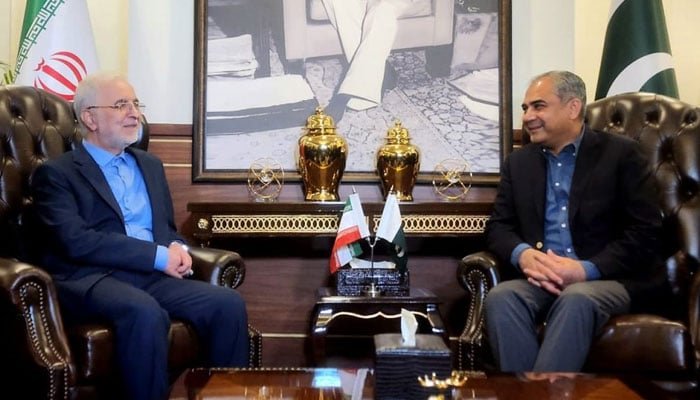
Pakistan-Iran Security Cooperation received a significant boost as senior officials from both neighboring countries reaffirmed their commitment to expanding collaboration on border security, counterterrorism, and regional stability. During a high-level meeting in Islamabad, Pakistan’s Interior Minister Mohsin Naqvi and Iranian Interior Minister Eskandar Momeni agreed to deepen cooperation in addressing shared security challenges and strengthening institutional coordination between the two countries.
The meeting took place during Momeni’s three-day official visit to Pakistan, highlighting the importance both governments place on maintaining strong diplomatic and security relations. As neighboring countries with a long shared border, Pakistan and Iran have consistently emphasized the need for close cooperation in managing cross-border issues and promoting regional peace.
One of the main outcomes of the discussions was a renewed commitment to Pakistan-Iran Security Cooperation in tackling terrorism. Both countries acknowledged that extremist threats continue to pose challenges to regional peace and agreed that stronger intelligence sharing and law enforcement coordination are essential for addressing these risks effectively.
Counterterrorism has remained a priority for both Islamabad and Tehran, particularly in border regions where militant groups and criminal networks sometimes exploit difficult terrain. By improving communication and operational cooperation, both sides hope to strengthen security while protecting their citizens.
Another major topic discussed during the meeting was border management. Pakistan and Iran share a border stretching hundreds of kilometers, making effective coordination vital for maintaining stability and facilitating legitimate cross-border movement.
The two ministers agreed that improving border management systems would help reduce illegal activities while encouraging lawful trade and travel. Enhanced coordination between border authorities is expected to improve security without disrupting economic cooperation between the neighboring countries.
Beyond terrorism, Pakistan-Iran Security Cooperation also focuses heavily on combating narcotics trafficking. Drug smuggling has remained a longstanding regional concern due to the geographical location of both countries near major trafficking routes.
During the talks, both delegations agreed to strengthen joint efforts against narcotics networks through closer collaboration among law enforcement agencies. They emphasized that sharing intelligence, improving border surveillance, and conducting coordinated operations would help disrupt illegal trafficking activities more effectively.
Illegal immigration and human smuggling were also key areas of discussion. Both governments expressed concern over criminal organizations involved in exploiting vulnerable individuals through human trafficking and unlawful migration.
To address these issues, Pakistan and Iran agreed to improve cooperation between immigration authorities, border security forces, and other relevant institutions. Stronger coordination is expected to help identify criminal networks while ensuring lawful border management practices.
The visit itself reflected the positive momentum in bilateral relations. Upon arriving at Pakistan’s Ministry of Interior, Iranian Interior Minister Eskandar Momeni received a warm welcome, including a formal guard of honor presented by the Federal Constabulary. The ceremonial reception underscored the significance Pakistan attaches to its relationship with Iran.
Following an initial one-on-one meeting, both ministers led their respective delegations in detailed discussions covering bilateral relations, regional developments, and opportunities for future cooperation. These talks reinforced the shared commitment to expanding Pakistan-Iran Security Cooperation across multiple sectors.
Speaking after the meeting, Interior Minister Mohsin Naqvi reaffirmed Pakistan’s determination to strengthen relations with Iran beyond security matters. He expressed confidence that greater collaboration would contribute to long-term regional stability while promoting mutual trust between the two neighboring countries.
Naqvi also praised the diplomatic efforts of Iranian Foreign Minister Abbas Araghchi and Interior Minister Eskandar Momeni in supporting regional peace initiatives. He expressed optimism that ongoing diplomatic engagement could create opportunities for reducing tensions and promoting lasting stability.
For both Pakistan and Iran, maintaining peaceful borders remains an essential objective. Stable border regions not only improve security but also encourage economic cooperation, legal trade, and people-to-people exchanges. Strengthened institutional collaboration can help address common challenges while supporting regional development.
The latest discussions also reflect a broader regional focus on cooperative security rather than unilateral approaches. Shared challenges such as terrorism, organized crime, narcotics trafficking, and illegal migration often require coordinated international responses rather than isolated national efforts.
As regional dynamics continue to evolve, Pakistan-Iran Security Cooperation is expected to play an increasingly important role in maintaining peace along shared borders. Both governments recognize that stronger partnerships between security institutions can improve their ability to respond to emerging threats while protecting national interests.
Analysts believe that continued high-level dialogue will further strengthen bilateral relations in the coming years. Regular exchanges between government officials, security agencies, and diplomatic representatives create opportunities to build trust and develop practical solutions to complex regional issues.
The latest meeting between Pakistan and Iran marks another positive step in expanding bilateral relations. By reaffirming their commitment to Pakistan-Iran Security Cooperation, both countries have demonstrated their shared determination to strengthen border security, combat terrorism, address narcotics trafficking, and tackle illegal immigration through coordinated action. As diplomatic engagement continues, this growing partnership has the potential to contribute not only to bilateral stability but also to broader peace and security across the region.