Iran-Pakistan Relations received fresh attention as Iranian Interior Minister Eskandar Momeni arrived in Islamabad on an official visit alongside a high-level delegation. The visit highlights the commitment of both neighboring countries to deepen cooperation in security, trade, border management, and regional peace. At a time when the Middle East is facing growing geopolitical uncertainty, the discussions between senior officials from Pakistan and Iran carry significant diplomatic importance for the region.
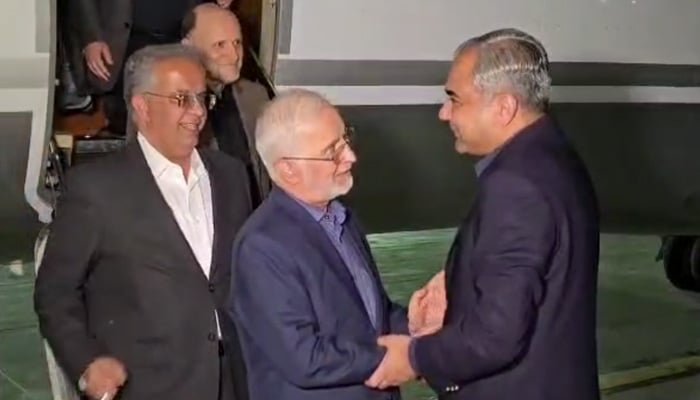
The Iranian delegation was welcomed at Islamabad Airport by Pakistan’s Federal Interior Minister Mohsin Naqvi. Minister of State for Interior Talal Chaudhry and Iranian Ambassador to Pakistan Reza Amiri Moghadam were also present to receive the visiting dignitaries. The warm reception reflected the friendly relationship that both nations have maintained despite regional challenges.
The delegation accompanying Minister Eskandar Momeni included several senior Iranian officials, such as the governor-general of Sistan and Baluchestan province, Iran’s deputy interior minister, the deputy minister for urban development and transport, the head of the National Iranian Oil Company (NIOC), and representatives from Iran’s agriculture sector. The composition of the delegation indicates that discussions are expected to extend beyond security and include economic cooperation, infrastructure development, energy, and agriculture.
During a meeting in Islamabad, Mohsin Naqvi and Eskandar Momeni exchanged views on bilateral relations and issues of mutual interest. The Iranian minister expressed appreciation for the hospitality shown by Pakistan and referred to Mohsin Naqvi as his “brother,” emphasizing the close relationship between the two countries.
Momeni praised Pakistan’s welcoming attitude and highlighted the historical friendship shared by both nations. Such diplomatic gestures are important in strengthening trust and encouraging future collaboration on common challenges.
Naqvi, in return, expressed optimism that the visit would open new opportunities for cooperation. He stated that Pakistan hopes to witness positive developments in regional affairs and believes stronger coordination between Islamabad and Tehran can contribute to peace and stability.
The visit also includes scheduled meetings with Prime Minister Shehbaz Sharif and Chief of Defence Forces and Chief of Army Staff Field Marshal Syed Asim Munir. These high-level engagements demonstrate the strategic significance of the visit and underline the importance both governments place on expanding bilateral cooperation.
Security cooperation remains one of the most important pillars of Iran-Pakistan Relations. Both countries share a long border that requires continuous coordination to combat terrorism, smuggling, illegal crossings, and cross-border criminal activities. Strengthening communication between security institutions helps improve border management while ensuring greater regional stability.
Apart from security matters, economic cooperation is expected to feature prominently in the discussions. Pakistan and Iran have considerable potential to expand bilateral trade, particularly in energy, petroleum, agriculture, transportation, and infrastructure development. Improved trade links could benefit businesses and consumers in both countries while supporting regional economic growth.
Energy remains another important area where both countries can enhance collaboration. Iran possesses significant oil and natural gas resources, while Pakistan continues to seek reliable and affordable energy supplies to meet its growing domestic demand. Increased cooperation in the energy sector could create long-term benefits for both economies.
The visit comes during a period of heightened regional tensions involving Iran and the United States, particularly concerning developments around the Strait of Hormuz. The strategic waterway remains one of the world’s most important routes for global energy supplies, making stability in the region a matter of international concern.
Pakistan has consistently supported peaceful dialogue and diplomatic engagement to resolve regional disputes. In recent weeks, Islamabad has encouraged all parties to avoid further escalation and continue negotiations under previously agreed diplomatic frameworks. Pakistan’s balanced foreign policy has positioned the country as a constructive voice for regional peace.
Iran has also indicated that diplomatic communication with the United States continues through mediators despite recent military tensions. These developments highlight the importance of dialogue over confrontation and reinforce the need for regional countries to work together in reducing tensions.
The participation of senior Iranian officials responsible for transportation, agriculture, and energy also signals broader ambitions for future cooperation. Improved transport connectivity, cross-border trade routes, and agricultural partnerships could strengthen economic integration between the neighboring countries.
Border provinces such as Pakistan’s Balochistan and Iran’s Sistan and Baluchestan have significant potential for economic collaboration through legal trade, infrastructure projects, and people-to-people exchanges. Improved cooperation could contribute to economic development while reducing security concerns in border regions.
Another important aspect of Iran-Pakistan Relations is the long-standing cultural and religious connection shared by both nations. Centuries of historical interaction have created strong people-to-people ties that continue to support diplomatic engagement today.
As regional dynamics continue to evolve, both governments recognize the importance of maintaining regular high-level dialogue. Diplomatic visits like this provide valuable opportunities to address common challenges, identify new areas of cooperation, and strengthen strategic partnerships.
Eskandar Momeni’s visit reflects the shared commitment of Pakistan and Iran to deepen bilateral cooperation across multiple sectors. With discussions covering security, trade, energy, border management, and regional stability, the visit represents another positive step toward stronger Iran-Pakistan Relations. Continued diplomatic engagement between the two neighboring countries has the potential to promote peace, expand economic opportunities, and contribute to greater stability across the wider region.