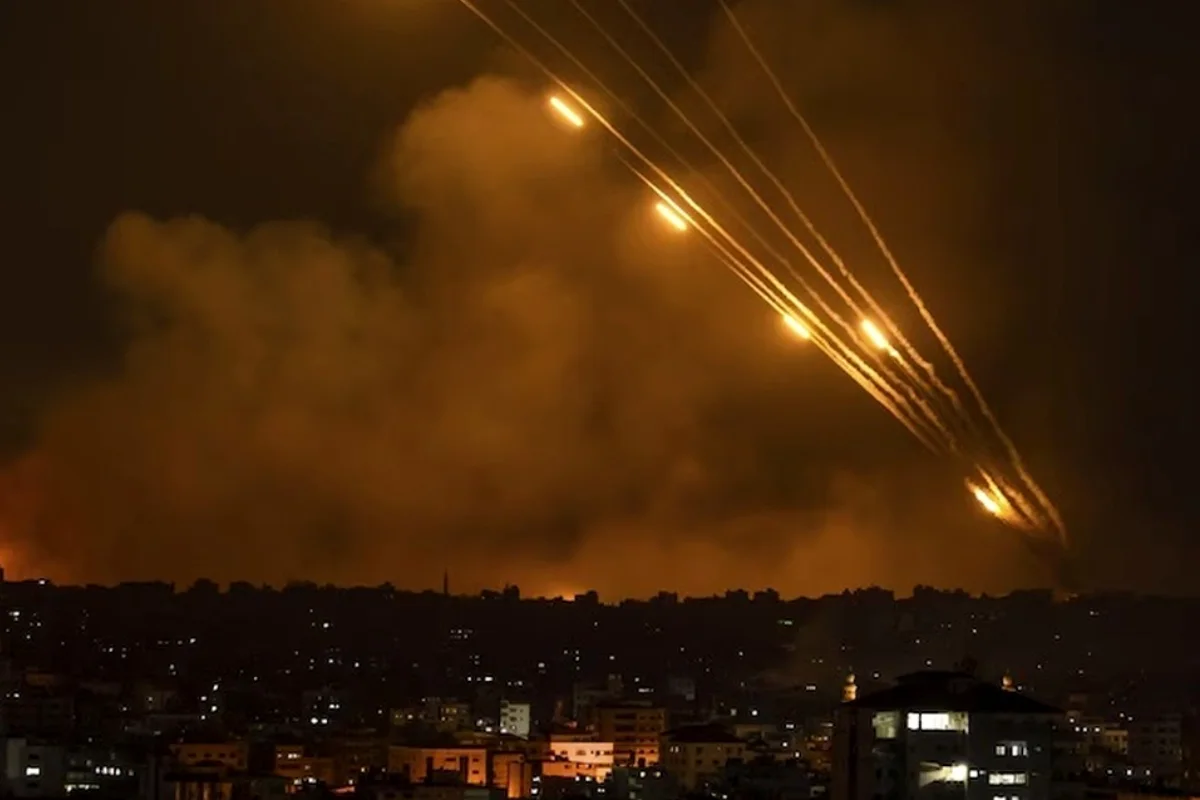
The latest IRGC Retaliatory Strikes have significantly intensified tensions across the Middle East, raising fresh concerns about regional security and the possibility of a broader military confrontation. Iran’s Islamic Revolutionary Guard Corps (IRGC) announced that it had launched a new series of attacks targeting US military assets in several countries across West Asia. While Iranian officials described the operation as retaliation for recent US military actions, many of the claims made by the IRGC have not been independently verified.
The reported strikes mark another chapter in the ongoing confrontation between Iran and the United States, a rivalry that continues to shape the security landscape of the region.
Iran Announces New Military Operation
According to the IRGC, its Aerospace Force carried out coordinated attacks against multiple US military installations across the region. Iranian officials stated that the operation targeted a US special operations command center in Syria, radar facilities in Oman, and military equipment and weapons depots in Kuwait.
The IRGC claimed the attacks damaged advanced radar systems, destroyed several helicopters used by US special forces, and caused significant casualties among American troops. However, independent confirmation of these claims has not been provided by international observers or US authorities.
Military analysts note that such statements are often difficult to verify during active conflicts, making independent assessments essential before confirming battlefield outcomes.
Retaliation Following Iranian Military Losses
Iran said the latest operation was launched in response to the deaths of seven Iranian soldiers who were reportedly killed in a US airstrike near Iranshahr.
Iranian officials described the strike as an attack on one of the country’s military facilities and vowed to respond forcefully. The IRGC Retaliatory Strikes were presented as part of that response, with military leaders emphasizing that Iran would continue to defend its national security and military personnel.
The exchange reflects the growing cycle of retaliation that has characterized relations between Tehran and Washington during periods of heightened regional tension.
Strait of Hormuz Warning Raises Global Concerns
One of the most significant statements issued alongside the military operation involved the Strait of Hormuz.
The IRGC declared that its forces remained fully capable of controlling the strategically important waterway and warned that oil and gas exports from the region could be disrupted if the United States continued what Iran described as hostile actions.
The Strait of Hormuz is one of the world’s most important energy corridors, with a significant percentage of global oil exports passing through it each day. Any disruption to shipping in the area could have major consequences for international energy markets, transportation costs, and global inflation.
Although no official blockade has been confirmed, such warnings typically attract close attention from governments and financial markets worldwide.
Additional Targets Reported in Kuwait and Oman
Iranian officials also announced separate operations targeting military infrastructure in Kuwait and Oman.
According to IRGC statements, missile defense radar systems, weapons storage facilities, and HIMARS launchers located at bases hosting US forces were struck during the operation. Iranian sources further claimed that large fires broke out following the attacks.
In Oman, the IRGC stated that it had successfully destroyed American naval and air surveillance radar installations.
As with earlier claims, these reports have not been independently verified, and official confirmation from the affected countries has not been released.
Accusations Against the United States
Beyond the military operation itself, Iran accused the United States of targeting civilian infrastructure during recent hostilities.
Iranian officials alleged that telecommunications facilities and railway infrastructure had been attacked, describing these actions as violations of international norms.
The IRGC warned that its retaliatory campaign would continue if similar attacks persisted.
Such accusations further complicate an already tense diplomatic environment, where competing narratives from both sides continue to shape international reactions.
Questions Surrounding Earlier Ceasefire Efforts
Another important aspect of the latest developments involves previous diplomatic efforts to reduce tensions.
Reports suggested that Iran and the United States had earlier agreed to a Pakistan-brokered Memorandum of Understanding aimed at ending hostilities and preventing further military escalation.
However, the IRGC claimed that Washington violated the understanding, prompting Iran to resume military operations.
No independent confirmation has been provided regarding the alleged violation, and details surrounding the reported agreement remain limited.
If diplomatic channels have indeed broken down, rebuilding trust between both sides may become increasingly difficult.
Regional and Global Implications
The IRGC Retaliatory Strikes come at a time when the Middle East remains highly sensitive to security developments.
Military escalation involving Iran and the United States has implications far beyond the immediate conflict. Regional allies, neighboring countries, energy producers, and global markets all closely monitor developments due to their potential economic and security consequences.
Increased tensions could affect:
- Global oil prices
- Maritime trade routes
- International aviation
- Regional security partnerships
- Diplomatic relations across the Gulf
Governments around the world continue urging restraint while encouraging diplomatic solutions to prevent further escalation.
The latest IRGC Retaliatory Strikes demonstrate how quickly regional tensions can intensify following military confrontations. While Iran describes its actions as a direct response to attacks on its forces, many operational claims remain unverified, making it essential to treat battlefield reports with caution until confirmed by independent sources.
As both sides continue exchanging accusations, the risk of wider instability remains a major concern for the international community. Diplomatic engagement, regional cooperation, and sustained efforts to reduce tensions will likely be crucial in preventing further escalation and protecting regional security in the months ahead.