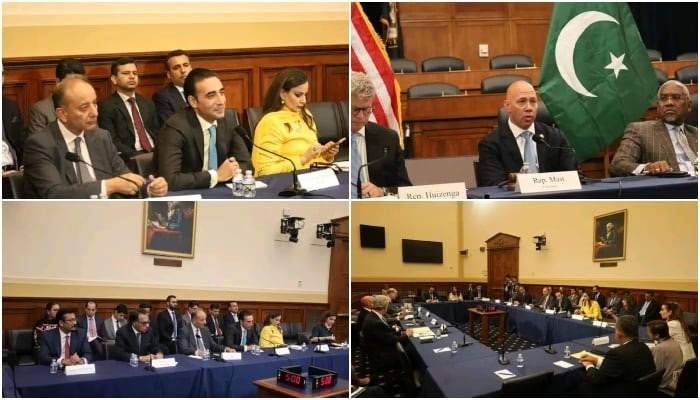
The Cashless Pakistan Initiative has completed a remarkable year of progress, transforming the country’s digital payment landscape and bringing millions of Pakistanis into the formal financial system. During a high-level review meeting chaired by Minister of State for Railways and Finance Bilal Azhar Kayani, the government highlighted significant achievements in digital transactions, financial inclusion, and public sector digitization. These developments reflect Pakistan’s growing commitment to building a modern, transparent, and technology-driven economy.
Launched in June 2025 under the guidance of Prime Minister Shehbaz Sharif, the initiative focuses on improving public convenience, increasing financial transparency, and encouraging digital payments across the country.
Digital Transactions Reach Record High
One of the biggest achievements of the Cashless Pakistan Initiative is the rapid growth in digital transactions. Over the past year, annual digital payments increased from 6.9 billion to an impressive 11.3 billion transactions.
This sharp rise demonstrates that individuals and businesses are increasingly embracing digital payment methods instead of relying on cash. The growing adoption of mobile banking, QR code payments, and online financial services has made transactions faster, safer, and more convenient for millions of users.
The increasing popularity of digital payments also supports Pakistan’s long-term vision of creating a documented economy.
Merchant Adoption Sees Massive Growth
The government’s efforts to expand digital payment acceptance have produced outstanding results.
The number of active merchants accepting digital payments has grown from approximately 500,000 to more than 2 million within a single year. A major contributor to this success has been the widespread implementation of the Raast QR Code payment system.
Small businesses, retail stores, restaurants, and service providers are increasingly offering customers cashless payment options, making digital transactions more accessible across urban and rural areas.
This expansion strengthens Pakistan’s digital financial infrastructure while encouraging greater business participation.
Digital Banking Users Continue to Rise
The Cashless Pakistan Initiative has also contributed to remarkable growth in digital banking adoption.
According to the review meeting, more than 135 million Pakistanis are now using digital banking services. These include mobile banking applications, internet banking platforms, digital wallets, and instant payment systems.
Greater access to digital banking allows consumers to transfer funds, pay utility bills, shop online, and manage finances without visiting physical bank branches.
As internet access and smartphone usage continue expanding, digital banking is expected to become even more widespread.
Financial Inclusion Shows Steady Improvement
Another major success highlighted during the review was the improvement in financial inclusion.
Pakistan’s financial inclusion rate has reached 69%, reflecting the government’s efforts to bring more citizens into the formal financial system. Targeted programs have also helped narrow the gender gap by encouraging greater participation of women in digital financial services.
Expanding financial inclusion supports economic growth by giving more people access to savings, payments, and other essential financial services.
These improvements are expected to create long-term benefits for households, entrepreneurs, and small businesses across the country.
Public Sector Digitization Gains Momentum
The Cashless Pakistan Initiative extends beyond private sector payments.
The government has identified 25 high-impact federal and provincial institutions for complete digitization through the Raast payment system by December 2026.
This transformation aims to modernize government services by reducing paperwork, increasing efficiency, and improving transparency in financial transactions.
Citizens will benefit from faster service delivery and simplified payment procedures when interacting with public institutions.
Government Payments Becoming Digital
Significant progress has also been achieved in digitizing government-to-person (G2P) payments.
Officials reported that approximately 75% of payment acceptance at centralized and self-accounting government entities has already shifted to digital platforms.
Digital government payments help reduce delays, minimize administrative costs, and improve financial accountability.
By replacing manual payment processes, government agencies can deliver services more efficiently while maintaining better financial records.
Commitment to Transparency
During the review meeting, Bilal Azhar Kayani emphasized the importance of maintaining transparency throughout the initiative.
To ensure accurate reporting and responsible use of public funds, the government has hired an independent third-party organization to validate progress, identify reporting gaps, and eliminate duplicate data.
Independent assessments help strengthen public trust while ensuring that project objectives are achieved efficiently.
Transparency remains one of the core pillars supporting Pakistan’s digital transformation strategy.
Collaboration Across the Financial Sector
The success of the Cashless Pakistan Initiative depends on cooperation between multiple stakeholders.
The government continues working closely with:
- Financial regulators
- Commercial banks
- Fintech companies
- Digital payment providers
- Private sector businesses
This collaborative approach encourages innovation while expanding secure and reliable payment solutions throughout Pakistan.
Such partnerships are expected to accelerate future growth in the country’s digital economy.
Although significant milestones have already been achieved, Pakistan’s digital transformation journey is still underway.
The government plans to continue expanding digital payment infrastructure, increasing merchant adoption, strengthening cybersecurity, and improving financial inclusion.
Future initiatives may include additional digital government services, enhanced fintech innovation, and broader access to electronic payment solutions across underserved regions.
These efforts aim to create a more connected, transparent, and efficient financial ecosystem for all Pakistanis.
The Cashless Pakistan Initiative has delivered impressive progress during its first year, with digital transactions reaching 11.3 billion, active digital merchants surpassing 2 million, and digital banking users exceeding 135 million. Improvements in financial inclusion, public sector digitization, and government payment systems demonstrate Pakistan’s commitment to building a modern digital economy.
As the government continues collaborating with financial institutions and technology partners, the initiative is well-positioned to further transform Pakistan’s payment landscape while promoting transparency, economic documentation, and greater financial accessibility for citizens nationwide.