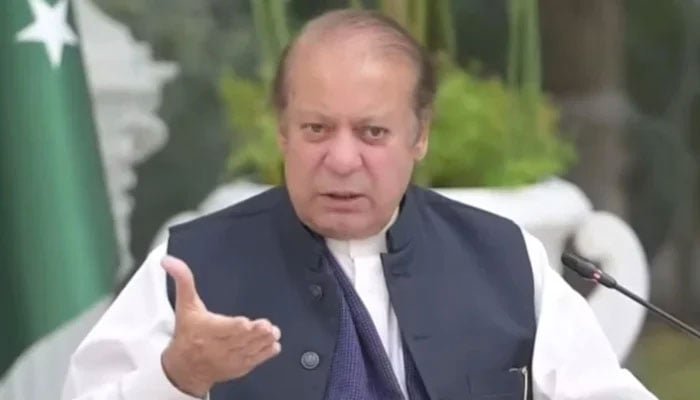
AJK Political Dialogue has become a key topic in Pakistan’s political landscape after Pakistan Muslim League-Nawaz (PML-N) President Nawaz Sharif called for an end to protests and sit-ins in Azad Jammu and Kashmir (AJK). Addressing party leaders during a meeting in Lahore, the former prime minister emphasized the importance of constitutional politics, peaceful engagement, and constructive discussions to resolve ongoing tensions in the region.
His remarks come at a time when the political situation in AJK remains under intense scrutiny. Recent developments have sparked debates about governance, public rights, representation, and the role of various political groups. Against this backdrop, Nawaz Sharif’s call for AJK Political Dialogue highlights the need for consensus-building and democratic solutions.
Growing Political Tensions in AJK
Over the past several weeks, political tensions in Azad Jammu and Kashmir have attracted national attention. The AJK government recently declared the Jammu Kashmir Joint Awami Action Committee (JAAC) a proscribed organization under anti-terrorism laws. The move came shortly before planned demonstrations regarding the future of reserved refugee seats in the AJK Assembly.
The issue has generated strong opinions among different political groups and segments of society. While some argue that reforms are necessary, others believe that constitutional mechanisms should be used to address concerns rather than street protests.
In this environment, AJK Political Dialogue is being viewed as a practical path toward reducing tensions and encouraging peaceful engagement among stakeholders.
Nawaz Sharif’s Call for Peace
During the meeting, Nawaz Sharif expressed concern over the current circumstances in the region and stated that such a situation should not have developed in the first place. He stressed that Pakistan belongs to all its citizens and that political disagreements should be resolved through democratic and constitutional means.
The former prime minister urged all parties, including political organizations, the AJK government, and the federal government, to work together for peace and stability. His message centered on cooperation, tolerance, and mutual understanding rather than confrontation.
Supporters of this approach believe that AJK Political Dialogue can help create an atmosphere where concerns are heard and solutions are reached without further escalation.
Importance of Constitutional Politics
One of the central themes of Nawaz Sharif’s remarks was the importance of pursuing political and public rights within the framework of the Constitution. Democratic systems rely on institutions, dialogue, and legal processes to resolve disputes.
Constitutional politics provides a structured mechanism for addressing grievances while maintaining social order and political stability. It also ensures that different viewpoints can be discussed openly without undermining democratic norms.
The emphasis on AJK Political Dialogue reflects the belief that lasting solutions emerge through consultation and negotiation rather than prolonged conflict.
Remembering the Human Cost
The meeting also expressed sorrow over the loss of lives in recent incidents linked to unrest in the region. Participants offered prayers for those who lost their lives and emphasized the importance of preventing further tragedies.
Political conflicts often have consequences that extend beyond policy debates. Families, communities, and local economies can be affected when tensions escalate. This is why many observers argue that peaceful engagement should remain the priority.
Through meaningful AJK Political Dialogue, leaders can focus on protecting public welfare while addressing political concerns responsibly.
Kashmir Issue Remains Central
Nawaz Sharif also reiterated his party’s longstanding position regarding the Kashmir issue. He stated that the people of Indian Illegally Occupied Jammu and Kashmir should be granted their right to self-determination in accordance with United Nations resolutions.
The former premier highlighted the sacrifices made by Kashmiris and acknowledged their historical connection with Pakistan. At the same time, he encouraged people to remain peaceful and continue strengthening their ideological and intellectual bond with the country.
While broader geopolitical issues remain complex, supporters believe that AJK Political Dialogue can strengthen internal unity and help the region focus on development and governance.
Development and Public Welfare
Another important aspect of the discussion was public welfare and development. Nawaz Sharif stated that the PML-N has consistently prioritized infrastructure projects, public services, and constitutional rights for the people of AJK.
Economic development and political stability often go hand in hand. Regions experiencing peace and cooperation are generally better positioned to attract investment, improve public services, and create opportunities for citizens.
By encouraging AJK Political Dialogue, policymakers hope to create conditions that support long-term growth and social progress.
The Road Ahead
The coming months will be crucial for the political future of Azad Jammu and Kashmir. Different stakeholders will need to demonstrate flexibility, patience, and a willingness to engage in constructive discussions.
Political disagreements are a natural part of democratic societies, but their resolution requires leadership and commitment to peaceful processes. Dialogue provides an opportunity to bridge differences and build common ground.
The recent call by Nawaz Sharif for AJK Political Dialogue reflects a broader desire for peace, stability, and democratic engagement in Azad Jammu and Kashmir. As political tensions continue to evolve, dialogue remains one of the most effective tools for addressing concerns while preserving social harmony.
By prioritizing constitutional politics, mutual respect, and cooperation, stakeholders can work toward solutions that benefit the people of AJK and strengthen the region’s future. The success of these efforts will depend on the willingness of all parties to choose discussion over division and progress over confrontation.