The US-Iran Peace Deal appears to be closer than ever as diplomatic efforts intensify between Washington and Tehran. According to recent statements from Pakistani and Iranian officials, a final text of the agreement has reportedly been reached, signaling a potentially historic breakthrough in one of the world’s most complex geopolitical conflicts. The development has attracted global attention as governments, analysts, and international organizations closely monitor the next steps in the peace process.
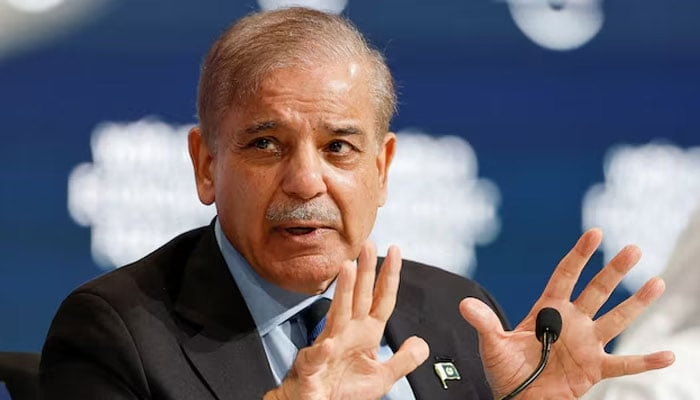
Prime Minister Shehbaz Sharif announced that Pakistan has been actively facilitating dialogue between the United States and Iran for several months. He stated that both sides have agreed on the final wording of the proposed agreement and are now working on procedural steps required for its implementation. If successful, the US-Iran Peace Deal could significantly reduce tensions in the Middle East and create opportunities for long-term regional stability.
The ongoing negotiations come after months of military confrontations, economic pressure, and diplomatic engagement. Pakistan’s role as a mediator has been widely acknowledged, with officials emphasizing the importance of dialogue over conflict. The country’s efforts have focused on encouraging constructive communication and finding common ground between the two nations.
One of the key aspects of the proposed agreement involves reducing hostilities and creating a framework for future discussions on broader regional issues. Reports suggest that economic measures may play a major role in the arrangement. Discussions have reportedly included sanctions relief, access to frozen assets, and measures designed to improve economic cooperation while ensuring compliance with agreed commitments.
The US-Iran Peace Deal is particularly significant because it addresses concerns that have affected regional security for years. Tensions between the United States and Iran have influenced energy markets, international trade routes, and diplomatic relations across the Middle East. A successful agreement could help restore confidence among investors and contribute to economic growth throughout the region.
Another important issue in the negotiations is the future of maritime security. The Strait of Hormuz, one of the world’s most critical shipping routes, has often been at the center of geopolitical disputes. Any agreement that guarantees safe navigation and uninterrupted trade would be welcomed by global markets and energy-dependent economies.
While optimism surrounding the US-Iran Peace Deal continues to grow, officials from both sides have urged caution. Iranian Foreign Minister Abbas Araghchi emphasized that the agreement has not yet been formally finalized and advised the media to avoid speculation regarding specific provisions. Similarly, US officials have stated that some reports circulating in the media do not accurately reflect the agreed terms.
The discussions have also highlighted differing perspectives on key issues. Reports indicate that certain matters, including regional security arrangements and military activities involving allied groups, remain sensitive topics. Negotiators are reportedly working to ensure that any final agreement balances the interests of all parties while maintaining long-term stability.
One notable aspect of the negotiations is the debate surrounding Iran’s nuclear program. Although reports vary regarding the details, it is clear that the issue remains an important component of broader discussions. Both sides appear committed to finding a diplomatic path forward that addresses security concerns while avoiding further escalation.
The potential benefits of the US-Iran Peace Deal extend beyond the immediate participants. Neighboring countries and international stakeholders have expressed hope that a successful agreement could reduce regional instability and create a more favorable environment for economic development. Improved relations could also encourage greater cooperation on issues such as energy security, trade, and infrastructure investment.
Pakistan’s involvement in the mediation process has further strengthened its position as a diplomatic bridge between nations facing complex challenges. By facilitating dialogue and promoting peaceful solutions, Pakistan has demonstrated its commitment to regional peace and international cooperation.
Despite the positive momentum, several challenges remain before the agreement can be officially signed and implemented. Negotiators must finalize technical details, establish verification mechanisms, and address outstanding concerns from various stakeholders. The success of the agreement will ultimately depend on mutual trust, transparency, and a willingness to honor commitments.
The US-Iran Peace Deal represents a potentially transformative moment for the Middle East and the international community. If finalized and implemented successfully, it could reduce tensions, strengthen economic cooperation, and pave the way for a more stable future. While uncertainties remain, the progress achieved so far demonstrates that diplomacy continues to be a powerful tool for resolving even the most challenging international disputes. As the world awaits official confirmation, hopes remain high that this agreement could mark the beginning of a new chapter in US-Iran relations.