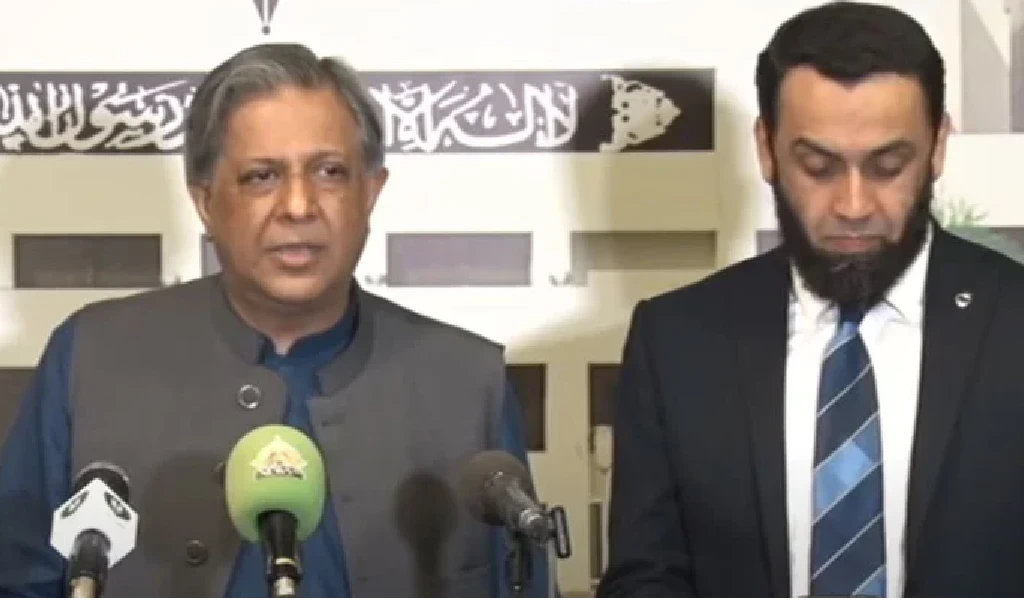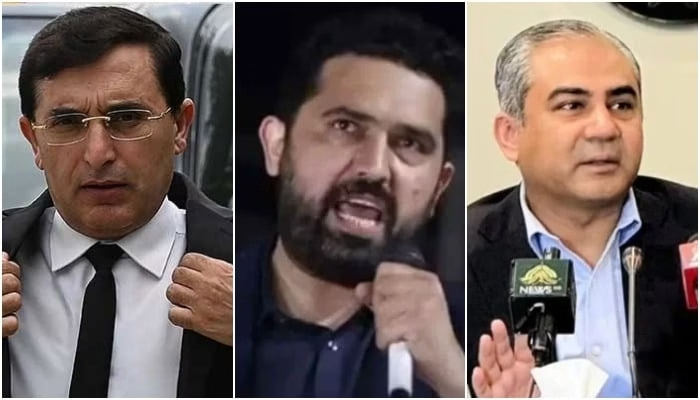
The recent PTI government meeting involving senior Pakistan Tehreek-e-Insaf leaders and Interior Minister Mohsin Naqvi has sparked political discussion across the country. After days of speculation, PTI finally confirmed that Khyber Pakhtunkhwa Chief Minister Sohail Afridi and party chairman Barrister Gohar Ali Khan met with the federal interior minister to discuss the worsening security situation in the province.
According to PTI officials, the meeting was not political in nature. Instead, it focused entirely on terrorism-related concerns in Khyber Pakhtunkhwa, especially after deadly incidents in Bannu that highlighted the growing threat posed by militant groups in the region.
The PTI government meeting has attracted attention because it comes at a time of heightened political tensions between the opposition party and the federal government. Despite those differences, both sides appeared willing to engage on matters related to national security and public safety.
Security Situation in Khyber Pakhtunkhwa
Khyber Pakhtunkhwa has faced increasing security challenges over the past several months. Militant attacks targeting civilians, police personnel, and security forces have once again become a major concern in several districts.
The recent clash in Bannu, where police officers and civilians lost their lives while dozens of militants were reportedly killed, intensified concerns about law and order in the province. Officials say coordinated efforts are needed to improve intelligence sharing, strengthen local policing, and enhance counterterrorism operations.
During the PTI government meeting, Interior Minister Mohsin Naqvi reportedly discussed ways to improve coordination between provincial and federal authorities to better respond to terrorism threats.
Political analysts believe the meeting reflected the seriousness of the security crisis, as both the federal and provincial leadership acknowledged the need for cooperation despite political disagreements.
PTI Clarifies Purpose of the Meeting
The meeting quickly became the subject of political speculation on social media. Some reports claimed that family members of PTI founder Imran Khan had also attended the gathering. However, PTI leaders strongly rejected those claims.
PTI Information Secretary Sheikh Waqas Akram clarified that only Barrister Gohar Ali Khan and Chief Minister Sohail Afridi participated in the PTI government meeting with Mohsin Naqvi. He emphasized that discussions remained limited to terrorism and law and order concerns in Khyber Pakhtunkhwa.
Aleema Khan, sister of Imran Khan, also publicly denied being present at the meeting. Her clarification helped reduce speculation that political negotiations or backchannel talks were taking place between PTI and the federal government.
Later, Chief Minister Afridi also stated that the meeting was entirely focused on the security situation in the province and not on political matters.
Importance of Political Cooperation on Security
Pakistan’s security challenges often require cooperation between political rivals. Experts say terrorism threats cannot be addressed effectively if federal and provincial institutions work separately.
The PTI government meeting demonstrated that even deeply divided political parties may still find common ground when national security is involved. While political tensions continue between PTI and the ruling coalition, both sides appear to recognize the urgency of improving law enforcement coordination in vulnerable regions.
Security analysts argue that Khyber Pakhtunkhwa remains one of the most sensitive provinces because of its proximity to Afghanistan and the presence of militant networks in border areas. Continued attacks in districts such as Bannu have increased pressure on authorities to adopt more effective counterterrorism strategies.
The provincial government has repeatedly demanded stronger federal support to deal with the evolving threat landscape.
Imran Khan’s Situation Remains a Major Issue
Although PTI leaders insist the meeting was not political, the broader political environment surrounding the party continues to influence public debate.
Former Prime Minister Imran Khan remains imprisoned and faces multiple legal challenges. PTI supporters have repeatedly raised concerns regarding his health and prison conditions. Reports about his eye condition and demands for medical treatment at a private hospital have kept the issue in the national spotlight.
The PTI government meeting therefore gained extra attention because many observers viewed any interaction between PTI leadership and government officials as politically significant.
However, party representatives maintain that the purpose of the meeting was solely related to terrorism and provincial security issues.
Public Reaction to the Meeting
Public reaction to the meeting has been mixed. Some people praised the decision by both sides to prioritize security over politics. Others remained skeptical and questioned whether additional discussions may have taken place behind closed doors.
Supporters of political dialogue argue that communication between rival parties is necessary for national stability, especially during periods of rising violence and economic challenges.
Meanwhile, critics continue to view any contact between PTI and government officials through a political lens due to the ongoing tensions between the opposition and the ruling coalition.
Despite the debate, the PTI government meeting highlighted the growing pressure on policymakers to address the worsening security situation in Khyber Pakhtunkhwa.
Future Challenges for KP
The provincial government now faces the difficult task of maintaining stability while responding to increasing militant activity. Experts believe long-term peace will require stronger intelligence operations, local community support, economic development, and coordinated federal assistance.
Khyber Pakhtunkhwa’s leadership has repeatedly stressed that terrorism remains one of the province’s biggest challenges. Continued attacks not only threaten public safety but also affect business confidence, education, and daily life in affected areas.
The recent PTI government meeting may represent an important step toward improving coordination between institutions, but many observers say practical action will matter more than political statements.
The meeting between PTI leaders and Interior Minister Mohsin Naqvi has brought renewed attention to Pakistan’s security challenges, particularly in Khyber Pakhtunkhwa. While political tensions remain high nationally, the PTI government meeting showed that counterterrorism concerns can still bring opposing sides together when public safety is at stake.
As militant threats continue to grow in sensitive regions like Bannu, cooperation between provincial and federal authorities may become increasingly important for ensuring long-term peace and stability in Pakistan.