Pakistan’s ongoing Operation Ghazab lil-Haq remains a major focus of the country’s national security strategy as the government and armed forces continue efforts to counter terrorism and maintain stability. Prime Minister Shehbaz Sharif recently reaffirmed the government’s commitment to the operation during his visit to the Command and Staff College in Quetta.
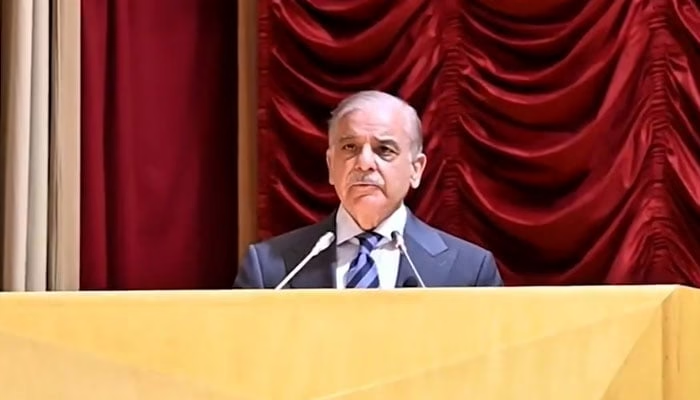
Addressing faculty members and student officers, the prime minister stated that the operation is being carried out with full determination to protect the lives and property of innocent citizens. He emphasized that Pakistan remains committed to targeting terrorist hideouts, support networks, and militant infrastructure linked to cross-border threats.
The launch of Operation Ghazab lil-Haq earlier this year came after increasing tensions along the Pakistan-Afghanistan border. Despite previous ceasefire agreements and diplomatic discussions between the two countries, concerns regarding militant activity and border security have continued to affect relations.
According to Pakistani officials, the operation is specifically aimed at eliminating terrorist proxies operating from Afghan territory. Islamabad has repeatedly called on the Afghan Taliban administration to take action against militant groups allegedly using Afghan soil for attacks inside Pakistan.
During his speech in Quetta, Prime Minister Shehbaz Sharif praised the professionalism and sacrifices of the Pakistan Armed Forces. He paid tribute to the soldiers and officers who have lost their lives while defending the country against terrorism and external threats.
The continuation of Operation Ghazab lil-Haq reflects Pakistan’s broader security policy focused on combating terrorism and maintaining internal stability. The operation also highlights the growing importance of border security and intelligence coordination in addressing modern security challenges.
The prime minister was accompanied during the visit by Defence Minister Khawaja Asif, Information Minister Attaullah Tarar, and Balochistan Chief Minister Sarfraz Bugti. Senior military officials also participated in the discussions regarding the country’s security situation.
Prime Minister Shehbaz Sharif also referred to “Marka-e-Haq,” the military conflict between Pakistan and India that took place earlier in 2025. He praised the leadership of Asim Munir and credited the armed forces for what he described as a successful and responsible defense of national sovereignty.
According to the prime minister, Pakistan demonstrated restraint and maturity during the conflict despite facing what he called unprovoked aggression. He noted that Pakistan’s approach received recognition from the international community for avoiding unnecessary escalation.
The role of the armed forces during Operation Ghazab lil-Haq and other security operations has become a central part of Pakistan’s national security narrative. Officials continue to stress the importance of public support and unity in confronting terrorism and safeguarding territorial integrity.
During the Quetta visit, the prime minister also highlighted Pakistan’s support for the people of Indian Illegally Occupied Jammu and Kashmir (IIOJK) and Palestine. He reiterated the country’s traditional diplomatic stance regarding regional and international humanitarian issues.
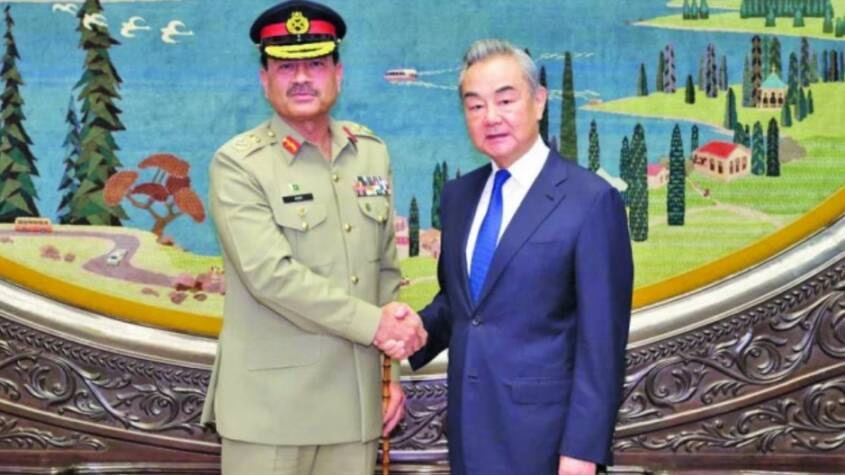
Meanwhile, Field Marshal Asim Munir separately visited the Command and Staff College Quetta, where he interacted with officers, faculty members, and troops deployed in Balochistan. He praised the institution’s high standards of military training and professionalism, emphasizing the importance of intellectual development in military leadership.
The army chief also reviewed the prevailing security environment in Balochistan and reaffirmed the armed forces’ commitment to eliminating terrorism across the country. He stated that hostile forces attempting to destabilize Pakistan through proxy warfare and propaganda would ultimately fail because of the resilience of the state and the unity of the people.
The ongoing Operation Ghazab lil-Haq has also renewed discussions about regional security cooperation and the challenges posed by cross-border militancy. Security experts believe that lasting peace in the region will require both military measures and stronger diplomatic engagement between neighboring countries.
Pakistan has consistently maintained that terrorism remains one of the biggest threats to national stability and economic progress. Military officials argue that operations targeting militant networks are necessary to ensure long-term peace and security for citizens.
The latest statements from civilian and military leadership indicate that Operation Ghazab lil-Haq will continue as part of Pakistan’s broader strategy against terrorism. Authorities believe that sustained efforts are essential to dismantle militant infrastructure and prevent future attacks.
As regional tensions and security concerns continue, Pakistan’s leadership is presenting a united stance on counterterrorism and national defense. The operation remains a significant part of the country’s security agenda, with officials emphasizing that protecting citizens and preserving stability remain top national priorities.