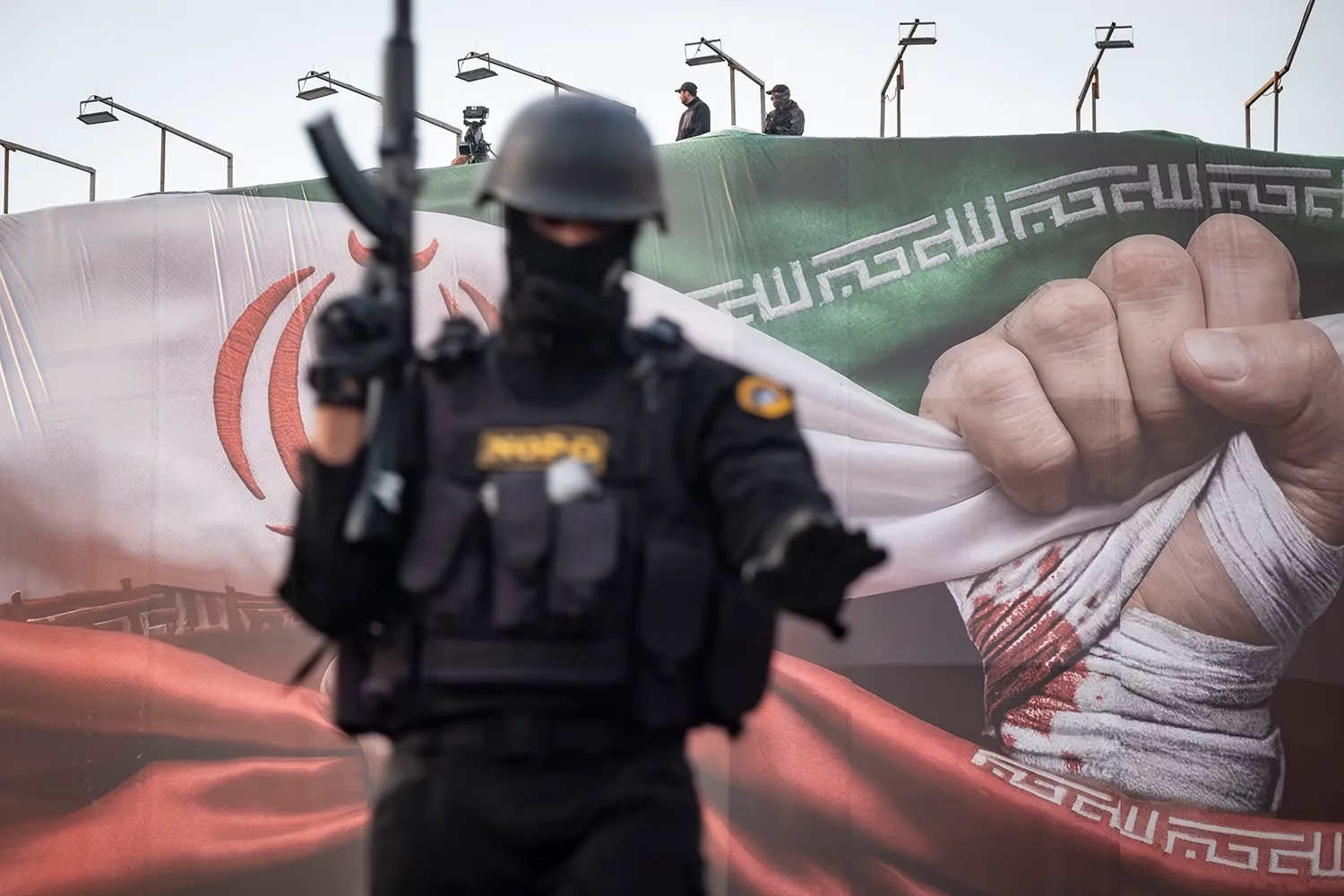
The latest rise in Iran US tensions has drawn international attention after senior Iranian figures issued strong warnings directed at the United States. Recent statements from Iranian officials highlighted growing frustration over American threats and military rhetoric, further increasing concerns about stability in the Middle East.
Former commander of Iran’s Islamic Revolutionary Guard Corps (IRGC), Mohsen Rezaei, made strong remarks on social media, warning that Iran would respond forcefully to any military aggression. His comments came amid renewed political and military tensions between Tehran and Washington.
According to Rezaei, Iran is fully prepared to confront external threats and would not surrender under pressure. He criticized what he described as inconsistent American policies and accused the United States of using threats as a political strategy against Iran.
The growing Iran US tensions have once again placed global attention on the long-standing conflict between the two countries. Relations between Tehran and Washington have remained strained for decades due to disagreements over regional influence, sanctions, nuclear policies, and military activities in the Middle East.
In his social media post, Rezaei specifically referred to statements made by former US President Donald Trump. He claimed that Washington often announces military deadlines or threats but later withdraws them, suggesting that such actions are intended to pressure Iran politically rather than lead to direct confrontation.
Iranian leaders have repeatedly stated that the country will defend itself against any external aggression. Rezaei emphasized that Iran’s armed forces and public unity would force enemies to retreat rather than weaken the country’s resolve.
The recent rise in Iran US tensions comes at a time when the Middle East is already experiencing political uncertainty and security concerns. Regional conflicts, economic sanctions, and geopolitical rivalries have created a fragile environment where even strong political statements can increase international anxiety.
Iran’s leadership has consistently presented resistance and national unity as key elements of its strategy against foreign pressure. Officials frequently highlight the role of the military and public support in maintaining national sovereignty. Such statements are often aimed at both domestic audiences and international observers.
Meanwhile, the United States has maintained pressure on Iran through sanctions, diplomatic measures, and military positioning in the region. Washington has long expressed concerns about Iran’s regional activities, missile program, and nuclear ambitions. These disagreements have contributed to repeated diplomatic crises over the years.
The latest developments in Iran US tensions have also sparked debate among political analysts regarding the possibility of future negotiations or further escalation. Some experts believe that strong public statements are often part of political messaging rather than immediate signs of military action. However, others warn that continued hostility could increase the risk of misunderstandings or conflict.
The relationship between Iran and the United States has experienced several critical moments in recent history. From sanctions and military incidents to nuclear negotiations and regional disputes, both countries have remained locked in a complex geopolitical rivalry that affects not only the Middle East but also global markets and international diplomacy.
Observers note that political rhetoric from both sides often intensifies during periods of diplomatic deadlock. Public statements can serve multiple purposes, including demonstrating strength, influencing domestic opinion, or sending strategic signals to international allies and rivals.
The current rise in Iran US tensions has also renewed concerns about economic impacts, especially on global energy markets. The Middle East plays a critical role in international oil supplies, and any escalation involving Iran and the United States can affect oil prices and investor confidence worldwide.
At the same time, many international powers continue to encourage diplomatic dialogue to prevent further instability in the region. Global leaders have repeatedly called for restraint, emphasizing the importance of peaceful solutions and negotiations instead of military confrontation.
Iranian officials continue to argue that external pressure will not force the country to change its core policies. Statements from leaders such as Mohsen Rezaei reflect the broader Iranian narrative of resistance against foreign influence and sanctions.
As discussions surrounding Iran US tensions continue, the international community remains closely focused on developments between the two countries. Political analysts believe that future diplomatic decisions, military movements, and public statements could significantly shape regional stability in the coming months.
The latest remarks from Iranian officials underline the deep mistrust that still exists between Tehran and Washington. While strong rhetoric remains a central feature of their relationship, many observers hope diplomatic channels will remain open to avoid further escalation in an already sensitive geopolitical environment.