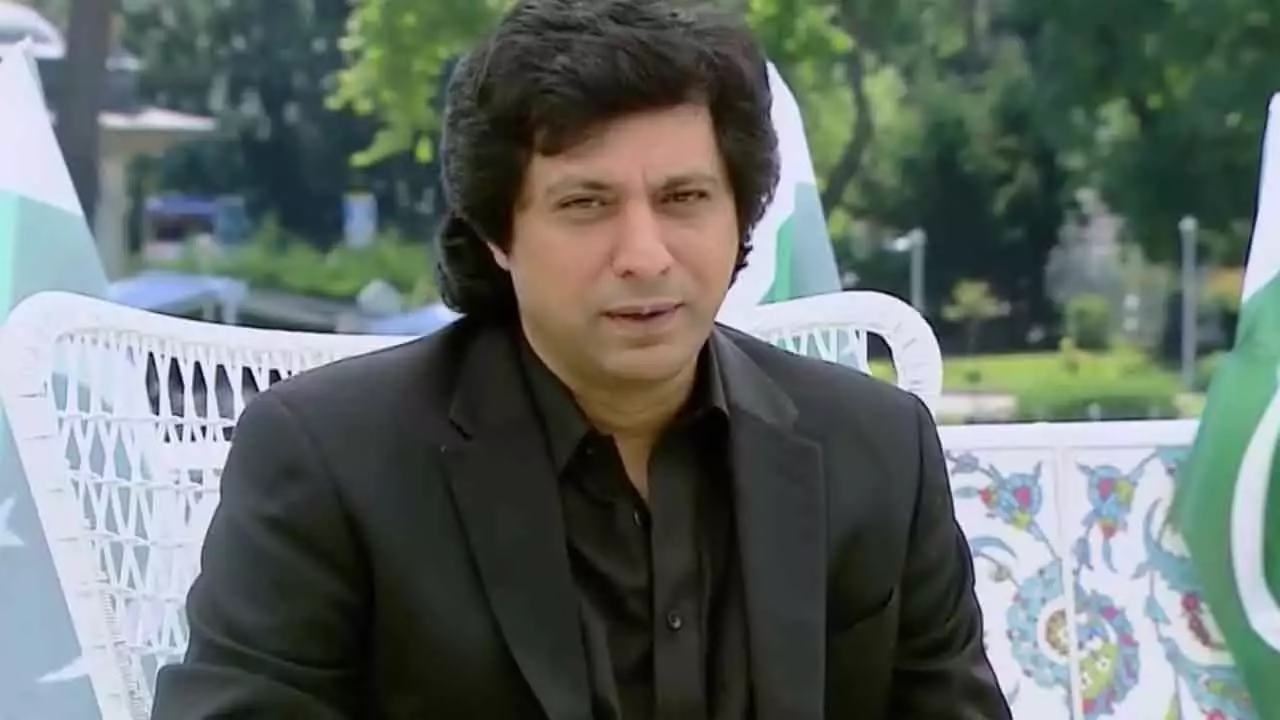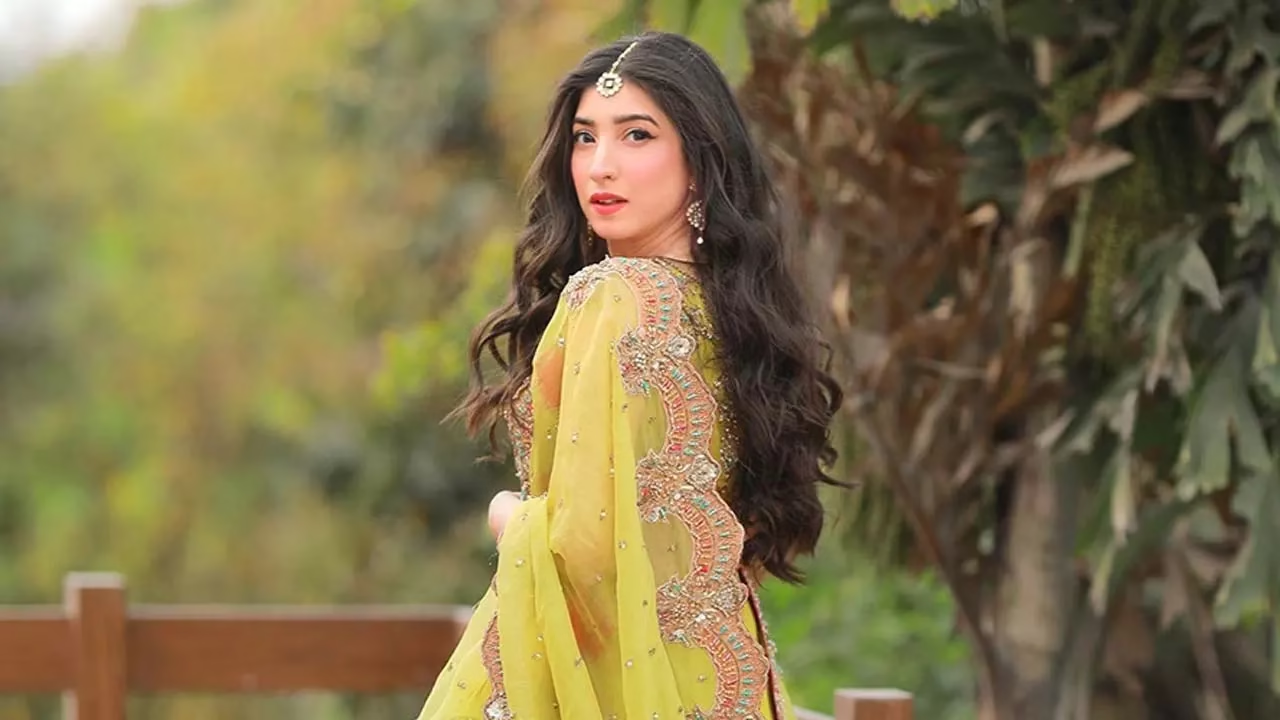
Maryam Nafees views on in-laws have sparked a new wave of discussion on social media after the actress openly shared her perspective on mother-in-law and daughter-in-law relationships during a private TV morning show. Her remarks touched on family expectations, independence after marriage, and the need for emotional and physical space within joint families.
A Bold Take on Traditional Family Roles
In her recent appearance, Maryam Nafees views on in-laws centered around the idea that a daughter-in-law should not be expected to automatically take on the responsibility of serving her husband’s family. She argued that this expectation is often unfair and outdated, especially in modern households where roles and responsibilities are evolving.
She also referred to broader teachings about family life after marriage, emphasizing that children should be encouraged to build their own independent lives. According to her, this separation is not about distancing relationships emotionally but about creating healthy boundaries that allow couples to grow together without unnecessary pressure.
The Maryam Nafees views on in-laws statement quickly gained attention because it directly challenged long-held cultural expectations in many South Asian households.
Preparing for Independence in Family Life
One of the most discussed parts of her interview was her personal reflection on motherhood. Maryam shared that even though her son is still very young, she is already mentally preparing for the day he grows up and starts his own family.
Her point was not about detachment, but about acceptance. Through her Maryam Nafees views on in-laws, she highlighted that parents should not hold on to children in a way that prevents them from building independent households after marriage.
This idea resonated with many viewers who believe that generational differences in expectations often create tension in joint families.
Space and Respect Within Shared Homes
Another important aspect of Maryam Nafees views on in-laws was her emphasis on space and dignity for daughters-in-law living in joint families. She acknowledged that not every family has the financial ability to live separately, but she stressed that emotional and practical boundaries are still important.
According to her, even within a shared home, a daughter-in-law should have her own personal space—such as a separate kitchen or defined living arrangements—so she can maintain independence and comfort.
This part of the discussion sparked significant engagement online, as many users related to the challenges of adjusting in joint family systems.
Social Media Reaction and Public Debate
As expected, Maryam Nafees views on in-laws triggered a wide range of reactions on social media. Supporters praised her for speaking openly about a topic that is often considered sensitive in traditional households. They appreciated her focus on mutual respect and personal space.
However, some critics argued that joint family systems are deeply rooted in cultural values and should not be discouraged. They believe that shared living can strengthen family bonds when managed properly.
Despite differing opinions, the conversation highlighted how relevant and complex the issue remains in modern society.
A Reflection of Changing Family Dynamics
The discussion around Maryam Nafees views on in-laws is part of a broader shift happening in many societies where younger generations are rethinking traditional family structures. Increasingly, couples prefer more independent living arrangements, while also trying to maintain strong ties with extended family.
Maryam’s remarks reflect this evolving mindset, where respect, boundaries, and emotional well-being are becoming central themes in family discussions.
The controversy and conversation around Maryam Nafees views on in-laws show how deeply personal beliefs about family life can influence public debate. Whether one agrees or disagrees with her perspective, her comments have clearly struck a chord with audiences.
At its core, the discussion is not just about in-laws—it is about balance. Finding harmony between tradition and independence continues to be one of the biggest challenges in modern family life, and voices like hers are pushing that conversation forward.