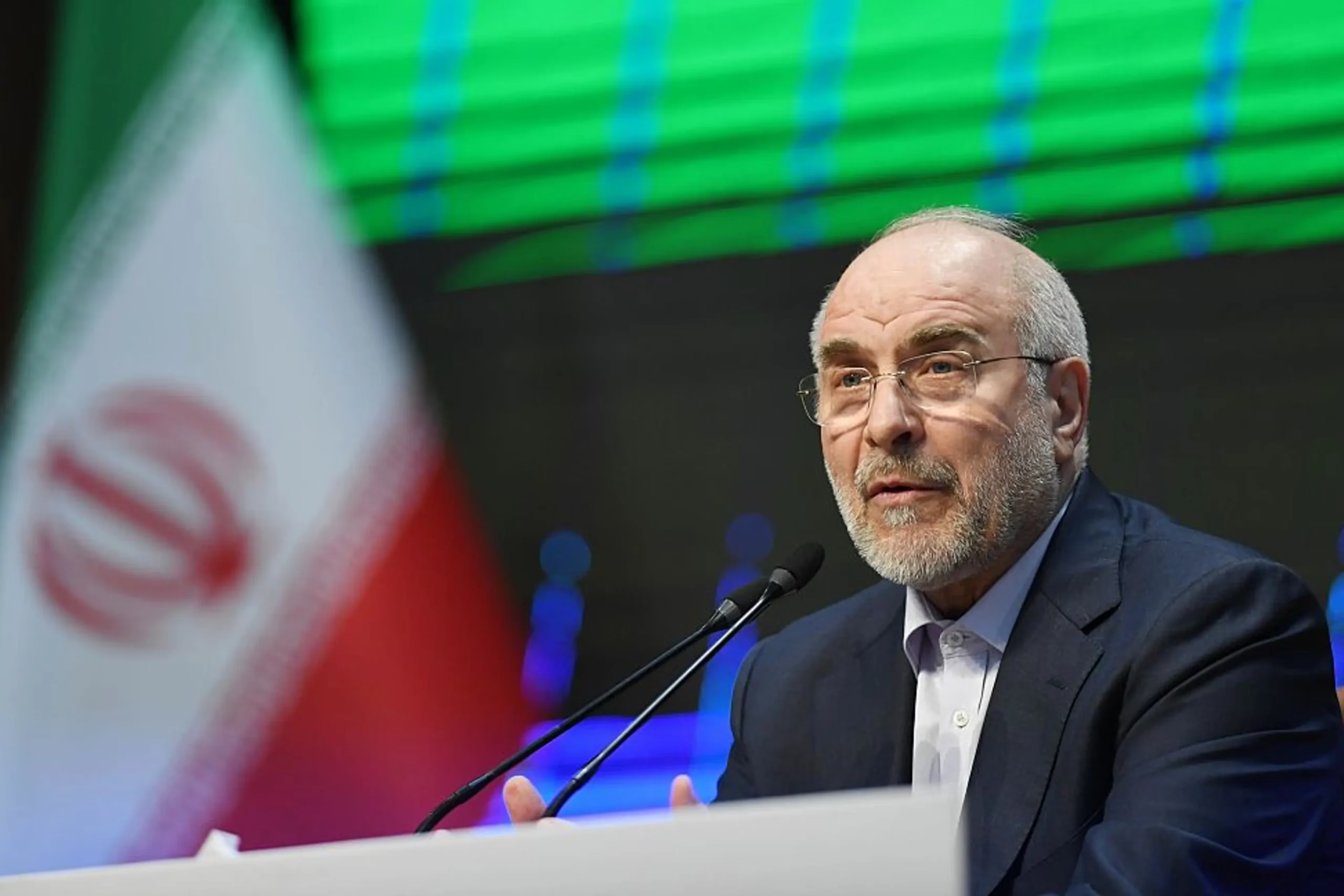
Iran has once again issued strong warnings to the United States amid growing regional instability and increasing military tensions in the Middle East. The latest statements from Iranian Parliament Speaker Mohammad Bagher Qalibaf have intensified discussions surrounding the ongoing Iran-US tensions, particularly regarding security in the strategically important Strait of Hormuz.
Speaking publicly about recent developments, Qalibaf stated that Iranian forces are fully prepared to respond to any form of aggression against Iranian territory or interests. He emphasized that Iran’s military capabilities have advanced significantly over the years and warned that any hostile action would face a strong response from Iranian defense forces.
The growing Iran-US tensions come at a sensitive time for the region, where geopolitical uncertainty has already affected global markets, shipping routes, and energy supplies. The Strait of Hormuz remains one of the world’s most critical waterways because a large percentage of global oil shipments pass through the narrow channel every day. Any military escalation in the area can quickly impact international trade and oil prices worldwide.
Qalibaf also referred to previous confrontations involving US naval activity near the Strait of Hormuz. According to his statement, Iranian forces responded rapidly to protect the strategic waterway and demonstrate their readiness. He claimed that Iran’s military reaction surprised US officials and showed the country’s ability to defend its territorial waters effectively.
The latest remarks further highlight the seriousness of current Iran-US tensions and the possibility of increased confrontation if diplomatic efforts fail. Iranian officials have repeatedly stressed that the country will defend itself against any external threats, while US officials continue expressing concerns about regional security, nuclear activities, and maritime stability.
Iran has invested heavily in expanding its military technology over the past decade. According to Iranian leaders, advancements in missile systems, drone technology, naval capabilities, and air defense systems have strengthened the country’s defensive position. Qalibaf specifically mentioned that Iran is prepared for both offensive and defensive operations if necessary.
Military analysts believe the Strait of Hormuz remains one of the most strategically sensitive regions in the world. Even small incidents involving naval vessels or military exercises can quickly raise fears of broader conflict. The current Iran-US tensions are therefore being closely monitored by governments, energy markets, and international observers.
The Middle East has already witnessed significant instability in recent years due to regional conflicts, sanctions, and geopolitical rivalries. Any further escalation involving Iran and the United States could have serious consequences for global energy supplies and economic stability. Rising oil prices are often one of the first reactions whenever tensions increase in the Gulf region.
Despite the aggressive tone of recent statements, experts continue to stress the importance of diplomacy and dialogue. Many international observers believe that both sides understand the risks of direct military confrontation. While political rhetoric may intensify during periods of tension, large-scale conflict would likely create severe economic and humanitarian consequences across the region.
The current Iran-US tensions also reflect broader power struggles involving regional influence, security alliances, and international sanctions. Iran has long argued that its military programs are intended for national defense, while Western countries continue expressing concerns about missile development and regional activities.
At the same time, Iran’s leadership often uses strong public statements to demonstrate internal unity and project military confidence. Such rhetoric can also serve as a message to both domestic audiences and international rivals. Political analysts note that strategic messaging is an important part of regional diplomacy in the Middle East.
The Strait of Hormuz continues to remain central to these tensions because of its economic significance. Any disruption to shipping in the area can immediately affect global oil markets, increasing prices and creating uncertainty for energy-importing countries. This is why international powers closely monitor developments in the Gulf region whenever military statements escalate.
The latest Iran-US tensions also come amid broader discussions about regional security arrangements and future negotiations regarding Iran’s nuclear program. Diplomatic efforts between various international stakeholders continue, although progress has often been slow and complicated by political mistrust.
Many experts believe that maintaining open communication channels remains essential to preventing misunderstandings or accidental escalation. In regions with heavy military presence, even minor incidents can rapidly become larger confrontations if diplomatic mechanisms fail.
The recent statements by Mohammad Bagher Qalibaf underline the continuing strain between Iran and the United States. The ongoing Iran-US tensions demonstrate how fragile regional stability remains and how quickly political rhetoric can influence global markets and international security concerns.
As the situation develops, the international community will likely continue watching closely for signs of either escalation or renewed diplomatic engagement. While military preparedness remains a central theme in official statements, many observers still hope that diplomacy can prevent further instability in one of the world’s most sensitive geopolitical regions.