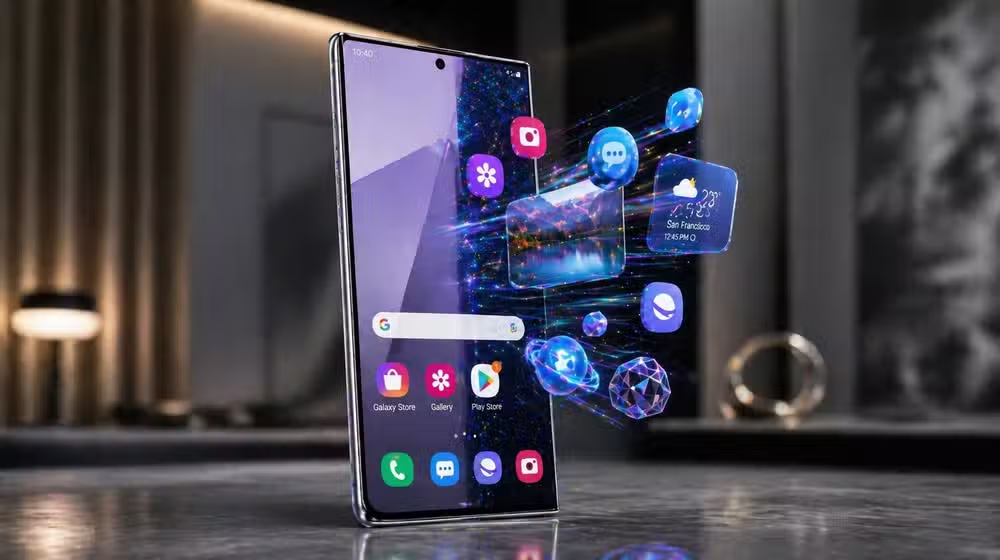
Samsung Display may be preparing the next big evolution in smartphone screens with its rumored Samsung holographic display technology. According to recent leaks, the company is reportedly researching a new display system capable of creating glasses-free 3D visuals directly on smartphone screens, potentially transforming how users interact with mobile devices in the future.
The leaked information, shared by tech insider Schrödinger, also known as @phonefuturist on X, claims the project is being developed internally under the codename MH1 or H1. While Samsung has not officially confirmed the reports, the leak has already sparked excitement across the technology industry because of the possible impact such innovation could have on future smartphones.
The rumored Samsung holographic display system reportedly combines several advanced technologies, including nanostructured holographic layers, eye tracking, and beam steering. Together, these technologies may allow users to view digital objects with realistic depth without needing special glasses or external accessories.
Unlike traditional smartphone displays that show flat images, this new system could create a more immersive viewing experience. Users may reportedly be able to move or tilt their phones slightly and see digital objects from different angles, similar to how people naturally view objects in real life. This would create a spatial effect that feels more interactive and realistic.
One of the most interesting aspects of the leaked Samsung holographic display technology is its focus on preserving normal screen quality during regular use. Earlier glasses-free 3D systems often reduced image clarity, brightness, or viewing angles when displaying standard 2D content. According to the leak, Samsung’s approach may solve this problem by maintaining full display resolution during normal smartphone usage.
The smartphone industry has experimented with glasses-free 3D technology before, but results have often been mixed. Devices such as the Nintendo 3DS introduced 3D viewing without glasses years ago, but users frequently complained about limited viewing angles and inconsistent image quality. Small movements could disrupt the effect, making the experience less practical for everyday use.
Samsung’s reported beam steering technology is said to improve this limitation significantly. Beam steering works by directing light more precisely toward the user’s eyes, helping maintain a stable 3D effect even when the phone moves slightly. Combined with eye-tracking systems, the technology could potentially create smoother and more comfortable viewing experiences.
The development of Samsung holographic display technology also reflects the growing interest in spatial computing and mixed reality. Technology companies are increasingly exploring ways to blend digital content with real-world experiences. Smartphones, tablets, headsets, and wearable devices are all evolving toward more immersive interfaces.
Industry analysts believe holographic displays could open the door to entirely new smartphone experiences. Future applications may include floating user interfaces, immersive gaming environments, advanced video communication, and realistic 3D navigation systems. Watching movies, browsing photos, or shopping online could become much more interactive if objects appear to have real depth.
There is also speculation that companies like Apple could eventually adopt similar display technologies in future products. The leak even mentioned the possibility of a “Spatial iPhone” in the future, suggesting that Samsung Display could potentially supply advanced screens to other smartphone manufacturers.
Samsung already has a strong history of introducing new display technologies to the market. The company played a major role in popularizing foldable OLED displays through devices like the Samsung Galaxy Z Fold and Samsung Galaxy Z Flip. It has also explored glasses-free 3D displays in monitors and other devices before bringing similar concepts into mobile research.
The rumored Samsung holographic display project is reportedly still in the early research and development phase, meaning commercial products may still be several years away. Many experimental technologies never reach mass production due to technical challenges, manufacturing costs, or limited consumer demand.
However, the timing of these reports aligns with broader industry trends. Smartphone manufacturers are searching for the next major innovation as hardware improvements become increasingly incremental. Foldable phones introduced a new design direction, but companies are now looking beyond folding screens toward more advanced display experiences.
Samsung recently introduced hardware-based viewing angle control features in flagship smartphones, showing the company’s continued focus on display innovation. Other brands such as Xiaomi, Oppo, and Vivo are also reportedly exploring similar technologies for future premium devices.
The Samsung holographic display could represent one of the biggest changes in smartphone interaction since touchscreens became mainstream. Instead of simply tapping flat icons on a screen, users may eventually interact with floating digital objects that feel more natural and immersive.
While the technology is still far from becoming commercially available, the idea of glasses-free holographic smartphones highlights how rapidly mobile innovation continues to evolve. As companies push the boundaries of display technology, the future of smartphones may become far more immersive than today’s devices.