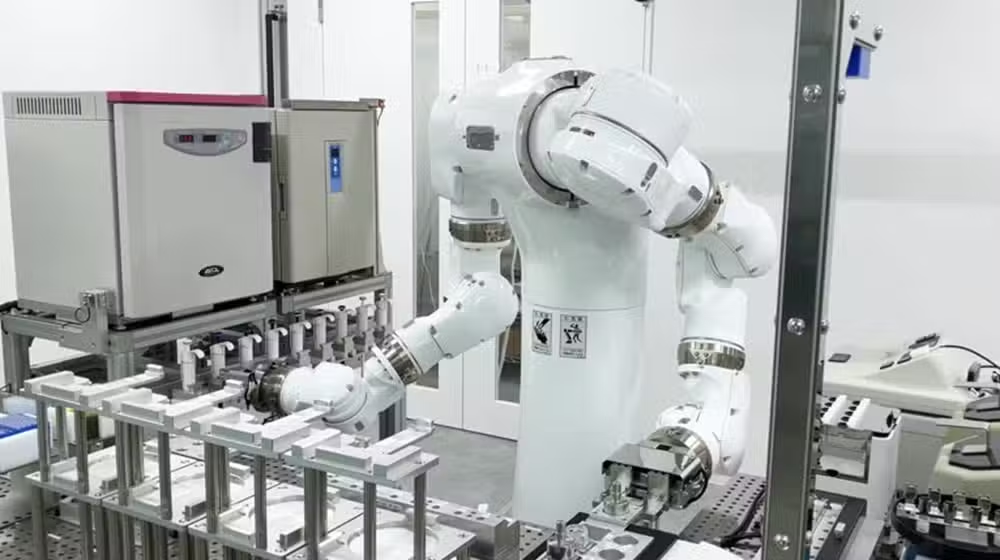
Japan is taking a major step toward the future of scientific innovation with the launch of a robotic research laboratory designed to automate medical experiments. The rise of AI robots in medical research is becoming one of the most exciting developments in modern science, and a Tokyo-based university is now leading this transformation with advanced robotics and artificial intelligence systems.
The new laboratory, located at Institute of Science Tokyo, operates with robots instead of traditional human laboratory staff. Known as the Robotics Innovation Center, the facility uses highly advanced machines capable of performing delicate scientific tasks that were previously handled only by trained researchers. Officials believe the technology could eventually revolutionize how medical discoveries are made.
At the center of the project is a humanoid robot called Maholo LabDroid. Equipped with two robotic arms, the machine can perform complex laboratory procedures with remarkable precision. Tasks such as handling reagents, opening laboratory equipment, transferring materials, and managing cell cultures are now being carried out automatically.
The growing use of AI robots in medical research reflects how technology is reshaping laboratories around the world. Research institutions face increasing pressure to improve efficiency, reduce human error, and manage labor shortages. By automating repetitive and time-consuming tasks, robotic systems allow scientists to focus more on analysis, innovation, and problem-solving.
One of the most impressive features of the Tokyo laboratory is its long-term vision. The university plans to increase the number of robots significantly over the coming years. By 2040, researchers hope to deploy around 2,000 robotic systems capable of handling nearly every stage of scientific research, from generating hypotheses to conducting experiments and verifying results.
This ambitious project combines robotics with artificial intelligence to create smarter and more independent research systems. AI can help robots process large amounts of scientific data, identify patterns, and even suggest potential experimental directions. The integration of AI with automation may dramatically accelerate the pace of medical discoveries in the future.
The expansion of AI robots in medical research could also improve consistency in laboratory experiments. Human researchers can become tired, distracted, or inconsistent during repetitive procedures, especially during long working hours. Robots, however, can repeat tasks with the same precision every time, reducing the risk of accidental contamination or measurement errors.
The project has already shown practical results in the healthcare field. The Maholo LabDroid has reportedly been introduced at a specialized ophthalmology hospital in Kobe, where it assists with clinical research involving induced pluripotent stem cells. The robot helps with cell culture operations, a process that requires extreme accuracy and sterile conditions.
Stem cell research is considered one of the most promising areas of modern medicine because it may lead to new treatments for diseases, injuries, and degenerative conditions. The use of robots in such sensitive research demonstrates the growing trust scientists place in automation technologies.
Experts believe the rise of AI robots in medical research may significantly change the future role of human scientists rather than replace them entirely. Instead of spending hours performing repetitive laboratory procedures, researchers may increasingly focus on creative thinking, designing experiments, and interpreting complex results. Automation could make scientific work faster and more productive while still relying on human expertise for major decisions.
Japan’s investment in robotics is not surprising. The country has long been recognized as a global leader in automation and advanced manufacturing technology. Facing an aging population and labor shortages, Japan continues to explore ways technology can support industries ranging from healthcare to scientific research.
The Robotics Innovation Center also represents a broader global trend toward smart laboratories. Around the world, universities and pharmaceutical companies are investing heavily in AI-driven research systems to speed up drug development, improve diagnostic tools, and discover new medical treatments more efficiently.
However, the rapid growth of automation in science also raises important questions. Some experts worry about overdependence on machines and the ethical challenges associated with AI-based decision-making in research. Others emphasize the importance of maintaining strong human oversight to ensure scientific integrity and safety standards.
Despite these concerns, many scientists believe the advantages outweigh the risks. Automated laboratories can operate continuously without fatigue, process large numbers of experiments simultaneously, and improve research productivity. This could become especially valuable during global health emergencies when rapid medical discoveries are urgently needed.
The future of AI robots in medical research appears increasingly promising as universities and research institutions continue investing in advanced technology. The Tokyo laboratory serves as an example of how robotics and artificial intelligence may reshape the scientific world over the next two decades.
As automation becomes more sophisticated, the line between human expertise and machine assistance will continue to evolve. While robots may not completely replace scientists, they are likely to become essential partners in the search for new medical breakthroughs and scientific innovation.