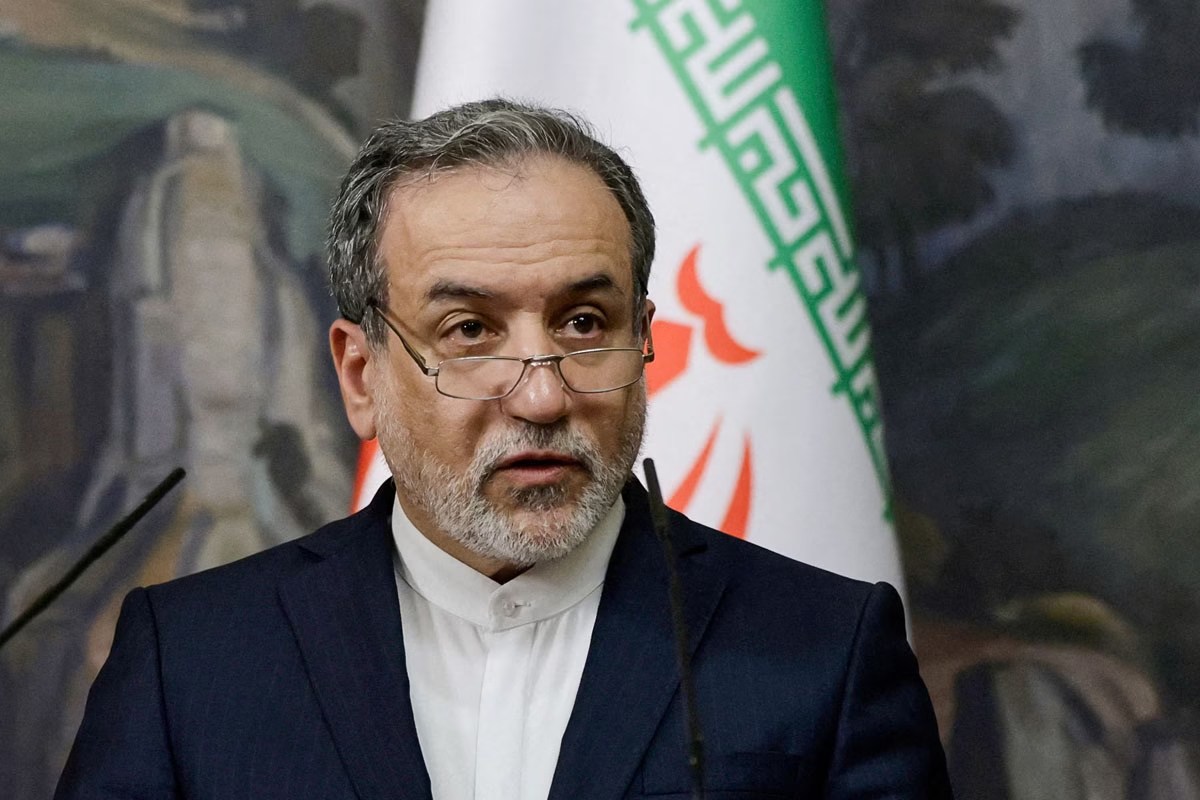
Rising Iran US Strait of Hormuz tensions have once again drawn global attention after strong remarks from Iranian Foreign Minister Abbas Araghchi. In his recent statement, Araghchi warned the United States against any new military action and criticized what he described as provocative activities in the strategic maritime corridor. His comments highlight the fragile nature of relations between Tehran and Washington at a time when both diplomacy and confrontation remain on the table.
The Iran US Strait of Hormuz tensions are closely linked to the broader geopolitical importance of the region. The Strait of Hormuz is one of the most critical oil shipping routes in the world, and any instability there can have immediate global economic consequences. Araghchi’s remarks reflect growing concern in Iran that external pressure could escalate into a wider regional conflict.
In his statement, the foreign minister accused the United States of frequently turning to military action whenever diplomatic opportunities arise. He questioned whether recent US behavior was aimed at increasing pressure on Iran or pushing political leadership in Washington toward confrontation. Despite these concerns, he emphasized that Iran would not submit to external pressure. This firm stance adds another layer to the already complex Iran US Strait of Hormuz tensions.
Araghchi also addressed reports circulating in international media regarding Iran’s missile capabilities. He strongly rejected claims that Iran’s military strength had declined, stating instead that missile reserves had actually increased compared to earlier estimates. According to him, Iran’s defense readiness remains extremely high, reinforcing the country’s deterrence posture amid ongoing Iran US Strait of Hormuz tensions.
The statement that Iran’s readiness is at “1,000 percent” reflects Tehran’s effort to project confidence and strength. While the figure is symbolic rather than technical, it underscores Iran’s intention to deter any potential military escalation. This rhetoric is consistent with previous Iranian messaging during periods of heightened Iran US Strait of Hormuz tensions.
The United States has not officially responded to these latest remarks, but media reports suggest continued monitoring of regional developments. The Strait of Hormuz remains a focal point for international security discussions due to its role in global energy supply. Any disruption in this area could significantly impact oil prices and global trade routes, making the Iran US Strait of Hormuz tensions a matter of international concern.
Historically, relations between Iran and the United States have been marked by cycles of diplomacy and confrontation. Sanctions, nuclear negotiations, and regional conflicts have all contributed to a complex and often unstable relationship. The current situation reflects this ongoing pattern, where diplomatic talks coexist with warnings and military signaling.
Analysts believe that both sides are attempting to balance pressure with restraint. While Iran continues to emphasize its defensive capabilities, the United States maintains a strong military presence in the region. This delicate balance helps prevent direct conflict but also keeps the Iran US Strait of Hormuz tensions active and unresolved.
The economic dimension of the situation cannot be ignored. The Strait of Hormuz handles a significant portion of the world’s oil exports, and any disruption could lead to sharp increases in global energy prices. This gives the region strategic importance far beyond its geographic size, making stability a priority for both regional and international actors.
Diplomatic efforts between the two countries continue intermittently, though progress has been limited. While both sides occasionally express willingness to engage in dialogue, mistrust remains a major barrier. Araghchi’s recent comments suggest that Iran remains cautious about US intentions, particularly when military actions are mentioned alongside diplomatic talks.
At the same time, Iran continues to emphasize its commitment to protecting national sovereignty. The government maintains that its defense capabilities are meant purely for deterrence, not aggression. This narrative is central to how Tehran frames the ongoing Iran US Strait of Hormuz tensions on the international stage.
The latest statements from Abbas Araghchi highlight the continued volatility surrounding the Iran US Strait of Hormuz tensions. With strong rhetoric from Iran, strategic military positioning, and ongoing diplomatic uncertainty, the situation remains sensitive. As global attention focuses on the region, the hope for stability depends on whether dialogue can eventually outweigh confrontation.