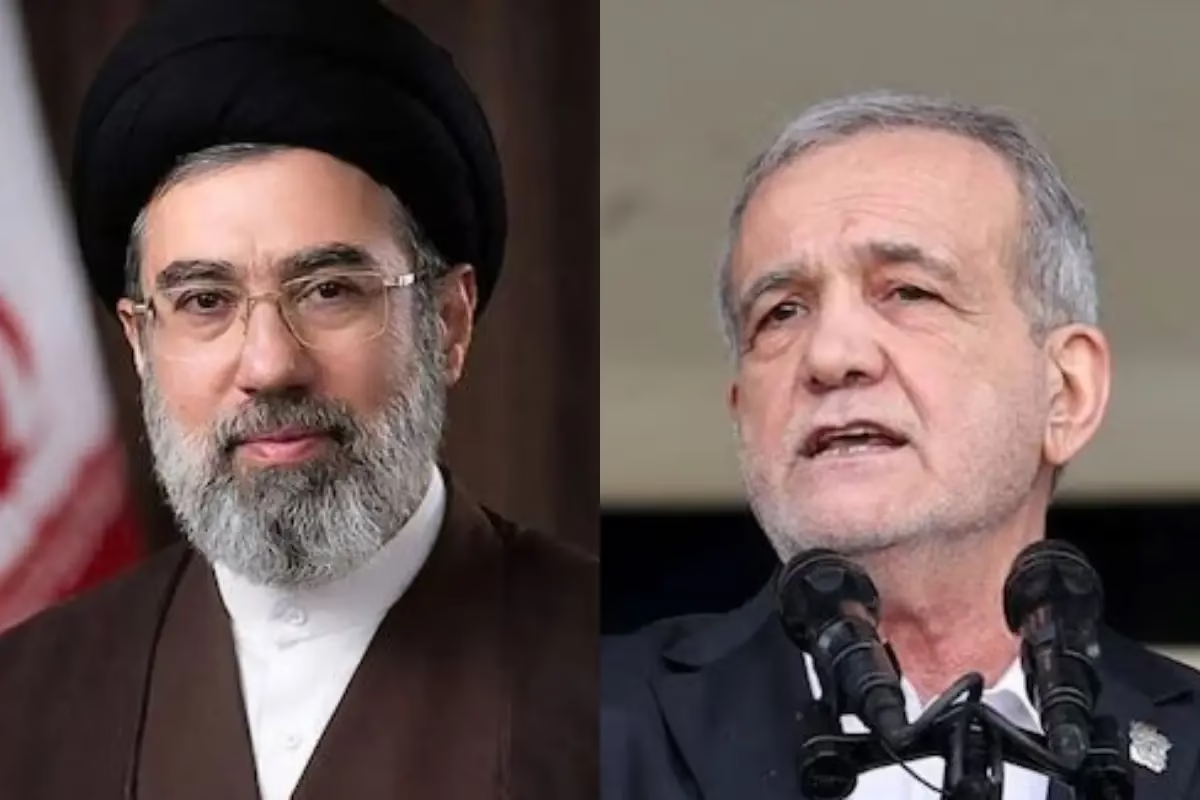
The recent Iran leadership meeting between Iranian President Masoud Pezeshkian and Supreme Leader Mojtaba Khamenei has attracted significant attention both inside and outside the country. According to Iranian media reports, the discussion lasted nearly two and a half hours and focused on national unity, public confidence, and the challenges facing Iran amid growing international pressure.
Speaking about the meeting, President Pezeshkian described the atmosphere as sincere, calm, and based on mutual trust. He praised the Supreme Leader’s humble approach and thoughtful perspective, saying that the conversation created an environment where open and direct dialogue was possible. The Iran leadership meeting was presented as a symbol of coordination and understanding at the highest level of government.
The president’s remarks come at a time when Iran is dealing with complex political and economic pressures. International sanctions, regional tensions, and domestic economic concerns have all contributed to uncertainty within the country. Against this backdrop, the Iran leadership meeting appears aimed at reinforcing unity among state institutions and reassuring the public that the leadership remains aligned on key national issues.
One of the major themes discussed was the importance of maintaining social stability. President Pezeshkian stated that external forces are attempting to weaken national unity by creating fear, anger, and frustration among the Iranian people. According to him, economic pressure is being used as a tool to encourage unrest and weaken public confidence in the government. These comments reflect the broader narrative often presented by Iranian officials regarding foreign influence and sanctions.
The Iran leadership meeting also highlighted the importance of communication between political leaders during difficult times. In many countries, public trust in leadership is closely connected to how openly and effectively leaders address national challenges. By publicly discussing the details and tone of the meeting, President Pezeshkian may be attempting to send a message of stability and confidence to both domestic and international audiences.
Economic challenges remain one of Iran’s most pressing issues. Inflation, unemployment, and restrictions linked to international sanctions have affected daily life for many citizens. Iranian leaders have frequently argued that external economic pressure is designed to increase dissatisfaction within society. During the Iran leadership meeting, these concerns were reportedly discussed in detail, with an emphasis on resilience and national solidarity.
Another important aspect of the discussion was the role of unity in confronting external pressure. Iranian officials often stress that internal divisions can make the country more vulnerable to outside influence. By emphasizing trust and cooperation, the Iran leadership meeting reinforced the leadership’s message that political stability depends on maintaining cohesion among both officials and the public.
Observers also note that the relationship between the president and the Supreme Leader plays a major role in shaping Iran’s political direction. In Iran’s political system, the Supreme Leader holds significant authority over major state matters, including defense and foreign policy. A positive and cooperative relationship between the two leaders is therefore seen as important for effective governance. The recent Iran leadership meeting suggests an effort to maintain alignment on both domestic and international strategies.
International reactions to such meetings are often shaped by broader geopolitical tensions. Iran’s relations with the United States and several Western countries remain strained, particularly over sanctions, nuclear policies, and regional security issues. Statements regarding economic pressure and foreign influence are likely to be interpreted within this wider context.
Despite ongoing tensions, Iranian officials continue to emphasize the importance of dialogue and stability. President Pezeshkian’s description of the meeting as calm and understanding reflects an attempt to project confidence during a challenging period. The Iran leadership meeting may also serve to reassure supporters that the country’s leadership remains united despite external challenges.
At the same time, analysts believe that maintaining public confidence will require more than political messaging. Economic reforms, improved living conditions, and stronger social trust are all important factors in long-term stability. While leadership meetings can shape public perception, practical solutions to economic and social concerns will remain essential.
The recent Iran leadership meeting between President Masoud Pezeshkian and Supreme Leader Mojtaba Khamenei highlighted the government’s focus on unity, trust, and stability during a period of external pressure. The discussion reflected concerns about economic challenges and foreign influence while also emphasizing the importance of national cohesion. As Iran continues to navigate regional and international tensions, such high-level meetings are likely to remain an important part of the country’s political landscape.