China’s ongoing China corruption crackdown has once again drawn global attention after two former defense ministers received suspended death sentences over bribery charges. The verdict reflects the country’s increasingly strict stance on corruption, particularly within military and political institutions. The decision is being viewed as another major step in President Xi Jinping’s long-running anti-corruption campaign.
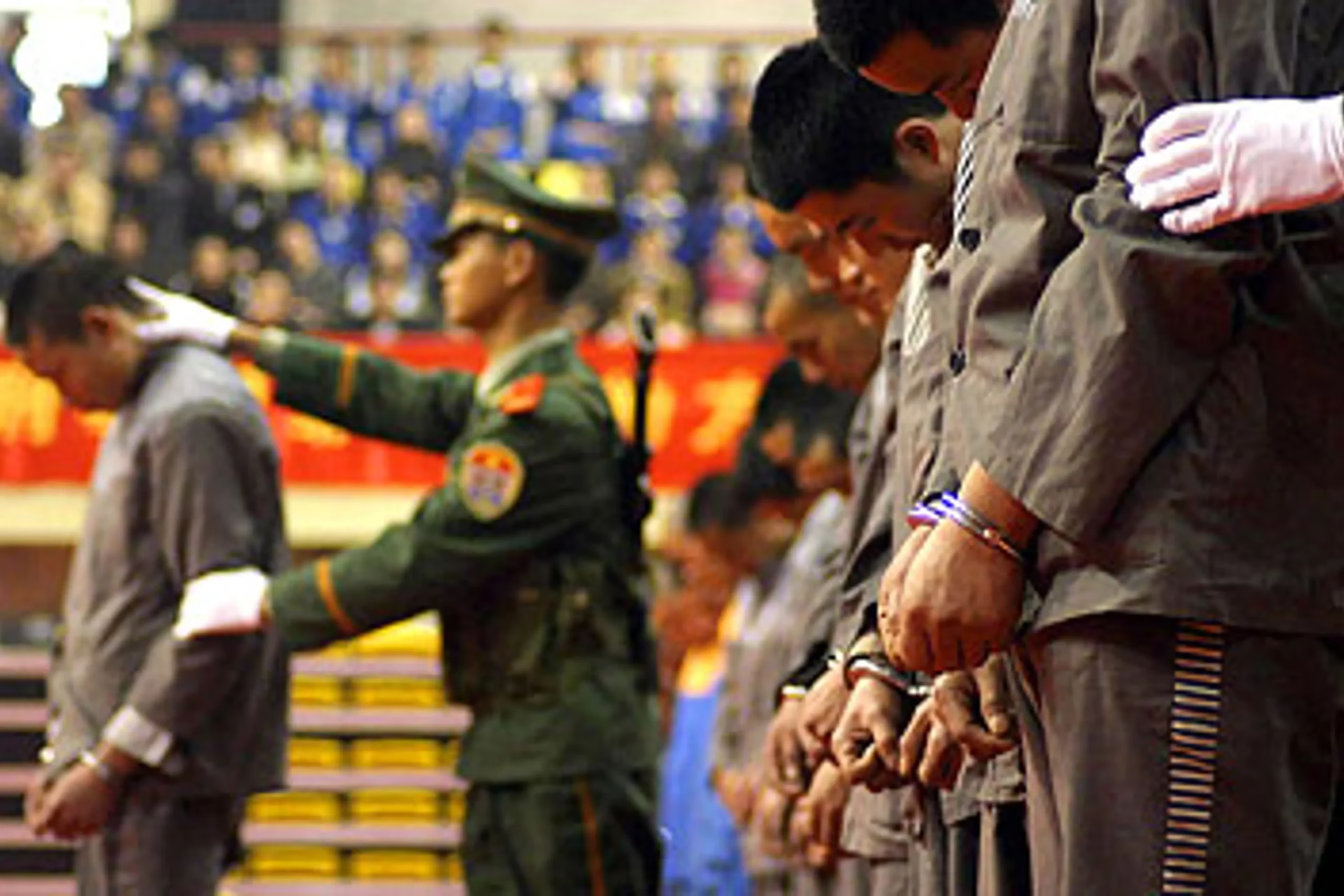
According to reports, former Chinese defense ministers Wei Fenghe and Li Shangfu were found guilty of accepting bribes. Li Shangfu was also accused of offering bribes, leading to severe punishment for both officials. Under Chinese law, a suspended death sentence is often reduced to life imprisonment after a review period, but it still represents one of the harshest penalties in the country’s legal system. The case has become a major symbol of the current China corruption crackdown.
President Xi launched his anti-corruption drive more than a decade ago, aiming to eliminate misconduct within the Communist Party, government institutions, and military leadership. Over the years, thousands of officials have faced investigations, dismissals, and legal action. However, recent developments suggest that the China corruption crackdown has entered a more aggressive phase, particularly within the military sector.
The removal and sentencing of senior defense officials send a strong message about accountability. China’s military, officially known as the People’s Liberation Army, plays a central role in the country’s political and strategic structure. By targeting high-ranking figures, the government appears determined to reinforce discipline and loyalty within the armed forces. Supporters of the campaign argue that the China corruption crackdown is necessary to strengthen governance and public trust.
One notable aspect of this campaign is its impact on the powerful Central Military Commission. In previous years, the commission had multiple influential members, but recent changes have significantly reduced its size and influence. Analysts see this as evidence of tighter control and a more centralized leadership approach under Xi Jinping.
The timing of these sentences is also significant. China is facing increasing global scrutiny over economic challenges, military modernization, and international relations. By continuing the China corruption crackdown, the government may be attempting to project an image of stability, discipline, and strong leadership both domestically and internationally.
Another factor linked to the case is the international controversy surrounding military procurement. Both former ministers had reportedly faced restrictions from the United States due to purchases of Russian military equipment. While these sanctions were separate from the corruption charges, they added further attention to the officials and their activities. The combination of international pressure and domestic legal action has made this case particularly high-profile.
Public reaction within China has been mixed. Some citizens view the campaign positively, believing that corruption has long weakened institutions and damaged public confidence. Others question whether the campaign is solely about accountability or also serves political purposes. Regardless of differing opinions, the China corruption crackdown has clearly reshaped the country’s political and military landscape over the past decade.
Critics of the system have also raised concerns about transparency and due process. China’s legal and political structure differs significantly from many Western systems, and sensitive political cases are often handled behind closed doors. Despite this, the government maintains that these measures are essential for maintaining order and national integrity.
From an international perspective, the crackdown demonstrates how seriously China views corruption within its leadership ranks. Countries around the world continue to monitor these developments closely, especially given China’s growing influence in global politics and economics. The outcomes of such cases may also influence future military and diplomatic relationships.
The recent sentencing of two former defense ministers highlights the intensity and reach of the China corruption crackdown under Xi Jinping. By targeting senior military figures, the Chinese leadership is reinforcing its message that corruption will not be tolerated at any level. Whether viewed as a governance reform effort or a broader political strategy, the campaign continues to shape the future direction of China’s political and military institutions.