Pakistan Peoples Party (PPP) Chairman Bilawal Bhutto-Zardari has called for greater political unity and institutional reforms, saying Bilawal Bhutto political unity is essential for restoring public confidence and addressing the country’s economic challenges. He urged political leaders to move beyond hatred and division, focus on public welfare and work together to protect Pakistan from future crises.
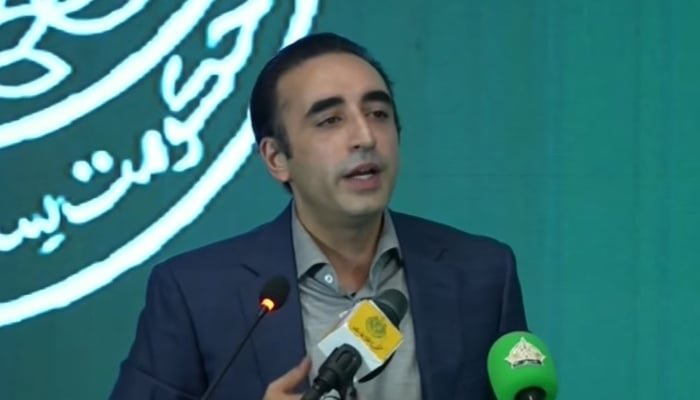
Addressing a Youth Card ceremony in Karachi on Monday, Bilawal said politicians had a responsibility to maintain public hope and confidence in the country’s political and institutional system. He warned that if political leaders themselves lost faith in the system, they could not expect ordinary citizens to trust it.
His remarks highlighted the need for cooperation between the government, opposition and state institutions at a time when Pakistan continues to face economic difficulties and growing public concerns.
Bilawal Calls for an End to Politics of Division
The PPP chairman said rulers should abandon the politics of hatred and division and prioritise the needs of citizens. According to him, Pakistan has the ability to overcome major challenges, including economic crises and natural disasters, but national progress would remain difficult if political differences continued to weaken unity.
Bilawal stressed that political disagreements should not prevent leaders from working together on issues affecting the country. He said the national interest must take priority over party politics, particularly during periods of economic uncertainty.
He also emphasised that political leaders should avoid creating an atmosphere of hopelessness. Instead, they should provide citizens, especially young people, with reasons to believe that democratic institutions can deliver meaningful improvements.
The call for Bilawal Bhutto political unity reflects his argument that cooperation among political forces is necessary to rebuild confidence and strengthen the country’s ability to respond to difficult circumstances.
Democratic Reset Needed to Restore Public Trust
Bilawal said restoring young people’s confidence in the system required what he described as a “democratic reset”. He identified parliamentary supremacy and public trust in the judiciary as important elements of this process.
He argued that democratic institutions must function effectively if citizens are expected to have confidence in the country’s governance structure. Parliament, he suggested, should have a central role in decision-making, while the judiciary must maintain public confidence through its institutional role.
The PPP chairman also called for mutual trust between the government and opposition. He said political parties needed to develop a more cooperative relationship instead of allowing disagreements to create further divisions.
According to Bilawal, public confidence cannot be restored through statements alone. Political leaders and institutions must demonstrate their commitment to democratic principles and effective governance through their actions.
His proposed democratic reset places institutional credibility at the centre of efforts to address public frustration and encourage greater participation in the country’s political process.
Technology Can Help Reduce Corruption
During his address, Bilawal also highlighted the importance of modern technology in improving transparency and preventing corruption.
He said government systems should be designed in a way that leaves fewer opportunities for corrupt practices. The use of digital tools and improved administrative processes, he suggested, could help make public services more transparent and accessible.
Bilawal said young people wanted a Pakistan free from corruption, where citizens could access government services without unnecessary difficulties.
He stressed that public institutions should focus on delivering services efficiently rather than creating obstacles for people seeking assistance. Improving service delivery, reducing administrative complications and strengthening transparency were among the priorities he highlighted.
The PPP chairman’s remarks linked institutional reform with the practical experiences of ordinary citizens. For many people, confidence in the government depends not only on political promises but also on whether public services are accessible, reliable and free from corruption.
Economic Challenges Require Collective Action
Bilawal also expressed concern about inflation and Pakistan’s difficult economic conditions. He said political differences should be put aside when dealing with challenges that affect the entire population.
He urged the government to prepare the country for future economic difficulties and introduce measures to protect citizens from another economic crisis.
His comments reflected the need for long-term planning rather than relying only on temporary responses when economic problems emerge. According to the PPP chairman, political cooperation and responsible policymaking are important for protecting the public and improving economic stability.
He also called for greater attention to the concerns of young people, who need confidence in the country’s future and opportunities to participate in its development.
Public Welfare Should Remain the Priority
Bilawal’s address brought together several themes, including political cooperation, democratic reforms, institutional trust, transparency and economic protection.
His message was that Pakistan cannot effectively address its challenges if political leaders remain divided and citizens lose confidence in the system. He called on the government and opposition to build mutual trust and focus on policies that improve people’s lives.
The PPP chairman also placed particular emphasis on young people, saying their confidence in democratic institutions was essential for the country’s future.
Bilawal Bhutto political unity remains central to his call for a more cooperative political environment. Whether through parliamentary reforms, stronger public institutions, technology-based transparency or economic planning, he argued that national progress requires political leaders to work together and place public welfare above personal and party differences.