
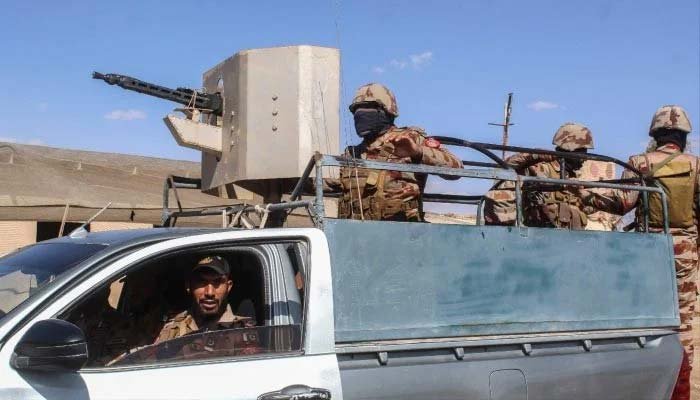
Security forces killed nine terrorists during two intelligence-based Balochistan security operations carried out in Kachhi and Wadh districts on October 26, according to the Inter-Services Public Relations (ISPR). The military’s media wing said the operations targeted suspected hideouts and movements of militants reportedly linked to the Indian proxy group Fitna al-Hindustan. Weapons and ammunition were also recovered, while further searches continued to identify and eliminate any remaining threats.
Seven Terrorists Killed in Kachhi District
The first operation took place in Kachhi district after security forces received intelligence reports about the presence of suspected terrorists in the area. According to the ISPR statement, troops located and targeted a terrorist hideout, leading to an exchange of fire.
The engagement resulted in the deaths of seven terrorists described by the military as India-sponsored militants. Security personnel also recovered weapons and ammunition from those killed during the operation.
The action was part of Pakistan’s broader counterterrorism efforts aimed at preventing militant groups from establishing hideouts and carrying out attacks. Intelligence-based operations allow security agencies to act on specific information about suspected militant activity rather than relying solely on routine patrols.
The military did not provide further details about the identities of those killed or the precise nature of the weapons recovered.
Two More Terrorists Killed in Wadh
In a separate engagement, security forces conducted another intelligence-based operation in Wadh district. The ISPR said troops tracked the movement of suspected terrorists and intercepted them after identifying their presence in the area.
An intense exchange of fire followed, resulting in the deaths of two additional terrorists. The military identified them as India-backed militants and confirmed that weapons and ammunition were recovered during the operation.
Together, the two engagements brought the reported death toll to nine. The operations highlighted the continued security challenges facing Balochistan, a province that has experienced repeated militant attacks and counterterrorism actions.
The military’s statement did not report any casualties among security personnel in either engagement.
Search Operations Continue in Both Areas
Following the engagements, security forces launched sanitisation operations in the affected areas. These searches are intended to locate any remaining militants, identify potential hideouts and reduce the risk of further attacks.
Such follow-up activity is an important part of counterterrorism operations, as armed groups may operate through networks spread across multiple locations. Clearing an area after an engagement can help security agencies determine whether other suspected militants remain nearby.
The latest Balochistan security operations also reflect the continuing focus on intelligence gathering and coordinated action against groups suspected of planning attacks in the province.
Authorities have repeatedly emphasised the need to disrupt militant networks before they can target security forces, government installations or civilians.
Azm-e-Istehkam Counterterrorism Campaign
The ISPR said Pakistan’s counterterrorism campaign under the vision of Azm-e-Istehkam would continue at full pace. The initiative was approved by the Federal Apex Committee on the National Action Plan and is intended to strengthen efforts against terrorism and foreign-sponsored militant activity.
According to the military, the campaign aims to eliminate terrorism and prevent external support from being used to destabilise Pakistan.
The effectiveness of such efforts depends on several factors, including reliable intelligence, coordination among security agencies, protection of vulnerable communities and sustained action against networks involved in planning and supporting attacks.
The latest operations in Kachhi and Wadh form part of these wider efforts. However, long-term security also requires addressing the conditions that allow militant organisations to recruit members, maintain supply networks and operate across difficult terrain.
Rising Militant Violence in Pakistan
Pakistan has experienced an increase in militant violence, particularly in Balochistan and Khyber Pakhtunkhwa, since the Afghan Taliban returned to power in Afghanistan in 2021.
According to the supplied report, Pakistan recorded its highest monthly number of militant attacks in 12 years during September 2026. The rise has intensified concerns about border security and the ability of militant organisations to operate across the region.
Islamabad has repeatedly urged Kabul to prevent Afghan territory from being used by militant groups to launch attacks inside Pakistan. Pakistani authorities maintain that the Afghan Taliban administration has not taken sufficient action against organisations accused of targeting Pakistani security personnel and civilians.
These allegations remain part of ongoing tensions between the two countries over cross-border security. Preventing attacks requires effective border management, intelligence sharing and cooperation against groups that threaten regional stability.
Security Remains a Major Challenge
The killing of nine suspected terrorists in the two Balochistan security operations represents another development in Pakistan’s continuing campaign against militancy. The recovery of weapons and ammunition, along with the ongoing sanitisation efforts, indicates that security forces are continuing their search for potential threats in the affected districts.
At the same time, the broader rise in militant attacks highlights the scale of the challenge facing authorities. Sustained counterterrorism efforts, improved intelligence coordination and stronger regional cooperation will remain important to reducing violence.
For residents of Balochistan and other affected areas, the central priority is lasting security that protects civilians, supports normal economic activity and prevents further loss of life.