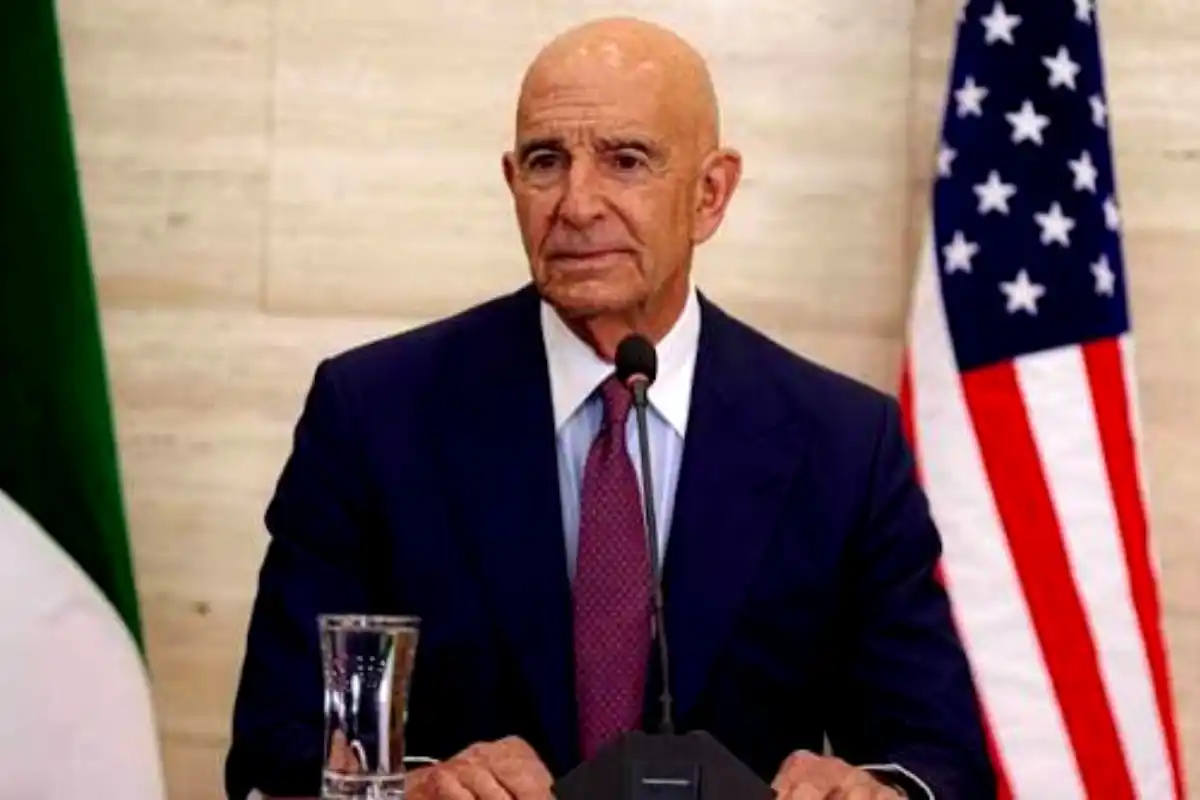
US Middle East policy is undergoing a reassessment, according to American diplomat Tom Barrack, who says Washington is reviewing its traditional approach to regional security, oil interests and political influence. Speaking at the Global Security Forum in Doha, Qatar, Barrack stressed that the United States is not withdrawing from the Middle East but reconsidering how it fulfils its responsibilities in the region.
Barrack, who serves as the US ambassador to Türkiye and special envoy for Syria, said Washington was moving away from an approach focused on maintaining control over regional affairs. His remarks suggest a possible shift in how the United States engages with Middle Eastern governments amid changing geopolitical priorities and longstanding concerns about foreign intervention.
Washington Reconsiders Its Traditional Regional Role
According to Al Jazeera, Barrack explained that the United States was reviewing the traditional arrangement in which it provided security guarantees in exchange for access to oil and maintained influence over governments in the region.
He indicated that Washington was reassessing its responsibilities rather than attempting to control political developments across the Middle East. The distinction is significant because American policy has long involved military partnerships, security assistance, diplomatic engagement and strategic relationships with regional governments.
The United States has maintained a substantial role in Middle Eastern security, partly because of the region’s importance to global energy supplies, international trade and broader geopolitical competition.
However, the costs and consequences of sustained regional involvement have remained subjects of debate. Military commitments, political disputes and the outcomes of past interventions have prompted questions about how Washington should balance its interests with the priorities of Middle Eastern countries.
Barrack’s comments indicate that US Middle East policy may increasingly focus on redefining the terms of engagement rather than assuming Washington must take the lead in resolving every regional crisis.
His remarks do not, by themselves, establish that the United States plans to end particular security agreements or withdraw specific military forces. They instead point towards a reassessment of the country’s broader approach.
Middle Eastern Countries Urged to Take Greater Responsibility
Barrack also suggested that governments across the Middle East were beginning to recognise that they could not rely entirely on the United States to solve their problems.
The observation reflects a wider discussion about regional responsibility, strategic independence and the future of international partnerships. Middle Eastern countries face different security challenges, ranging from armed conflicts and political instability to economic pressures and competition between regional powers.
Greater regional cooperation could allow governments to address some of these challenges through diplomacy, shared security arrangements and direct negotiations. It could also encourage countries to develop policies based more closely on their own national interests.
Nevertheless, reducing dependence on Washington would not necessarily mean ending cooperation with the United States. American diplomatic relationships, military capabilities and economic ties remain important to many governments in the region.
The potential change would instead concern the balance of responsibility: how much Washington is expected to contribute to regional security and how much local governments are prepared to manage independently.
For US Middle East policy, this could mean a greater emphasis on partnerships and negotiated arrangements rather than an assumption that American involvement alone can deliver lasting stability.
Barrack Highlights Failed Regime-Change Efforts
During his remarks, Barrack said the United States had been involved in 23 attempts to change governments in several Middle Eastern countries. He argued that such interventions and efforts to replace political leaders had often failed.
His comments raise questions about the effectiveness and long-term consequences of foreign attempts to reshape political systems. Regime-change efforts can produce outcomes that differ significantly from those intended, particularly when they fail to account for local political dynamics, social divisions and competing regional interests.
Interventions may also create prolonged instability if political institutions weaken or if rival groups compete for power after a government falls.
Barrack’s assessment suggests that Washington should reconsider whether attempts to influence leadership outcomes have consistently served American interests or contributed to sustainable regional stability.
However, his figure of 23 attempts was part of his remarks and would require additional context to assess precisely which events and actions were included.
The broader argument is that political change imposed from outside does not automatically produce stable institutions or lasting peace. Diplomatic engagement and respect for local political realities may be more sustainable approaches in some circumstances.
Iran and the Limits of Regime Change
Barrack’s comments also come against the background of US President Donald Trump’s earlier description of attacks on Iran as an effort to bring about regime change.
According to the supplied report, that objective was not achieved. The episode illustrates the difficulties involved when military pressure is expected to produce a fundamental political transformation.
Military operations can affect a country’s security environment, but changing its political leadership or system involves far more complex factors. Domestic political support, institutional structures and public responses can all influence the outcome.
The Iranian case reinforces the questions raised by Barrack about the limits of external intervention and the risks of assuming that military action will deliver a desired political result.
Tom Barrack’s remarks point to a possible reassessment of US Middle East policy, particularly Washington’s traditional role in regional security and political affairs. His comments highlight the costs of past interventions and the growing expectation that Middle Eastern governments should take greater responsibility for their own challenges.
Although the full implications for American military and diplomatic commitments remain uncertain, the discussion reflects a broader debate about how the United States can protect its interests without trying to control regional outcomes. Whether this reassessment leads to concrete policy changes will depend on future decisions by Washington and its regional partners.